Reviewed · FARMS
Living Land Farm Rice Experience
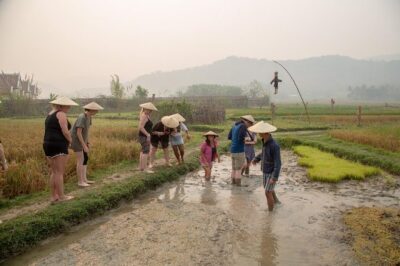
Rice tells the story of Laos. This hands-on farm day lets you follow it from field to grain, with buffalo ploughing, rice planting, rice reading, and winnowing near Luang Prabang. I like the direct contact with daily rural work, and I like that the farm is both an organic food supplier and an educational centre. The main consideration is the price: at $89 per person, this is not a cheap sightseeing outing, and meals are not listed as included.
You will spend the day at a community-run farm with rice fields, vegetable gardens, and mountain views. I also appreciate the small-group limit of 10 people, which should make practical activities easier to follow. Still, you need to be ready for sun, dirt, and changing clothes, since this is farm work rather than a neat museum visit.
In This Review
- Key points to know before booking
- Why this farm visit feels different from ordinary sightseeing
- Arriving from Luang Prabang and settling into the farm
- Guiding the buffalo plough
- Planting rice and understanding the farming cycle
- Reading rice and learning what happens after planting
- Winnowing rice and seeing the final stage
- Vegetable gardens and the farm’s wider purpose
- What the $89 price includes
- Who will enjoy this day most
- What to pack for the rice fields
- Booking details and cancellation flexibility
- FAQ
- How long does the Living Land Farm Rice Experience last?
- Where does the experience take place?
- What rice-farming activities are included?
- Is transportation included?
- Is an English-speaking guide provided?
- How many people are in the group?
- Is food included in the price?
- Should you book Living Land Farm?
Key points to know before booking
- Rice work from field to grain: You can take part in ploughing with buffalo, planting rice, reading the rice, and winnowing it.
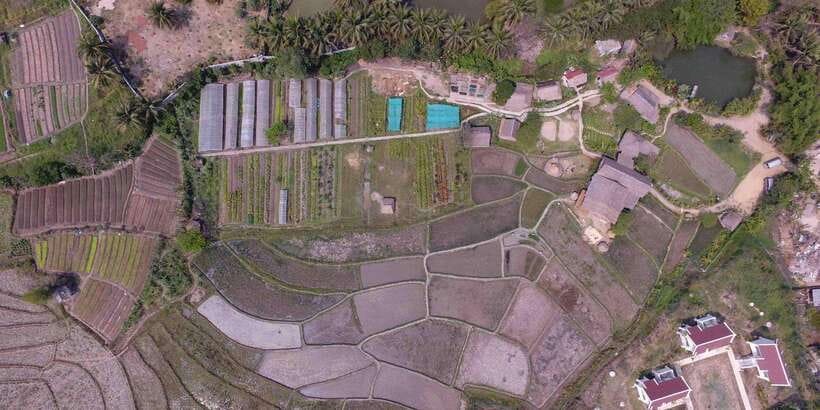
- A working community farm: The property grows rice, vegetables, herbs, and salads for hotels and restaurants in Luang Prabang.
- Rice grows all year: The farm offers a useful look at cultivation beyond one short harvest season.
- Mountain and field views: The setting just outside Luang Prabang adds open views and a rural pause from town.
- Small-group format: The group is limited to 10 participants, with an English-speaking local guide.
- Practical planning matters: Bring sun protection, cash, water needs beyond the supplied drinking water, and clothes that can get dirty.
Why this farm visit feels different from ordinary sightseeing
Many Luang Prabang outings focus on temples, waterfalls, and old streets. Living Land Farm gives you a look at the work that helps feed the town. That makes the day useful for anyone who wants to understand Laos through ordinary life, not only famous sights.
The farm is described as a rice farming community, an organic farm, and an educational centre. Those three roles matter. You are not simply walking past a field for a photograph. You are learning how rice is handled, while seeing a place that supplies fresh vegetables, herbs, salads, and rice to local hotels and restaurants.
I like that connection to Luang Prabang’s food scene. The farm is tied to the town in a practical way. It grows produce for businesses that serve visitors, but the activity itself remains rooted in local farming.
Rice is planted all year round, so the experience is not limited to one narrow agricultural window. The exact work you do can depend on the farming stage taking place when you visit. That is worth keeping in mind if you expect every activity to look exactly the same on every date.
A few more Luang Prabang trips worth reading about
- Living Land Rice Farming Experience
★ 5.0 · 93 reviews - Luang Prabang: Farm Tour and Buffalo Buffet Adventure
★ 4.7 · 11 reviews - Luang Prabang: Organic Farm Experience & Hike to Kuang si
★ 4.4 · 4 reviews
Arriving from Luang Prabang and settling into the farm
Pickup is arranged from your hotel lobby, where you should meet 45 minutes before departure. That early meeting time gives the driver and guide room to gather the group and begin the transfer without a rushed start.
Transport is provided in an air-conditioned vehicle, with a private local driver and an English-speaking local guide. The small-group limit is 10 people. This combination should give you more personal attention than a large coach tour, especially when you are learning physical tasks in a field.
The farm sits just outside Luang Prabang. From there, you can expect views over rice fields and toward mountains. The setting is part of the appeal, but it also explains why you should prepare for outdoor conditions. A sun hat, sunglasses, and sunscreen are sensible choices, not packing-list decoration.
Cold drinking water is included during the sightseeing portion. Other drinks, soft drinks, and alcohol are not included. Bring cash for personal spending, since the tour package does not cover personal purchases or other expenses.
Guiding the buffalo plough
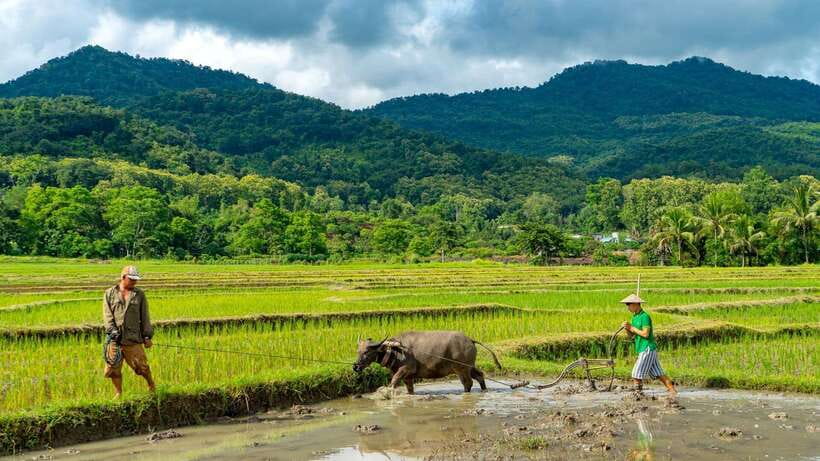
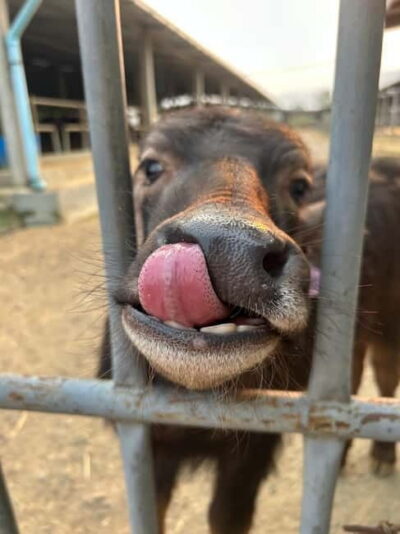
The buffalo-ploughing session is likely to be the most memorable part of the day. You get the chance to guide the buffalo plough rather than simply watch a demonstration. That gives you a better sense of how much care and effort goes into preparing a rice field.
This is also the activity that may feel least polished. A working animal and a muddy field do not follow a stage script. You may need to take instructions carefully, move at a steady pace, and accept that the experience is about participation rather than perfect control.
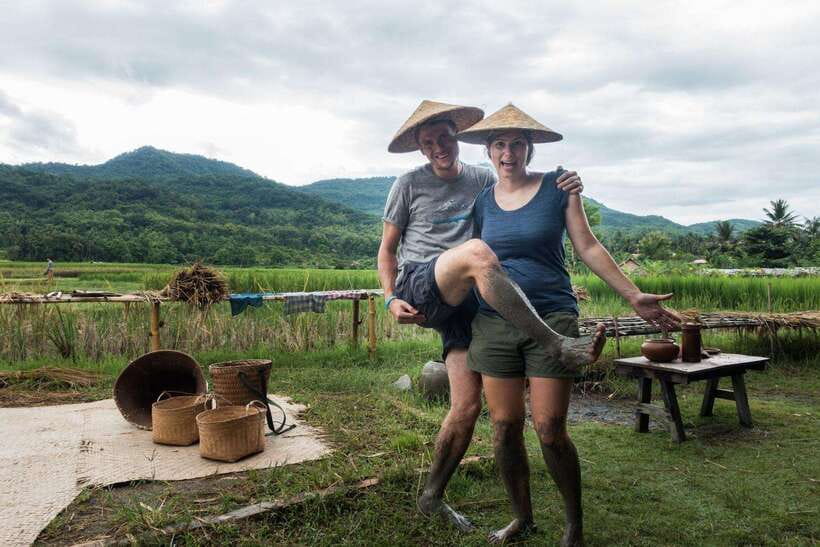
Wear clothing that can get dirty. The instructions specifically recommend a change of clothes, and I would take that advice seriously. Even if the ground is not wet on your visit, farm work can leave you dusty, muddy, or damp.
For families and curious adults, buffalo ploughing offers a clear connection between food and labor. It turns an abstract idea, rice production, into something you can feel through your hands and feet. If you prefer tidy, passive sightseeing, this part may be less appealing.
Planting rice and understanding the farming cycle
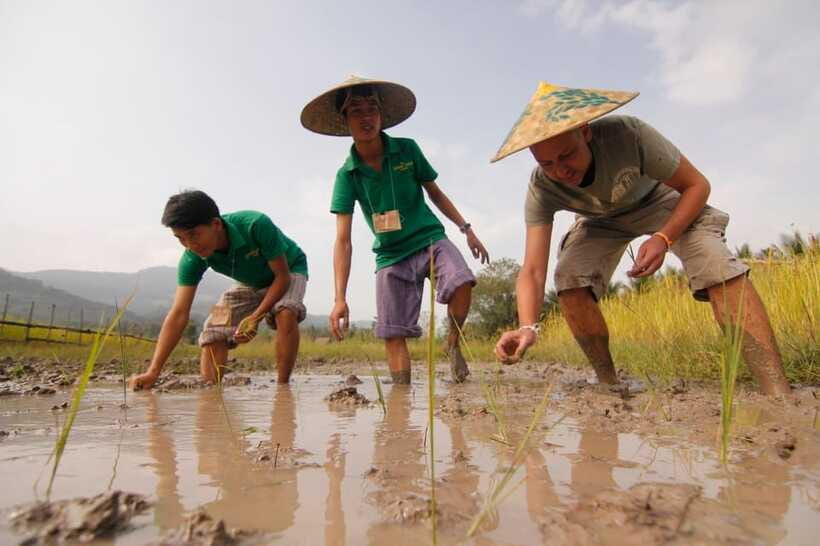
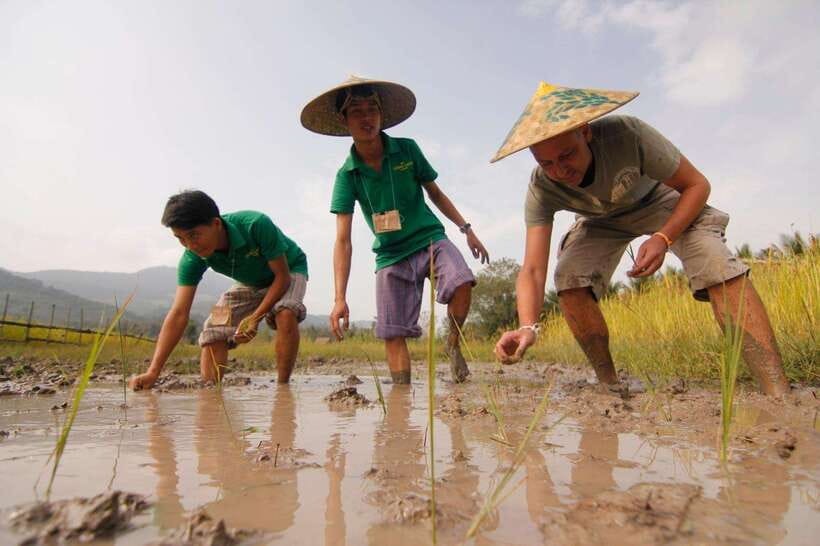
Rice planting gives you another close look at the process. Instead of seeing a finished paddy from a roadside viewpoint, you take part in one of the basic jobs that keeps the cycle moving.
The farm plants rice throughout the year. That is an important detail because it means the visit is not tied only to a single annual event. The fields may look and function differently at different times, and the guide can explain the stage you are seeing during your visit.
The activity also helps you understand why rice farming takes patience. Planting is repetitive work, and the value lies in trying it yourself while learning how the field is managed. I would treat this as a lesson in rhythm and effort, not as a quick photo opportunity.
The provided information does not specify a detailed timetable for each farm task. Your guide will explain the activities available on the day. That flexibility is normal for a working farm, but it means you should not book this expecting a fixed sequence with exact start times for every task.
Somewhere quieter, at a slower pace:
- Luang Prabang: Cruise to Pak Ou Caves & Kuang Si Waterfalls
★ 5.0 · 1,769 reviews - Luang Prabang: Cruise to Pak Ou Caves & Kuang Si Waterfalls
★ 4.8 · 1,360 reviews - Half Day Mekong Cruise to Pak Ou Caves (Morning / Afternoon)
★ 4.6 · 290 reviews - Luang Prabang: UNESCO World Heritage City Highlights Tour
★ 4.6 · 201 reviews
Reading rice and learning what happens after planting
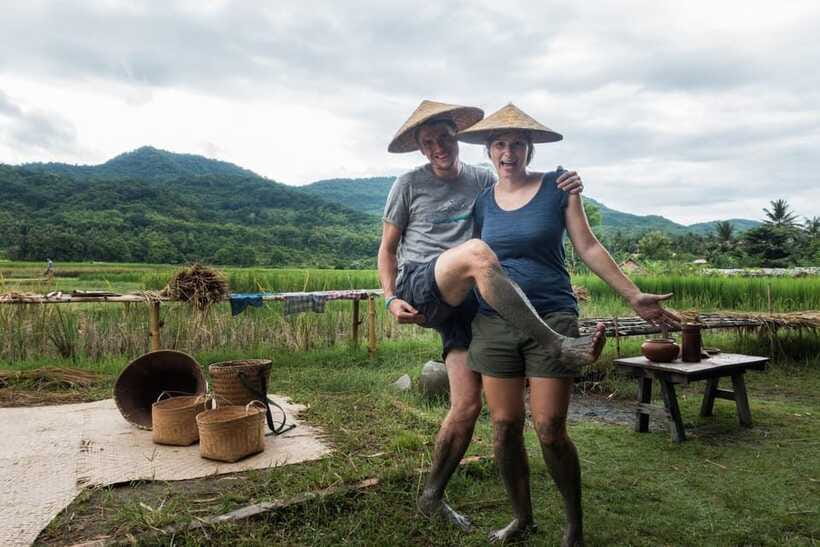
The program includes reading the rice, using that wording in the activity description. The supplied details do not explain exactly what this step involves, so you should ask the English-speaking guide to clarify the term when the activity begins.
That small question can improve the day. Guides often make hands-on activities easier to understand when you know what to look for. Ask how the stage fits into the wider farming cycle, and pay attention to the condition of the plants and field.
The point of this section is not only to perform a task. It is to connect planting with the later stages of rice production. The farm’s educational role gives the guide a reason to explain those links rather than moving you from one activity to another without context.
Winnowing rice and seeing the final stage
Winnowing is the most visual part of the process. It shows how rice is separated and prepared after earlier field work. You will handle the grain and see that rice production continues long after the plant leaves the ground.
This stage can help tie the day together. First comes field preparation, then planting, then the later work represented by rice reading and winnowing. The experience becomes a chain of tasks rather than a single rural activity.
I like the way winnowing gives the tour a clear finish. You are not left with only a muddy-field memory. You also see a step that connects farming with the rice eventually served at home, in restaurants, and in the hotels supplied by the farm.
Again, the exact amount of participation may depend on the farm’s condition that day. The tour promises the chance to experience these stages, but agricultural work cannot always be staged on demand. A flexible attitude will serve you well.
Vegetable gardens and the farm’s wider purpose
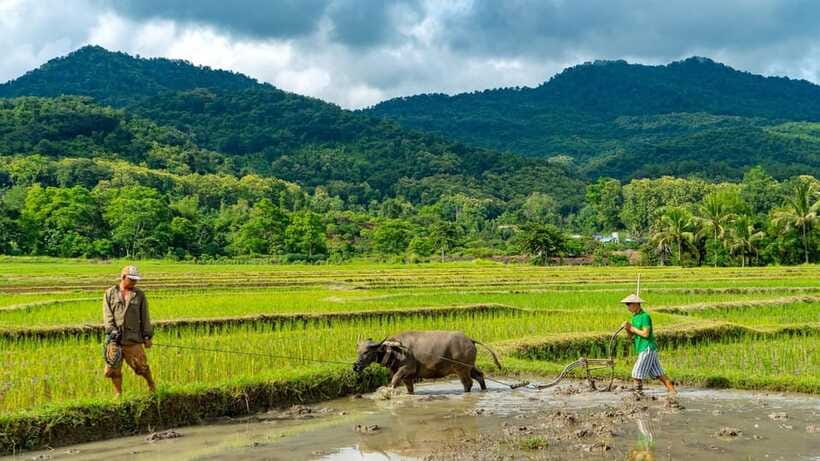
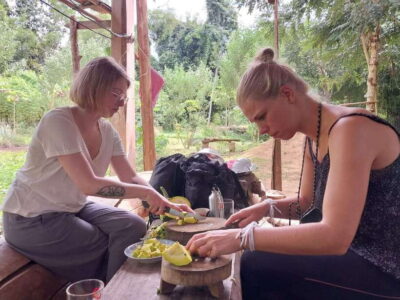
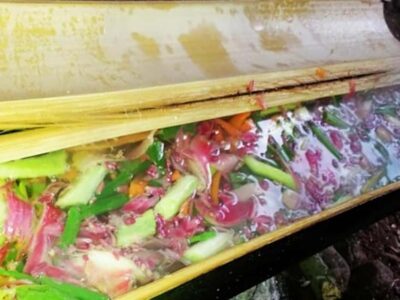
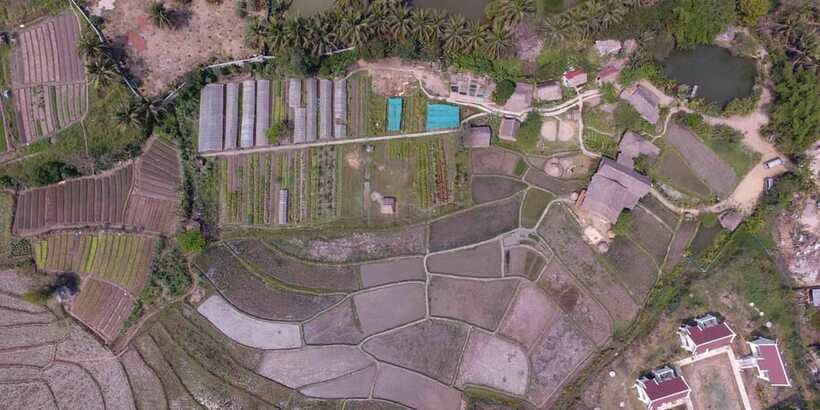
Rice is the headline activity, but the farm also contains vegetable gardens. It grows fresh vegetables, herbs, and salads for hotels and restaurants in Luang Prabang. That wider production makes the visit more than a single-crop demonstration.
You can see how a community farm supports the local food supply. The farm’s work connects rural production with meals served in town, which gives the setting a practical role in Luang Prabang’s visitor economy.
The organic focus will appeal to you if you care about how food is grown. The information provided does not give a detailed explanation of certification or specific farming methods, so I would avoid assuming more than the tour states. You can ask the guide what organic practices are used and how the farm manages its crops.
This part may be especially useful if you are traveling with children or with someone who has little contact with agriculture. The garden can make the conversation broader than rice alone, while the open setting keeps the lesson active.
What the $89 price includes
At $89 per person, the experience sits at the higher end of a simple day outing in Luang Prabang. Its value depends on how much you want active instruction and local context, rather than how many separate sights you can tick off.
The price includes a local driver, an English-speaking guide, air-conditioned transport for the tour and transfers, cold drinking water during sightseeing, and sightseeing entrance fees and permits during guided time. You are paying for transport, a guide, access, and participation in several farm activities.
The small-group limit of 10 improves the value. Hands-on work is easier when the guide does not have to manage a packed bus. You should have a better chance to see instructions clearly and ask questions.
There is one important catch: meals are not listed as included. The exclusions also cover drinks beyond the supplied cold water, personal spending, phone calls, laundry, travel insurance, visa costs, and other services not named in the program. Check the meal plan before booking so the final cost does not surprise you.
For me, the price makes the most sense if you want a focused cultural experience and value practical contact with local work. If you only want scenic views and a few photographs, a less expensive outing may offer better value.
Who will enjoy this day most
I would recommend Living Land Farm to you if you enjoy learning by doing. It suits people who want a rural experience, families looking for an activity beyond temples, and food-minded visitors curious about where Luang Prabang’s ingredients come from.
It is also a good match for a small group of friends who do not mind getting dirty. The buffalo plough, planting, and winnowing give the day a physical quality that a standard guided walk does not provide.
You may want to choose another activity if you need step-free access or use a wheelchair. The experience is listed as unsuitable for wheelchair users. You should also think twice if you dislike outdoor heat, mud, or clothing changes.
An English-speaking guide is provided, and the group size is limited to 10. That makes the day easier for you if you want explanations during the work rather than only a short introduction at the start.
What to pack for the rice fields
Bring sunglasses, a sun hat, sunscreen, and a camera. Pack a full change of clothes and wear something that can get dirty. Those are the most important practical tips for enjoying the farm without worrying about every splash or stain.
Keep some cash with you for personal expenses. Cold drinking water is supplied during sightseeing, but other drinks are not included, so plan accordingly.
You should also dress for movement. The activity list involves ploughing and planting, so restrictive clothing or shoes you want to keep spotless are poor choices. The supplied information does not specify footwear, so choose practical footwear suitable for outdoor farm conditions.
Booking details and cancellation flexibility
The activity lasts one day, but a specific start time depends on availability. Hotel pickup is arranged, and you should be in the lobby 45 minutes early.
You can reserve now and pay later, which helps if your Luang Prabang plans are still shifting. Cancellation is free up to 24 hours in advance for a full refund.
All non-ASEAN residents must arrange a valid Laos visa and pay any related visa fees themselves. Travel insurance is compulsory and is not part of the tour price.
FAQ
How long does the Living Land Farm Rice Experience last?
The experience lasts one day.
Where does the experience take place?
It takes place at Living Land Farm just outside Luang Prabang, in Luang Prabang Province, Laos.
What rice-farming activities are included?
The experience includes guiding the buffalo plough, planting rice, reading the rice, and winnowing it.
Is transportation included?
Yes. The tour includes transfers and sightseeing in an air-conditioned vehicle, with a private local driver.
Is an English-speaking guide provided?
Yes. An English-speaking local guide leads the experience.
How many people are in the group?
The activity is limited to 10 participants.
Is food included in the price?
Meals are not listed as included. Drinks other than cold drinking water provided during sightseeing are also excluded.
Should you book Living Land Farm?
Book this experience if you want to understand Luang Prabang through farming, food, and hands-on work. The strongest parts are the chance to guide a buffalo plough, take part in several stages of rice production, and visit a working organic farm that supplies local businesses.
At $89, it is worth it for a small-group cultural day with transport and an English-speaking guide. It is less suitable if you want a cheap half-day stop, dislike getting dirty, need wheelchair access, or expect meals to be included.
Bring sun protection, spare clothes, and patience. If you do, Living Land Farm offers a grounded and useful look at the work behind one of Laos’s most important foods.
Fresh in Luang Prabang
- 6-Day Private Laos Tour to Vientiane, Pak Ou Cave, Luang Prabang★ 5.0 · 5 reviews
- The Namkhan – Traditional Lao Bamboo Weaving★ 5.0 · 4 reviews
- The Namkhan – Yoga Class (8 am or 4 pm)★ 4.0 · 5 reviews
- Unwind with a Sunset Cruise on the Mekong River★ 5.0 · 4 reviews
- Sunset Cruise in Luang Prabang with Live Performance★ 4.5 · 3 reviews
- Night Bus to Huay Xai, Chiang Rai, Thailand – Hotel pickup★ 3.0 · 2 reviews
- Private Tour: Half-Day City Tour of Luang Prabang★ 4.5 · 4 reviews
- Private Luang Prabang City Tour★ 5.0 · 3 reviews