
Reviewed · HIKING & TREKKING
Luang Prabang: 3-Day Cultural Remote Trek With Homestay
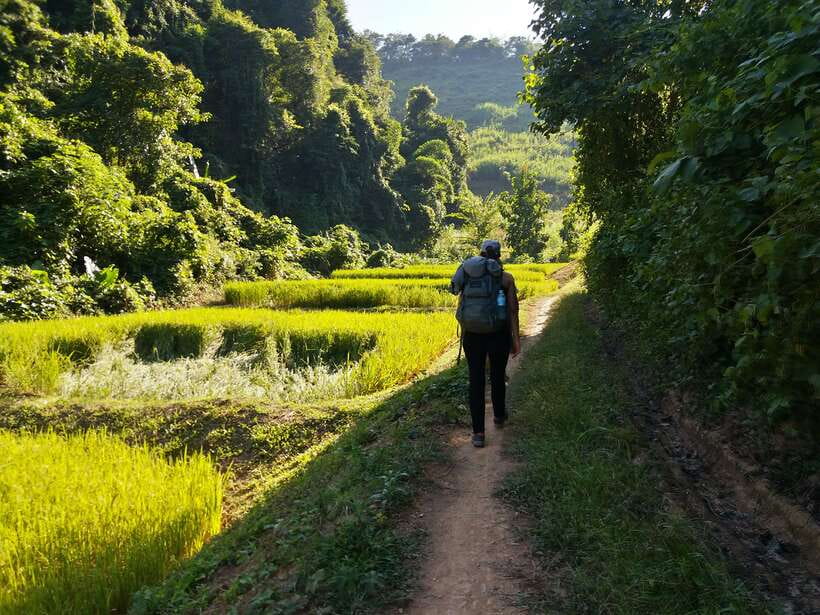
Real Laos starts beyond the paved roads. This three-day trek takes you from Luang Prabang into jungle paths, rice fields, and remote Hmong and Khmu villages where daily life remains simple and closely tied to the land. I like the local boat crossings and the chance to sleep in village homes, not a polished lodge. I also like that guides such as Aroun and Chan have helped explain village customs, plants, rituals, and hill farming in a way that gives the walking real meaning.
This is not a soft adventure. You will walk for four to seven hours each day, deal with basic washing and toilet facilities, and go without regular electricity. The biggest consideration is comfort: during the rainy season, trails take longer, and even in dry weather some climbs can be demanding, especially in high heat.
In This Review
- Five things to know before you go
- Leaving Luang Prabang at 8:45 in the morning
- Day 1: Four to five hours through paddies and jungle
- Day 2: A valley route to a large Hmong and Khmu village
- Day 3: Six to seven hours above the rice fields
- What the village stays are really like
- Hmong and Khmu culture without a rushed village stop
- Is $360 a fair price?
- Who should book this three-day trek?
- FAQ
- How long is the Luang Prabang remote trek?
- Where does the tour meet?
- Is hotel pickup available?
- What accommodation is provided?
- Are meals included?
- Does the tour operate during rain?
- Can I charge my camera or phone during the trek?
- Should you book it?
Five things to know before you go
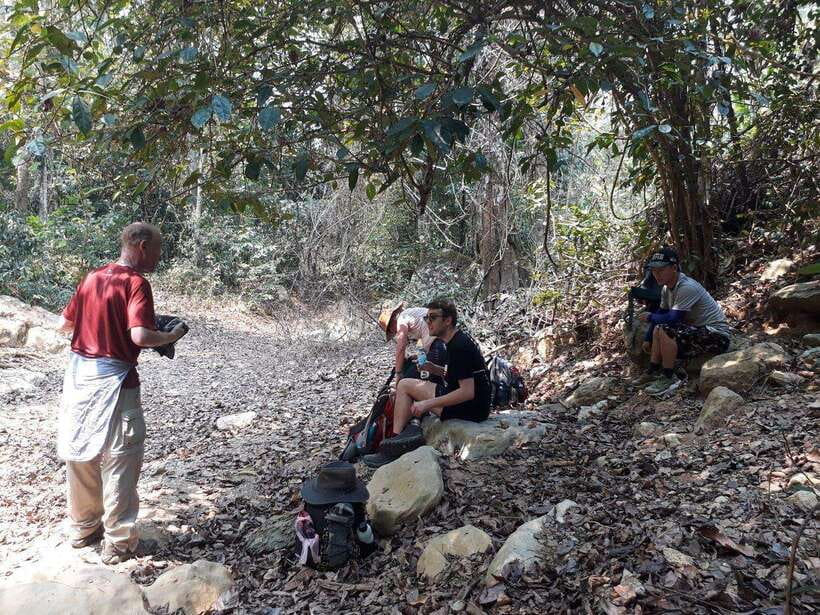
- The first boat crossing leads directly to local jungle trails: You leave the road behind and follow paths used by villagers moving between settlements.
- Two ethnic communities shape the trip: You visit Hmong and Khmu villages, with time to see homes, schools, rice farms, and everyday village life.
- The homestays are basic by design: Expect simple accommodation, limited washing facilities, and no dependable electricity for charging devices.
- The third day is the toughest: A six to seven-hour hike reaches mountain tops with wide views over valleys and remote Lao scenery.
- The $360 price covers the essentials: Transport, boat crossings, meals, guide services, permits, village fees, and homestay accommodation are included.
- A small group makes village contact easier: Private and small-group formats are available, and hotel pickup can be added.
Leaving Luang Prabang at 8:45 in the morning
The day begins at the Tiger Trail Travel office, on the same street as Villa Maly hotel. You meet at 8:20 a.m. for an 8:45 departure, giving you time to sort luggage and keep only what you need for the mountains.
That early start matters. You have a long transfer before the first walk, and carrying a large suitcase would make the trip awkward. You can store extra luggage and travel with a light pack containing clothes, insect repellent, water shoes, and weather-appropriate clothing.
The road follows the Mekong River and then the Nam Xeuang River for about an hour and a half. After that, a local boat carries you across the river to the trailhead. This is a useful transition: the city fades away, the road ends, and the trek begins from a place connected to village travel rather than tourist transport.
Transportation and boat crossings are included in the price. You can also arrange hotel pickup and a return to your hotel on the third day, which is helpful after a long hike and river swim.
More Hiking Trips in Luang Prabang
- Luang Prabang to Nong Khiaw: River Cruise, Hike & Waterfall
★ 4.4 · 53 reviews - Full Day Trek to Kuang Si Waterfalls, Remote Village
★ 5.0 · 38 reviews - Luang Prabang: Full Day Trek to Kuang Si Waterfall & Village
★ 4.6 · 20 reviews
Day 1: Four to five hours through paddies and jungle
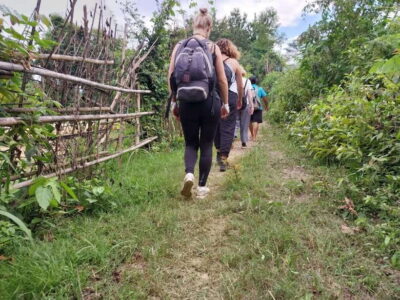
The opening walk takes four to five hours over medium-grade terrain. You pass rice paddies and enter jungle trails used by local people traveling between remote villages.
The route is valuable because it is not simply a marked exercise path built for visitors. You are walking routes that serve a practical purpose, including access to farms and neighboring communities. That also means the surface may be uneven, and the pace can be affected by rain.
Your guide becomes important here. The best moments are not only the mountain views but the explanations along the way: how people work steep fields, which plants matter, and how Hmong and Khmu communities differ. Chan has been praised for explaining hill-tribe customs, rituals, plants, and animals, while Aroun has helped connect the villages and surrounding nature to local culture.
By evening, you reach a Hmong village and stay in a homestay-style arrangement. The setting is welcoming, but you should reset your expectations before leaving Luang Prabang. This is basic, comfortable shelter, not a hotel room. You will experience simple toilets and washing arrangements, and charging camera batteries is not possible for the duration of the trek because there is no regular electricity.
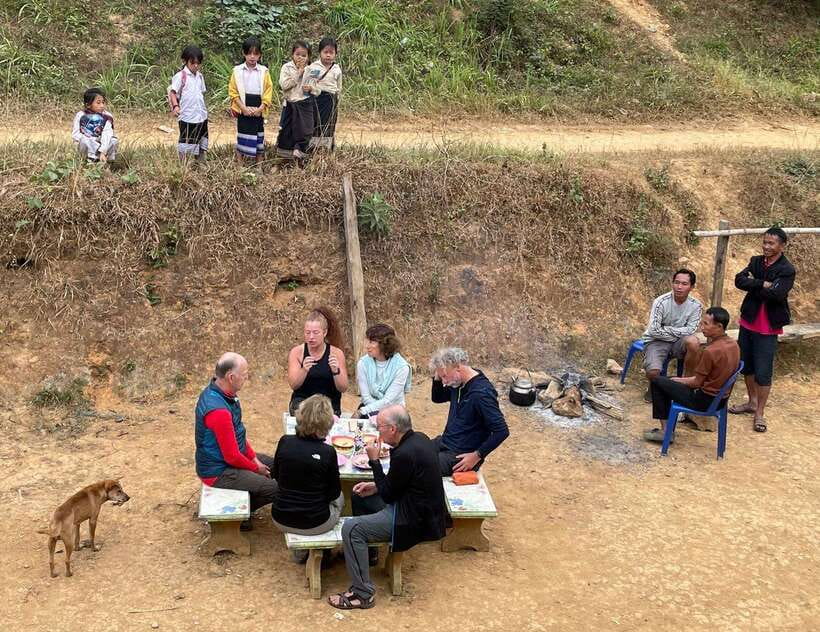
Dinner is prepared by your guide and a local Hmong family. That shared meal is one of the strongest parts of the trip because food becomes a natural way to meet the household hosting you. Specialty drinks are not included, so bring money if you want to buy them.
Day 2: A valley route to a large Hmong and Khmu village
Day two begins with the sounds of village life and breakfast prepared by your guide. The walk is described as the shortest of the three, but four hours on mountain paths is still a real morning and afternoon of hiking.
The trail follows valley streams toward a large, remote village made up of Hmong and Khmu residents. The settlement sits in a valley ringed by high mountains, giving you a strong sense of how isolated these communities can be.
You arrive around mid-afternoon, leaving time to explore rather than rushing straight into dinner. Your guide can take you through the village and help you understand the schools, homes, and patterns of local life. This is also where the trip moves beyond scenery. You see the practical side of village organization and the challenges of living far from major roads and services.
The cultural exchange is not staged as a formal show. It is closer to observing how a community works, with the important reminder that you are entering people’s homes and neighborhoods. Follow your guide’s lead, ask before taking photographs, and keep your behavior modest.
Accommodation remains simple. One memorable stay included an invitation to join a Khmu New Year celebration, with shared food, Lao whiskey, Beerlao, music, and dancing. That kind of event cannot be promised, but the possibility shows why a homestay can offer something a standard hotel cannot. You are present in a village at the right time, rather than simply passing through it.
Day 3: Six to seven hours above the rice fields
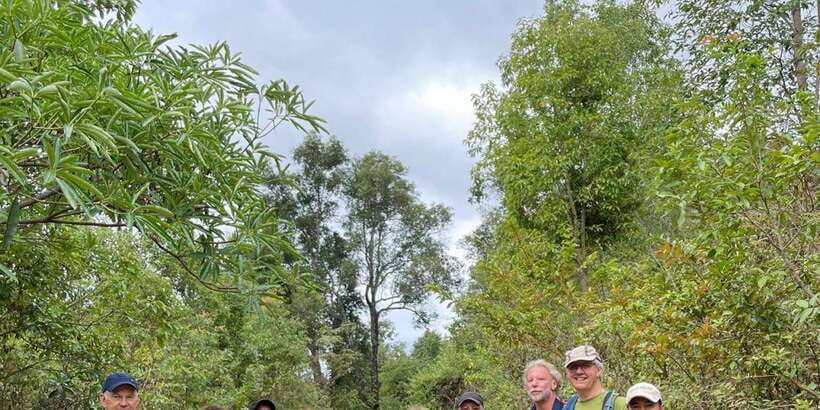
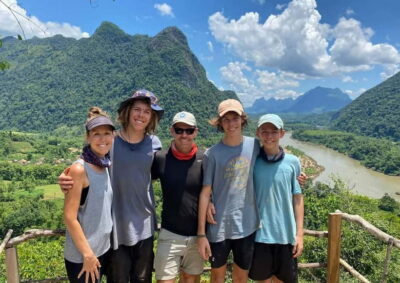
The final day is the physical centerpiece. You hike for six to seven hours toward mountain tops with broad views over the villages and remote Lao scenery.
The route follows trails villagers use to reach steep, high rice fields and to visit a Hmong mountain settlement. That detail explains the effort. The climb is not a scenic shortcut made for visitors. It is part of a working network of paths that supports farming and community life.
The views should be the reward for the harder walking. From the high points, you look over villages, valleys, and large stretches of rural Laos. The supplied information does not give an exact elevation or a fixed viewpoint, so you should think of this as a mountain route with changing views rather than a guaranteed single lookout.
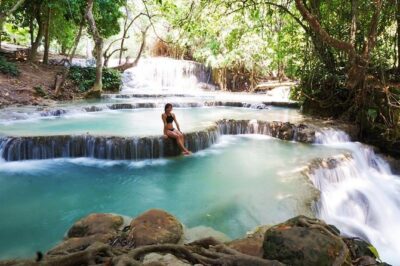
After the mountain section, the trail drops toward the Nam Xeuang River, where the trek ends. A swim is possible at the river before the return drive to Luang Prabang, which takes about an hour and a half. Pack water shoes if you want to make the most of this option, and keep a dry change of clothes ready.
The last day can feel long, especially after two earlier walking days. In hot conditions, the exertion rises quickly. One account describes some sections as challenging at 37 degrees Celsius, while rainy-season conditions can slow the trail even more. You should be comfortable with sustained walking before booking.
Somewhere quieter, at a slower pace:
- Luang Prabang: Cruise to Pak Ou Caves & Kuang Si Waterfalls
★ 5.0 · 1,769 reviews - Luang Prabang: Cruise to Pak Ou Caves & Kuang Si Waterfalls
★ 4.8 · 1,360 reviews - Half Day Mekong Cruise to Pak Ou Caves (Morning / Afternoon)
★ 4.6 · 290 reviews - Luang Prabang: UNESCO World Heritage City Highlights Tour
★ 4.6 · 201 reviews
What the village stays are really like
The homestays are central to the experience, not a minor detail. You sleep in a village setting and share meals connected to the host community. That gives you a closer look at rural life than a day trip from Luang Prabang can offer.
It also means giving up familiar comforts. Washing and toilet facilities are simple. Electricity may come only from limited solar panels, or may not be available for your devices. There is no opportunity to charge camera batteries during the trek, so charge everything before departure and carry a power bank if you have one.
The accommodation is described as basic but comfortable. That combination is fair: the point is not luxury, yet you have a place to rest after a full day outside. If you need private facilities, reliable hot water, or a strong phone-charging setup, this trip will feel too rustic.
Pack light, but do not pack too little. Comfortable shoes are essential, and a change of clothes matters after wet trails or a river swim. Insect repellent is worth treating as standard equipment. Weather-appropriate clothing should include protection for both heat and rain, since the trip runs in all weather.
Hmong and Khmu culture without a rushed village stop
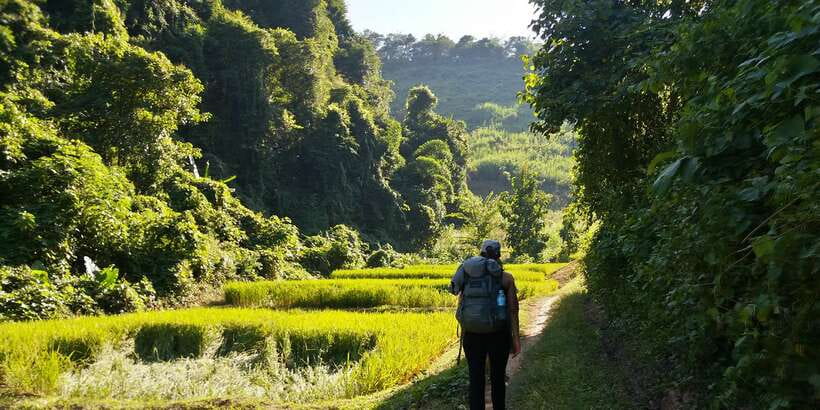
The cultural value comes from time. You spend an evening in a Hmong village, then reach a mixed Hmong and Khmu community on the second day and have several hours to look around.
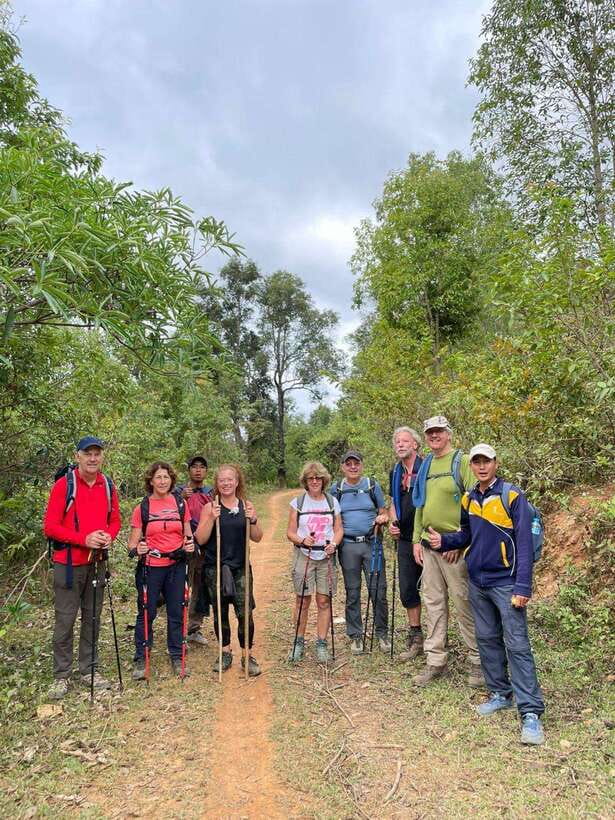
Your guide acts as the bridge. English-speaking guides can explain the differences between communities, local rituals, plants, animals, and farming methods. Aroun has been singled out for making the trip especially informative, while Chan has been praised for his strong explanations of hill-tribe life and customs.
The schools are part of the village experience, as are homes and rice farms. You are not just checking off an ethnic village on a sightseeing route. You see how homes, education, farming, and community events fit together in a remote place.
Still, cultural contact requires care. The villages are not museums, and the people you meet are not part of a performance. Listen more than you speak, ask permission for photos, and accept that some moments may be quiet rather than entertaining. That is part of the value.
Is $360 a fair price?
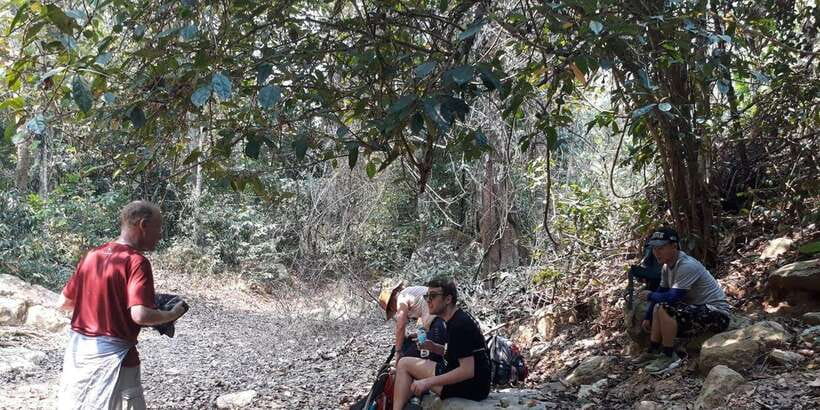
At $360 per person, the tour is not the cheapest way to spend three days around Luang Prabang. It is a fair price if you want a guided route into remote areas and prefer to have the main practical pieces handled for you.
The fee includes transport, boat crossings, all meals stated in the schedule, an English-speaking guide, taxes, village fees, permits, and homestay accommodation. You are paying for access as well as logistics. The guide helps with routes, village introductions, and communication, while the operator arranges the transfers and permissions needed for a remote trek.
The value is strongest for people who would struggle to organize these connections independently. A private or small group can also make the walking pace and village visits more personal. Specialty drinks are extra, and you will need to bring your own personal items, but the major costs are covered.
The price is less appealing if you mainly want comfortable accommodation or easy walks. In that case, the long hiking days and basic facilities may not feel worth the money. This is an adventure purchase, not a luxury purchase.
Who should book this three-day trek?
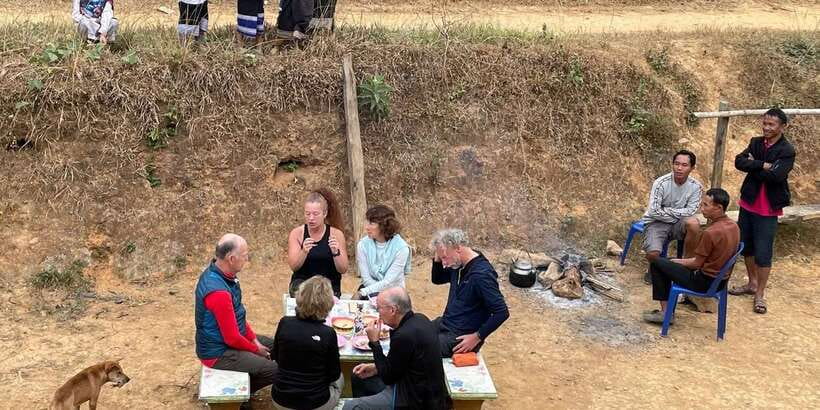
I would recommend it to you if you want:
- Remote mountain villages rather than busy sightseeing stops
- Long days on foot through jungle and rice fields
- A genuine homestay with simple facilities
- Time with both Hmong and Khmu communities
- A guide who can explain culture, farming, plants, and local life
- A small-group or private setting
- Big mountain views earned through physical effort
I would not recommend it if you are pregnant, have a mobility impairment, or dislike uneven trails. The activity is not suitable for pregnant women or people with mobility impairments, and the three walking days require stamina.
The rainy season deserves extra thought. The tour runs rain or shine, and wet conditions can make the routes harder and longer. If you book during that period, bring proper rain protection and expect the schedule to feel less predictable.
Free cancellation is available up to 24 hours before departure for a full refund, and you can reserve now and pay later. Those terms help if your plans are still shifting, but they do not change the physical demands of the route.
FAQ
How long is the Luang Prabang remote trek?
The experience lasts three days. Walking time is about four to five hours on day one, four hours on day two, and six to seven hours on day three.
Where does the tour meet?
You meet at the Tiger Trail Travel office on the same street as Villa Maly hotel. Meeting time is 8:20 a.m. for an 8:45 a.m. departure.
Is hotel pickup available?
Yes. Optional pickup from your hotel is available, with a return to your hotel in Luang Prabang on day three.
What accommodation is provided?
You stay in homestay-type accommodation in remote Hmong and Khmu villages. Conditions are basic but described as comfortable, with simple toilets and washing facilities.
Are meals included?
All meals described in the schedule are included. Specialty drinks are not included.
Does the tour operate during rain?
Yes. The trek runs rain or shine. Rainy-season conditions can make the walking more challenging and may require more time on the trails.
Can I charge my camera or phone during the trek?
There is no electricity for charging camera batteries during the trek. Charge your devices before leaving and bring suitable backup power if needed.
Should you book it?
Book this trek if you want to trade hotel comfort for village contact, long walks, and a closer look at rural Laos. The strongest reasons to go are the local trails, the shared meals, the time in Hmong and Khmu communities, and the mountain views on the final day.
Skip it if you want a gentle cultural outing or dependable comfort. At $360, the value depends on accepting basic homestays and serious walking. For the right person, this is a memorable way to see a side of Luang Prabang that remains far beyond the usual day-trip circuit.
More 3-Day Experiences in Luang Prabang
- Luang Prabang: Nong Khiaw 3-Day Trekking & camping, Homstay
★ 5.0 · 9 reviews - 3 Days The Plain of Jars and Xieng Khouan (Depart from Luang Prabang)
★ 5.0 · 3 reviews
Fresh in Luang Prabang
- 6-Day Private Laos Tour to Vientiane, Pak Ou Cave, Luang Prabang★ 5.0 · 5 reviews
- The Namkhan – Traditional Lao Bamboo Weaving★ 5.0 · 4 reviews
- The Namkhan – Yoga Class (8 am or 4 pm)★ 4.0 · 5 reviews
- Unwind with a Sunset Cruise on the Mekong River★ 5.0 · 4 reviews
- Sunset Cruise in Luang Prabang with Live Performance★ 4.5 · 3 reviews
- Night Bus to Huay Xai, Chiang Rai, Thailand – Hotel pickup★ 3.0 · 2 reviews
- Private Tour: Half-Day City Tour of Luang Prabang★ 4.5 · 4 reviews
- Private Luang Prabang City Tour★ 5.0 · 3 reviews
Hiking & Trekking, compared.
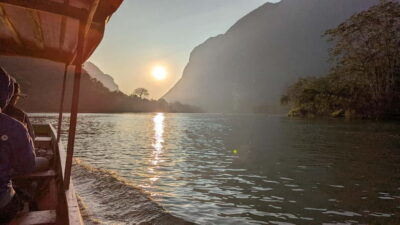
Luang Prabang to Nong Khiaw: River Cruise, Hike & Waterfall
Read our review →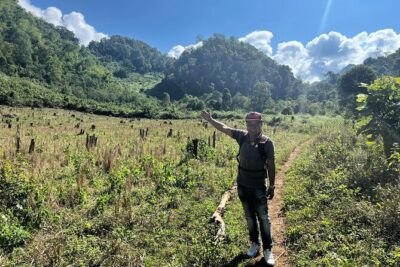
Full Day Trek to Kuang Si Waterfalls, Remote Village
Read our review →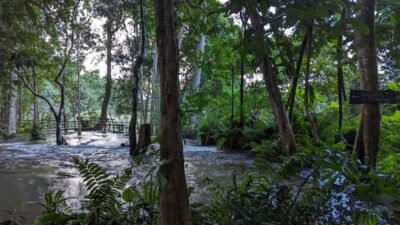
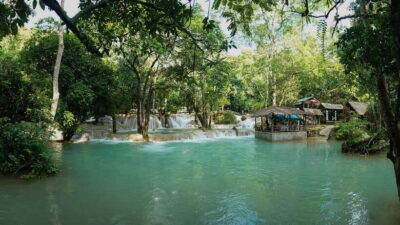
Luang Prabang Thin Pha Trail & Tad Sae Falls Trek
Read our review →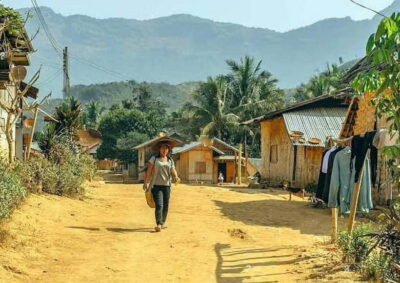
Day Trek to Kuangsi Waterfall and Bear Sanctuary – Luang Prabang full day tour
Read our review →Browse the lists this tour appears in