
Reviewed · PLAIN OF JARS TOURS
Plain of jars private tour
Ancient stone jars make a strange, memorable day. I like that this private tour visits all three main jar sites, not just the famous first site, and I like the mix of archaeology, village life, old temples, and open countryside. The main drawback is the long, tightly timed day, with several stops packed between 8:30 AM and late afternoon.
You pay $110 per person for a private tour from Phonsavan, including an air-conditioned vehicle, local lunch, entrance fees, taxes, and an English or Thai-speaking guide. That is fair value if you want door-to-door transport and clear explanations, though the spoon-making village may feel less comfortable if you prefer cultural stops that are not connected to wartime recycling.
In This Review
- Five details that shape the day
- Why the Plain of Jars deserves a full day
- 8:30 AM pickup in Phonsavan
- Ban Naphia and the uncomfortable story behind the spoons
- Site 3: jars beside rice fields
- Site 2 at Ban Nakho and the Phou Salato hills
- Muang Khoun, Wat Phia Wat, and That Foun
- Site 1 and the final stop at Wat Hai Heen
- What $110 includes and what it does not
- The best fit for this private tour
- Practical advice before you book
- Should you book the Plain of Jars private tour?
- FAQ
- Where does the Plain of Jars private tour start?
- How long does the tour last?
- Which Plain of Jars sites are included?
- How many jars are at Site 2?
- Is lunch included?
- Are entrance fees included?
- What languages can the guide speak?
- Can I cancel the booking?
Five details that shape the day
- Three jar sites: Site 1, Site 2, and Site 3 each offer a different setting and make the archaeology feel larger than a single viewpoint.
- Site 1 has 334 jars: This is the largest and most important stop on the route.
- Ban Naphia recycles wartime metal: Families produce about 1,000 spoons each day for local markets.
- Muang Khoun adds ruined temples: Wat Phia Wat and That Foun show another side of Xiangkhouang’s past.
- Site 3 includes a rice-field walk: You get a closer look at rural life before reaching the jars.
- Lunch is included: A local meal at Ban Nakho keeps the middle of the day simple and practical.
Why the Plain of Jars deserves a full day
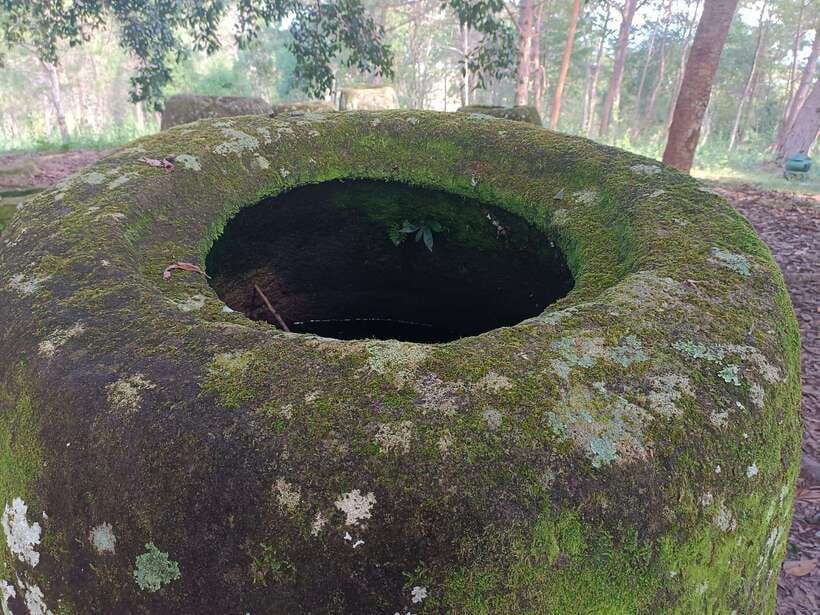
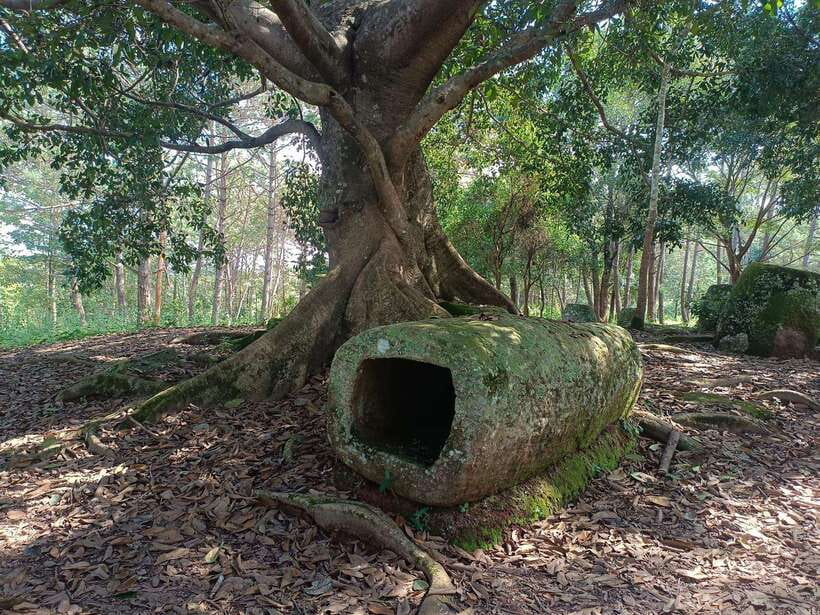
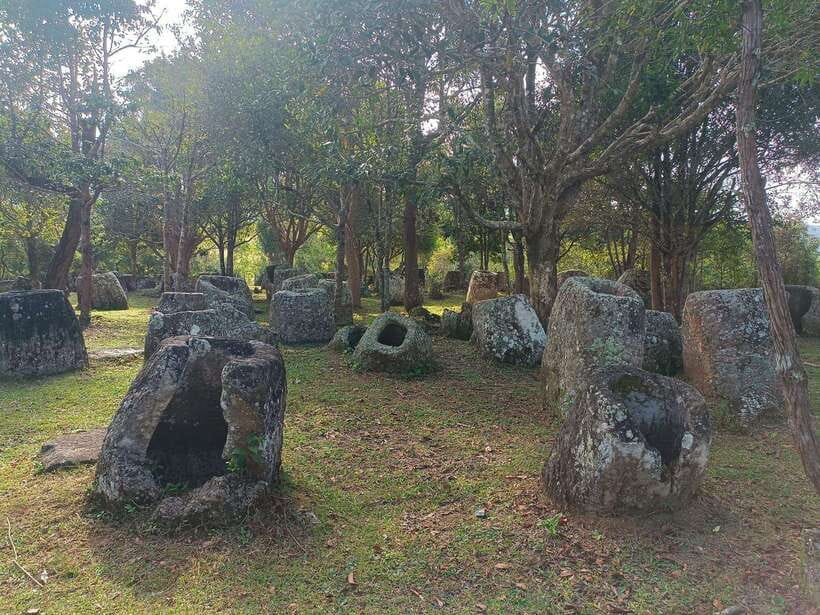
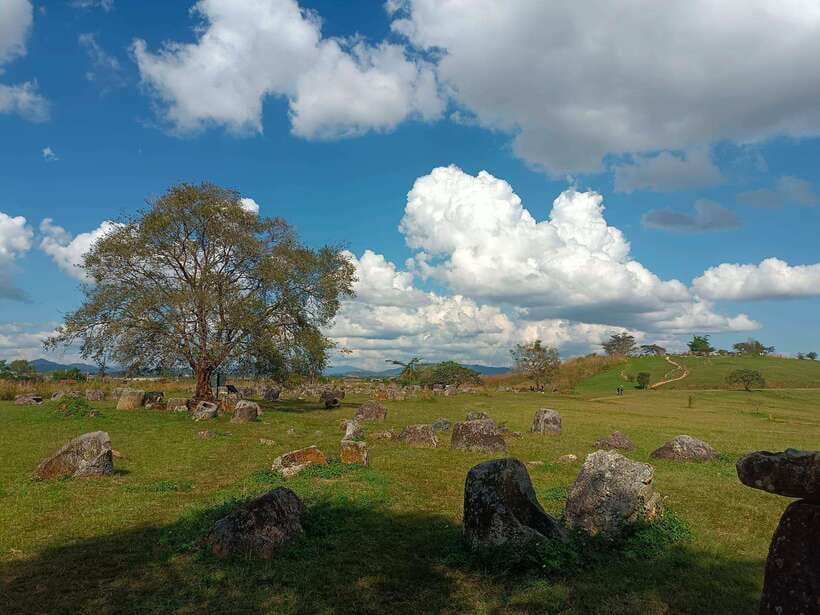
The Plain of Jars is the largest archaeological site in Laos. More than 1,000 stone jars are scattered across Xiangkhouang Province, spread over a number of sites rather than gathered in one neat park.
That matters when you plan your visit. If you only see Site 1, you see the largest collection, but you miss the way the jars appear across hills, rice fields, and open ground. The three-site route gives you a better sense of scale.
The jars themselves come in many sizes. Their original purpose remains part of the mystery, which gives the sites their appeal. Your guide can help you look closely at the setting instead of treating the stop as a quick photo break. The archaeological story becomes more useful when you can connect the jars with the surrounding villages and old provincial centers.
I also like the balance of the day. The tour is not only ancient stones. You move from a working spoon village to rice fields, hilltop jar sites, a former capital, a stupa, and a large Buddha image. It gives you a broader picture of Xiangkhouang than a single archaeological stop would.
Other trips out to the Plain of Jars:
- Plain of jars tour with local guide
★ 4.5 · 8 reviews - Plain of jars share group tour
★ 5.0 · 4 reviews - 3 Days The Plain of Jars and Xieng Khouan (Depart from Luang Prabang)
★ 5.0 · 3 reviews
8:30 AM pickup in Phonsavan
The day begins with pickup at your address in Phonsavan at about 8:30 AM. Make sure you provide the correct hotel or pickup address when booking, since the pickup is included.
A private group makes this start easier. You do not need to wait for a large coach or adjust to strangers’ interests. If you want more time at a jar site, you can ask your guide, although the schedule is fairly full and the listed visit times are limited.
Transport is by air-conditioned vehicle. That is useful in a province where the day includes several road sections between sites. You will also have a guide who speaks English or Thai, giving you a chance to ask about archaeology, local life, and the province’s history.
The private format is one of the strongest reasons to choose this tour. The price is $110 per person, so the value improves when two or more people share the experience. For a solo visitor, it is less of a bargain, but the included transport, entrance fees, lunch, and guide reduce the need to arrange several separate services.
Ban Naphia and the uncomfortable story behind the spoons
The first stop is Ban Naphia, a village known for making spoons from recycled wartime metal. Families produce about 1,000 spoons each day and sell them in local markets.
This is not just a standard handicraft stop. The work is tied to the legacy of war in Laos, so the visit can feel more serious than a simple shopping opportunity. You may see the craft as a practical way for families to reuse dangerous or unwanted metal, but you may also feel that the stop places a commercial activity ahead of the archaeological focus.
That tension is worth understanding before you go. One useful approach is to listen carefully to the explanation and treat the village as a place where history continues into daily work. If you buy a spoon or another item, it becomes a direct purchase from a local family rather than an anonymous souvenir.
The stop lasts about an hour. Personal spending is not included, and soft drinks are also extra. You do not need to buy anything to take part in the visit.
Site 3: jars beside rice fields
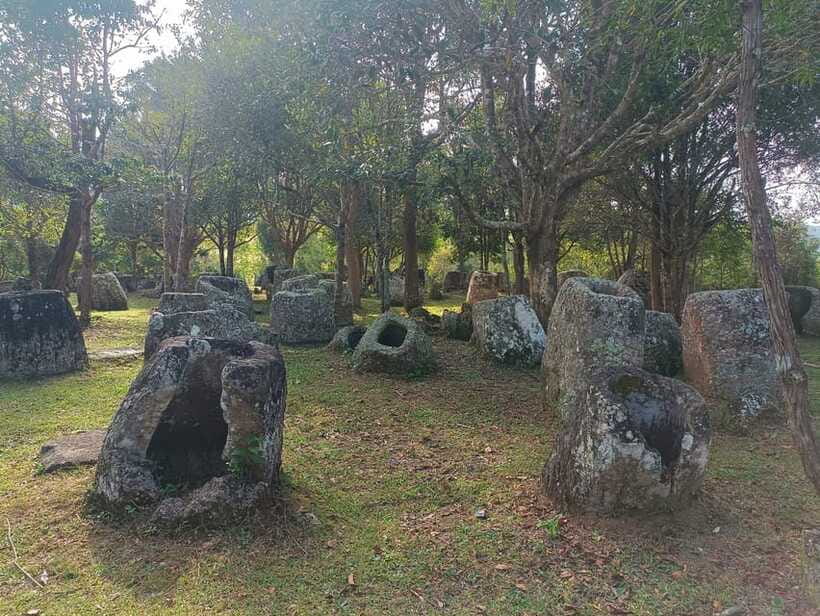
Around 10:00 AM, you reach the ticket office for Plain of Jars Site 3, also known as Ban Xieng Di. The route includes roughly an hour with the guide, and the walk to the jars takes you through rice fields.
This is a good first archaeological site because the setting feels open and rural. Rather than arriving at the biggest collection straight away, you approach the jars while seeing how the surrounding land is used today. Your guide explains rice planting along the way, adding a practical local detail to the ancient site.
The walk is one of the more distinctive parts of the day. You are not simply stepping from a parking area to a display. You follow a route through working countryside, then reach the stone jars in their natural setting.
You should allow for walking on this stop. The information provided does not give a difficulty rating or specify the exact surface, so wear shoes suited to a field walk. The schedule allows about an hour, which is enough for a guided look but may feel short if you want to stop often for photographs.
A few more Laos trips worth reading about
- Vientiane Cultural Tour with Private Guide
★ 5.0 · 80 reviews - Luang Prabang Private Minivan
★ 4.5 · 36 reviews - Vientiane: Private Full-Day Tour with Buddha Park and Lunch
★ 4.8 · 33 reviews - Private Tour: Vientiane City Tour Full Day with Buddha Park
★ 4.5 · 32 reviews
Site 2 at Ban Nakho and the Phou Salato hills
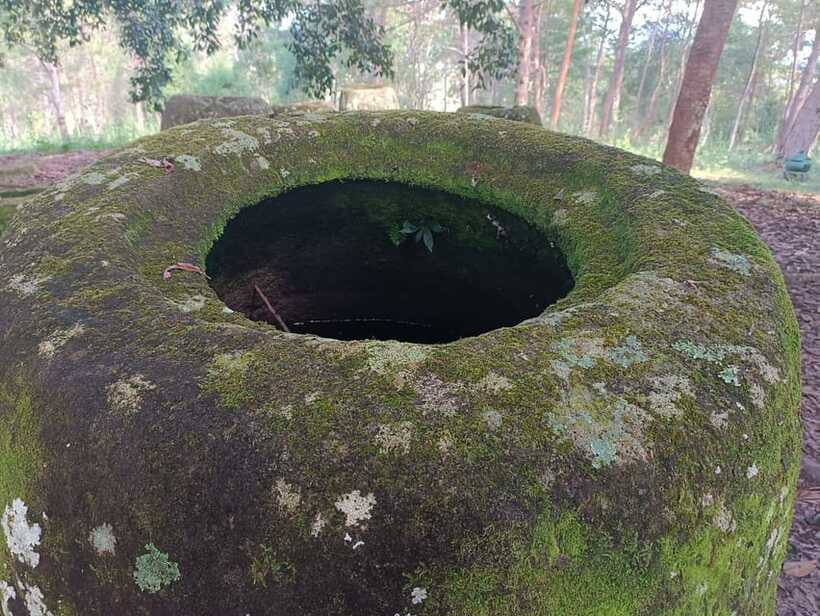
The next major stop is Plain of Jars Site 2 at Ban Nakho. The site sits near two hills of the Phou Salato mountain area and contains about 100 jars.
Site 2 gives you a different visual experience from Site 3. The hills provide a wider view, while the smaller number of jars makes it easier to focus on the arrangement of the stones and the surrounding terrain. I like having this quieter middle section before the largest collection at Site 1.
The visit lasts about an hour. Use this time to ask your guide how Site 2 relates to the other locations. Since the jars are scattered across the province, the comparisons help you understand why the sites are grouped together as one major archaeological area.
At about 12:30 PM, you stop for lunch at a local restaurant in Ban Nakho. A local menu is included, which keeps the price clear and avoids the need to search for a restaurant during a busy day.
The food details are not specified, so you should not expect a particular dish or a special dietary menu unless you confirm it before booking. Soft drinks are not included, so bring extra money if you want one with lunch.
Muang Khoun, Wat Phia Wat, and That Foun
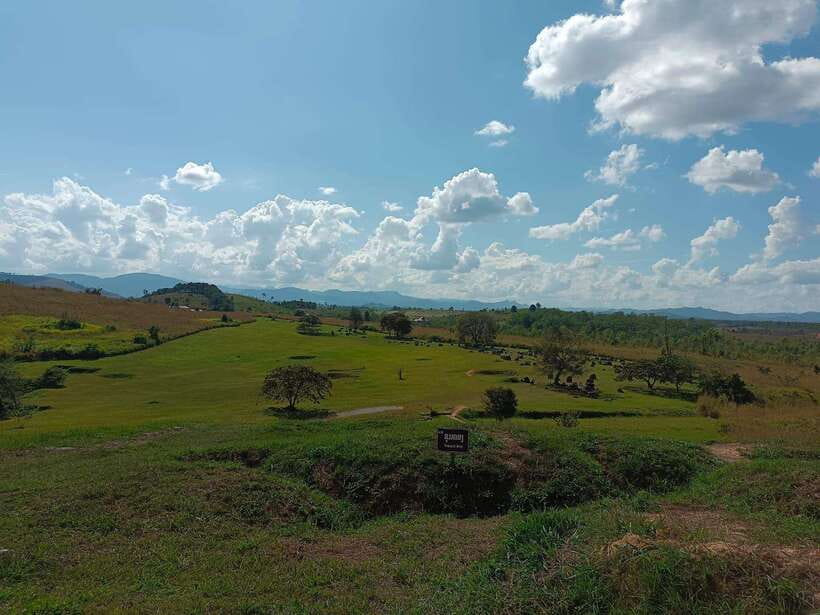
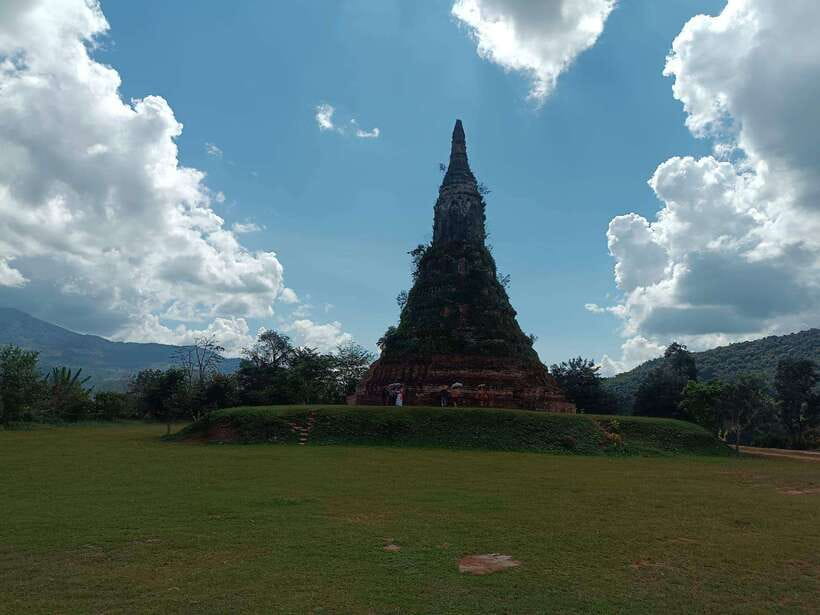
After lunch, the tour turns to Muang Khoun, the former capital of Xiangkhouang Province. The visit includes the ruins of Wat Phia Wat and the That Foun stupa, both of which remain connected to the damage and disruption of the Vietnam War.
The stop at 89HC+727 is listed as a guided visit of about 30 minutes. That timing suggests a concise look rather than a long historical walk. You will get another layer of context for the province, moving from prehistoric archaeology to a former political and religious center.
That Foun receives a separate guided visit of about 20 minutes. The short stop works well in a full-day program, but it also means you should keep your expectations realistic. This is not a full city tour of Muang Khoun. It is a focused introduction to key ruins and religious remains.
I like this part because it prevents the day from becoming a single-theme outing. The Plain of Jars is the main reason to book, but Muang Khoun helps place Xiangkhouang’s past in a longer timeline. Ancient jars, former capitals, Buddhist monuments, and wartime damage all appear within one provincial story.
Site 1 and the final stop at Wat Hai Heen
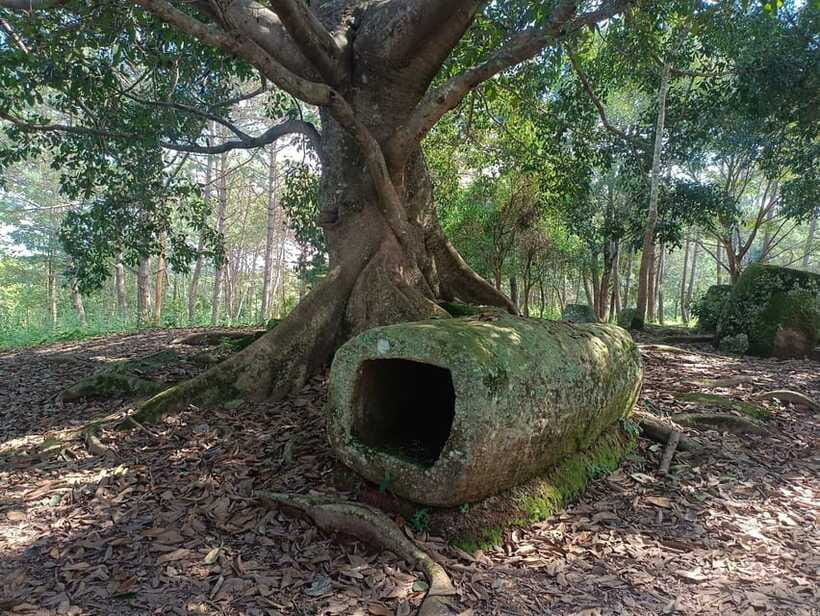
The final major archaeological stop is Plain of Jars Site 1, reached at about 3:50 PM. This is the largest site and contains 334 jars.
Site 1 is the grand finale for a good reason. After seeing smaller collections and different settings, you arrive at the place with the greatest concentration of jars. The scale makes it easier to understand why the Plain of Jars is considered Laos’s biggest archaeological site.
You have about an hour with the guide. That should give you time to walk through the site, compare the jars with those at Sites 2 and 3, and take photographs. If the archaeological sites are your main interest, this is the stop where you will want to use every available minute.
On the drive back to Phonsavan, the vehicle passes Wat Hai Heen, also called Thonghaiheen Xaiyalam Temple. The tour includes a short visit to the large Buddha statue before you return to the city at about 4:45 PM.
The temple is a passing stop rather than a full guided visit. That is useful for a final pause, but do not expect it to receive the same attention as Site 1.
What $110 includes and what it does not
At $110 per person, this is not the cheapest way to see the Plain of Jars. The price makes more sense when you count what is bundled into the day:
- Air-conditioned private vehicle
- English or Thai-speaking guide
- Pickup and return in Phonsavan
- Entrance fees
- Local lunch
- Taxes and other listed fees
You still pay separately for soft drinks and personal purchases, including handicrafts at Ban Naphia. There is no mention of accommodation, extra meals, or other personal costs being included.
For two people, the private transport and guide make the cost easier to justify. You get a full day without having to arrange separate rides to three archaeological sites and Muang Khoun. For a group of friends or a family, the private format can be especially practical.
The tour also offers free cancellation up to 24 hours in advance and lets you reserve now and pay later. Those terms are helpful if your plans in Laos may shift, but you should still check the available starting time before booking.
The best fit for this private tour
I would choose this tour if you want the main archaeological sites in one day and prefer a guide to explain what you are seeing. It suits people who want more than a quick visit to Site 1, since Sites 2 and 3 show different settings and make the province’s scale clearer.
It is also a good choice if you value private transport. Xiangkhouang’s sites are spread out, and an organized vehicle saves you from arranging each section independently.
The tour may be less suitable if you want a slow day with long unstructured stops. The schedule moves steadily from one place to the next, with about an hour at each main jar site and shorter periods at the ruins and stupa.
You should also think about the spoon village. The stop gives you a direct look at wartime metal recycling and local production, but it may not appeal if you want to keep the day strictly focused on archaeology.
Practical advice before you book
Wear footwear that works for walking through rice fields and outdoor archaeological sites. The route at Site 3 specifically includes a walk through fields, and the tour spends much of the day outside.
Bring money for drinks and personal purchases. Lunch and entrance fees are covered, but soft drinks and handicrafts are not.
Tell the tour provider your correct pickup address in Phonsavan. Pickup is included, but only when the address is supplied accurately.
Finally, keep your schedule flexible around the stated times. The tour begins at 8:30 AM and returns around 4:45 PM, so it is a full day rather than a short morning outing. The payoff is a much fuller look at Xiangkhouang.
Should you book the Plain of Jars private tour?
Book it if you want to see Sites 1, 2, and 3 in one well-organized day, with transport, lunch, entrance fees, and a guide handled for you. The private format and the mix of archaeology, village work, rice fields, ruins, and temples make the $110 price reasonable for couples, families, or small groups.
Skip it if you want a very slow pace or have no interest in the spoon village and Muang Khoun. For most people with one day in Phonsavan, though, this is a strong way to see the main sites without reducing the Plain of Jars to a single stop.
FAQ
Where does the Plain of Jars private tour start?
Pickup is in Phonsavan. You need to provide the correct address when booking so the included pickup can be arranged.
How long does the tour last?
The tour lasts one day. Pickup is scheduled for about 8:30 AM, and return to Phonsavan is expected around 4:45 PM.
Which Plain of Jars sites are included?
The tour visits Plain of Jars Site 3 at Ban Xieng Di, Site 2 at Ban Nakho, and Site 1, the largest site with 334 jars.
How many jars are at Site 2?
Site 2 has about 100 jars and is located near two hills in the Phou Salato mountain area.
Is lunch included?
Yes. Lunch at a local restaurant in Ban Nakho is included, with a local menu.
Are entrance fees included?
Yes. Entrance fees, taxes, the air-conditioned vehicle, and the listed tour fees are included.
What languages can the guide speak?
The live guide is available in English or Thai.
Can I cancel the booking?
You can cancel up to 24 hours in advance for a full refund. The tour also allows you to reserve now and pay later.
Fresh in Laos
- Vientiane Private Lao Cooking Class with Market Tour★ 4.0 · 3 reviews
- Vientiane: Lao Cultural Attire Rental Experience★ 5.0 · 3 reviews
- Vientiane IG tour & Patuxay monument★ 5.0 · 5 reviews
- Vientiane : Private Custom Tour with a Local Guide★ 5.0 · 6 reviews
- Vientiane: Half-Day City Tour – Morning or Afternoon★ 4.0 · 3 reviews
- Vang Vieng: Zipline&Water Cave&Tham Chang&Blue Lagoon 1★ 5.0 · 3 reviews
- Vientiane classic Food tour ( Included Food )★ 4.2 · 6 reviews
- Vangvieng a beauty and incredible things to do.★ 5.0 · 2 reviews
Plain of Jars Tours, compared.
3 Days The Plain of Jars and Xieng Khouan (Depart from Luang Prabang)
Read our review →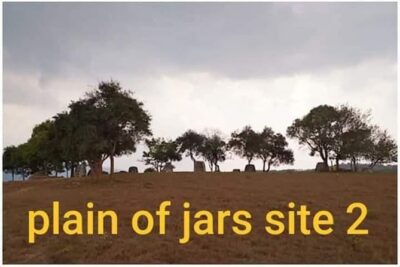
The Old capital tour combined with Plain off jars
Read our review →Browse the lists this tour appears in