
Reviewed · PLAIN OF JARS TOURS
Plain of jars share group tour
Ancient stone jars, local craft, open fields. This eight-hour group tour gives you a clear, efficient way to see Xiangkhouang Province’s main archaeological sights without arranging several separate rides. I especially like the chance to visit all three Plain of Jars sites, along with Ban Napia’s handmade-spoon workshop, in one day. The English or Thai-speaking guide, entrance fees, lunch, vehicle, and drinking water are included, which makes the $99 price easy to understand.
I also like the human scale of the day. You walk through rice fields to Site 3, stop for a simple noodle-soup lunch, and see a village workshop rather than spending the whole day beside a road. The main consideration is weather: heavy rain flooded the path to Site 3 on one trip, turning the walk into a muddy, barefoot crossing. Site 1 and Site 2 were much easier under those conditions, but good shoes and a flexible attitude will help.
In This Review
- Five useful things to know before booking
- Why this Plain of Jars day works well
- Ban Napia and the handmade spoon workshop
- Site 3: the quiet walk through rice fields
- A local noodle-soup lunch at Lak Khai
- Site 2 at Ban Nakho and the best view
- Site 1: the largest collection of jars
- What the guide and shared vehicle add
- Is $99 good value?
- Rain, clothing, and practical preparation
- Who should book this tour?
- Should you book it?
- FAQ
- How long does the Plain of Jars shared tour last?
- Where does the tour begin?
- Which Plain of Jars sites are included?
- Is Ban Napia included?
- Is lunch included?
- Are entrance fees included?
- What languages does the guide speak?
- Can I cancel the booking?
Five useful things to know before booking
- All three jar sites fit into one day: You visit Site 3, Site 2, and the largest Site 1 in a sensible order.
- Ban Napia adds a local stop: You can see a spoon-making workshop and browse for a handmade souvenir.
- Site 3 includes a rice-field walk: The route can be muddy after rain, so footwear matters.
- Lunch is simple and included: Expect noodle soup at a local restaurant in Lak Khai.
- The guide can shape the day: Teh has been praised for clear English, useful information, and a friendly manner. Eric is the local contact who helped confirm arrangements for a small booking.
Why this Plain of Jars day works well
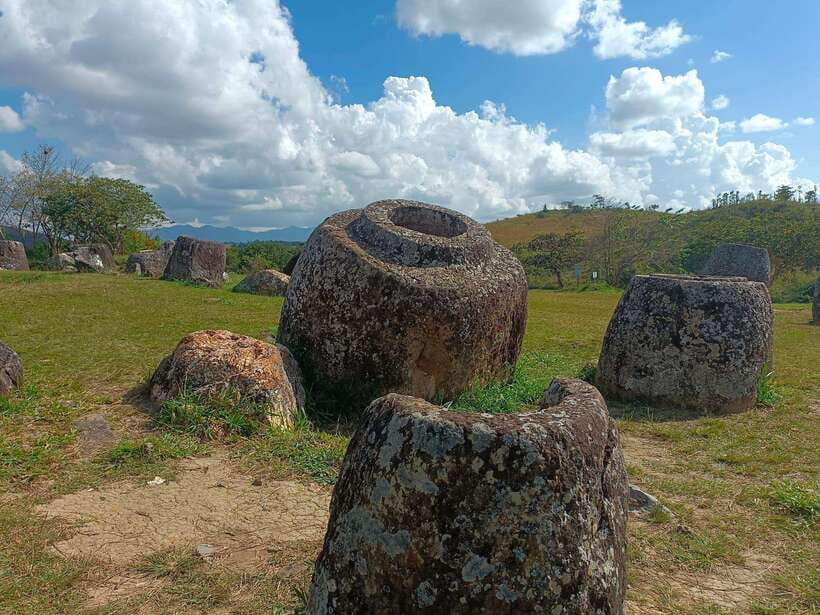
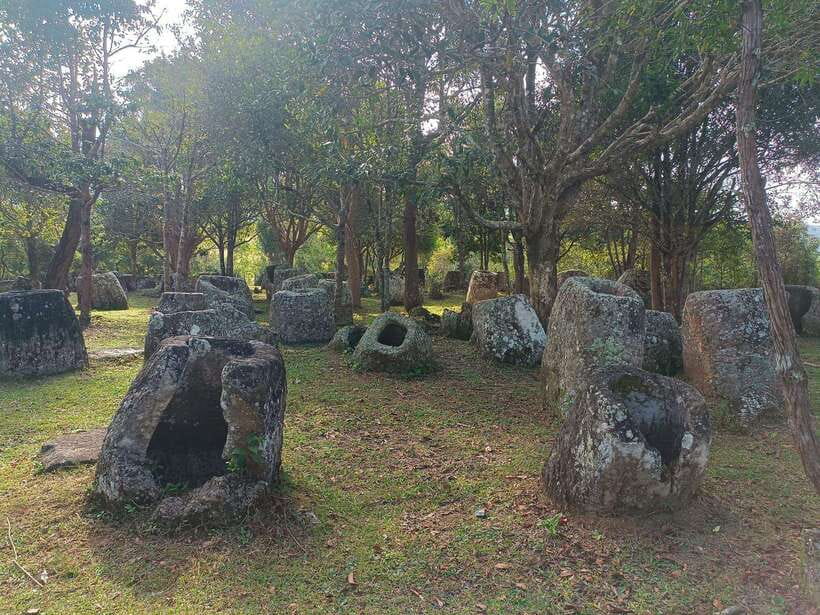
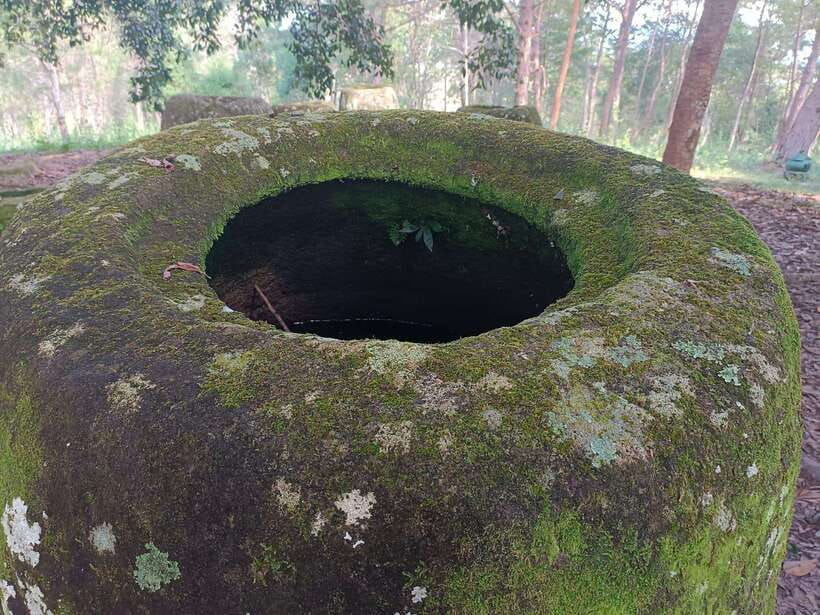
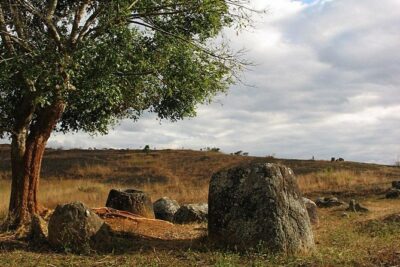
The Plain of Jars is not one single monument. It is a broad archaeological area spread across Xiangkhouang Province, with more than 1,000 stone jars scattered among several sites. The jars vary in size, and their purpose remains one of the central questions surrounding the area.
That spread makes independent sightseeing awkward if you do not have your own vehicle. A shared minivan solves the main problem. You can move between the sites, hear explanations along the way, and return to Phonsavan the same day without negotiating separate transport.
The tour also gives you a better sense of the region than a quick visit to Site 1 alone. Site 1 is the largest and most famous, but Sites 2 and 3 offer different settings. You get archaeological remains, views, farmland, and a village craft stop in one long but manageable outing.
The schedule begins with pickup at your Phonsavan hotel at about 8:30 in the morning. You should be in the lobby 15 minutes early. Because this is a shared tour, a late arrival can delay pickup for the rest of the group.
Other trips out to the Plain of Jars:
- Plain of jars tour with local guide
★ 4.5 · 8 reviews - 3 Days The Plain of Jars and Xieng Khouan (Depart from Luang Prabang)
★ 5.0 · 3 reviews - Plain of jars private tour
★ 5.0 · 3 reviews
Ban Napia and the handmade spoon workshop
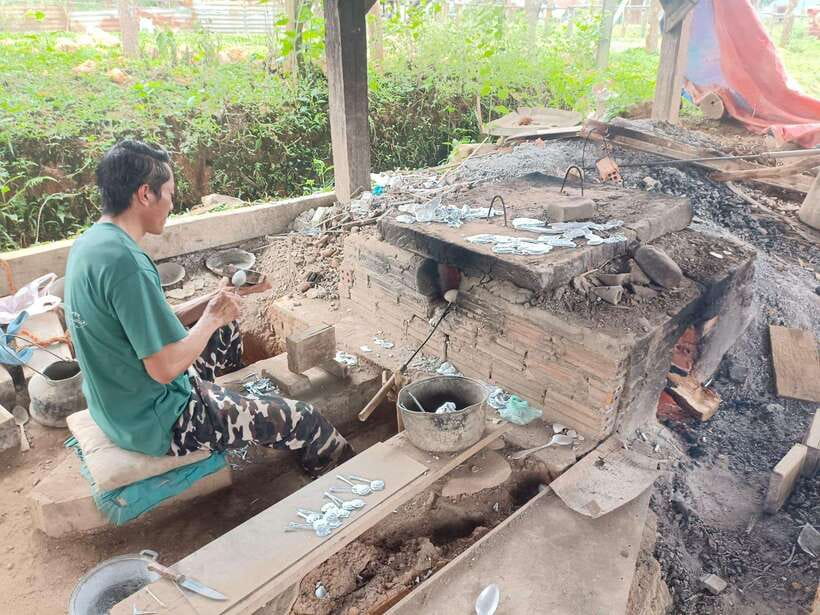
The first stop is Ban Napia, a village known for making spoons. The visit lasts about an hour and combines a guided introduction, time to look around, a photo stop, and an opportunity to shop.
This is a useful opening stop because it brings the day down to a local level. The Plain of Jars is the headline attraction, but a working village gives you a closer look at how people in the area turn practical skills into small-scale income. The workshop visit is not just a quick photograph beside a sign. You have time to see the work area and browse the items available.
Keep your expectations practical. The workshop may not be operating at full activity every day. On one Sunday visit, no smelting was taking place, though the workshop was still open to view. If you are hoping to watch every stage of spoon production, the timing of your visit may matter.
You should also budget for any souvenir here. Village purchases are not included in the tour price. That is not a serious drawback, but it helps to carry some spending money if you want to take home a spoon or another local item.
Site 3: the quiet walk through rice fields
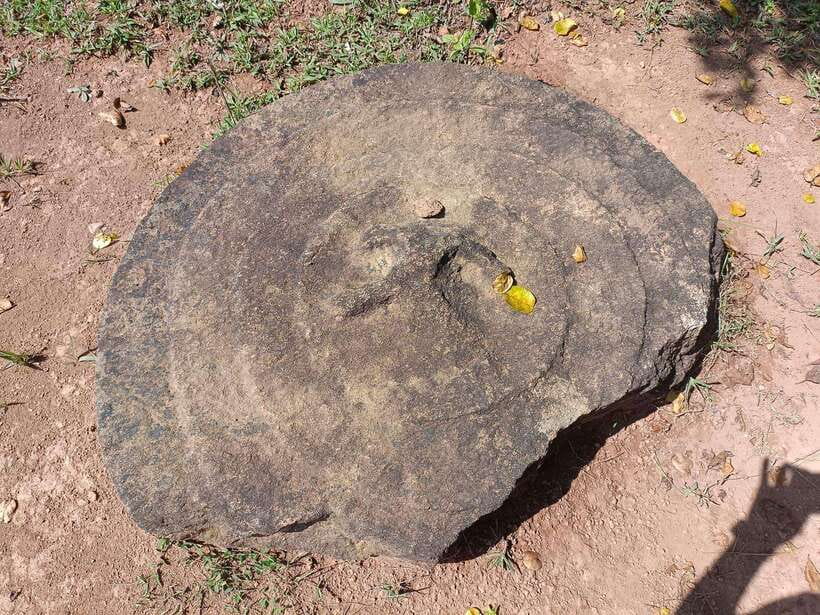
Around 11 in the morning, the minivan takes you to Plain of Jars Site 3 at Ban Xieng Di. The visit lasts about an hour and a half, including a guided walk and time to look around.
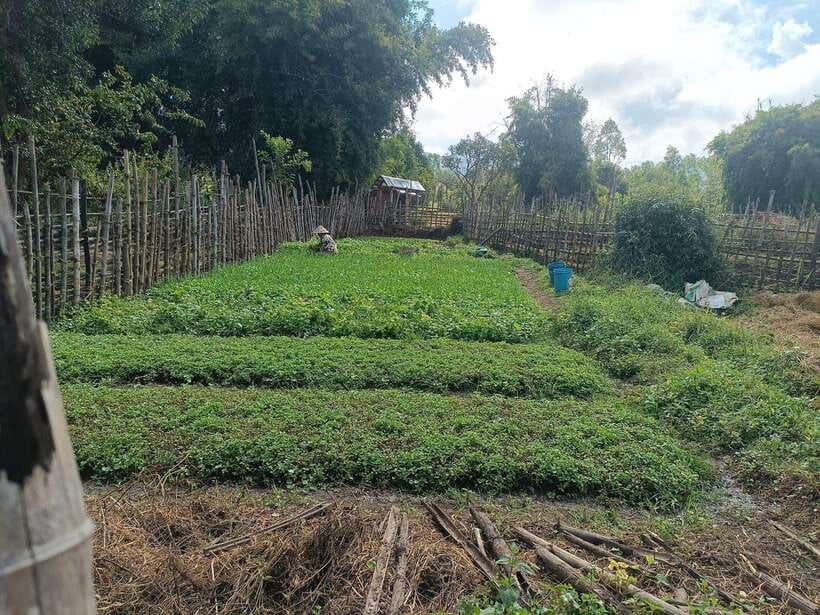
Site 3 is the most active walking stop in the schedule. You cross or follow rice-field paths to reach the jars, which gives the visit a more rural feel than simply parking near an attraction. The walk is part of the appeal. You see the jars in relation to farmland and open countryside rather than treating them as isolated objects in a museum display.
Rain can change this stop dramatically. One documented visit followed heavy overnight rain, which flooded the path. The walk became wet and muddy, and the visitor ended up crossing the paddy fields barefoot. That sounds uncomfortable, but it also shows why you should not treat the eight-hour schedule as a polished city excursion.
Wear shoes that can get dirty, and bring an extra pair if you have room. The supplied information does not promise a paved route or dry conditions. If the weather has been poor, ask the guide about the path before setting out. The group may need to move slowly, and the walking time can feel longer than the distance suggests.
The benefit of Site 3 is its setting and walking route. The drawback is the same thing: conditions underfoot are less predictable than at the other two sites.
A local noodle-soup lunch at Lak Khai
The schedule places lunch at about 12:30 at a local restaurant in Lak Khai. Noodle soup and drinking water are included.
This is a straightforward midday meal rather than a long restaurant experience. That suits the tour because you still have two important sites ahead. If you prefer a large lunch, have a snack before pickup or carry something small with you. Soft drinks such as Pepsi and beer cost extra.
A local restaurant stop also keeps the day moving. You are not losing an hour to a formal meal when the main reason for booking is the archaeological area. The tradeoff is choice: the included meal is specified as noodle soup, so you should not expect a broad menu included in the price.
Somewhere quieter, at a slower pace:
- Luang Prabang: Cruise to Pak Ou Caves & Kuang Si Waterfalls
★ 5.0 · 1,769 reviews - Luang Prabang: Cruise to Pak Ou Caves & Kuang Si Waterfalls
★ 4.8 · 1,360 reviews - Vang Vieng: Kayaking & Cave Tubing with Zip Line/Blue Lagoon
★ 4.5 · 410 reviews - Half Day Mekong Cruise to Pak Ou Caves (Morning / Afternoon)
★ 4.6 · 290 reviews
Site 2 at Ban Nakho and the best view
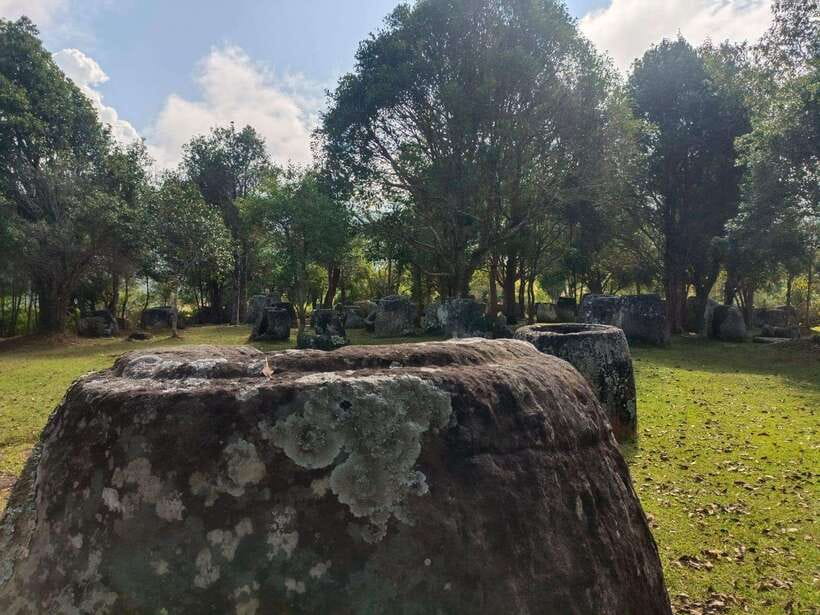
The next visit is Plain of Jars Site 2 at Ban Nakho, scheduled for about 1:45 in the afternoon. You spend roughly an hour here with the guide.
Site 2 is often the scenic favorite of the three stops. The supplied tour information specifically recommends it for the view, and that distinction matters. Site 1 has the greatest number of jars, while Site 2 gives you a chance to pause and take in the wider surroundings.
This is a good point in the day for photographs. The visit is shorter and less walk-heavy than Site 3, so you may appreciate the change of pace after lunch. Your guide can also help explain how the jars are distributed and how Site 2 differs from the larger main site.
Do not expect Site 2 to replace Site 1. It is the recommended viewpoint, not the largest collection. Its value comes from the combination of archaeology and setting.
Site 1: the largest collection of jars
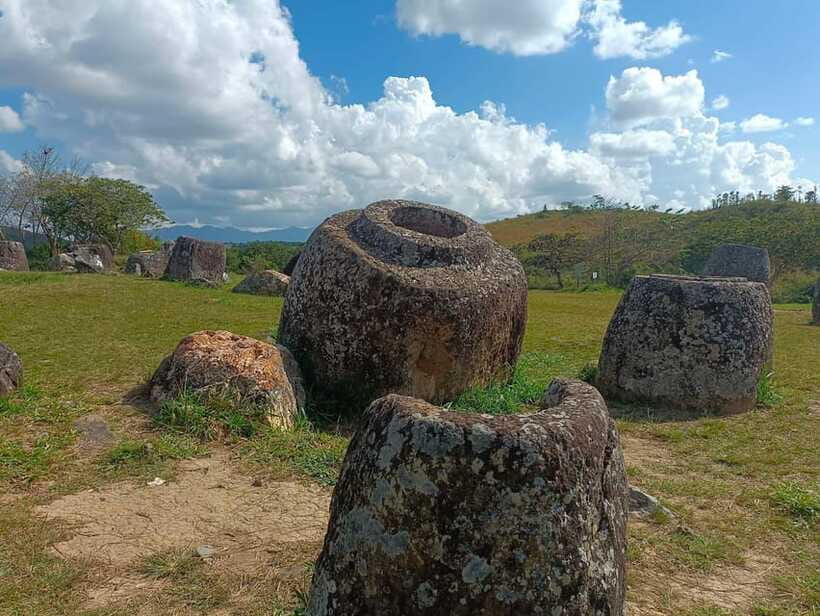
The final major stop is Plain of Jars Site 1, reached at about 3:50 in the afternoon. This is the largest site, with 334 jars, and the tour allows about an hour for a guided visit before the return to Phonsavan.
Site 1 is the natural climax of the day. After seeing the smaller sites, you have a useful comparison point. Here, the number of jars makes the scale of the Plain of Jars easier to grasp. You are not simply seeing one famous object. You are seeing the biggest concentration included in this route.
The site is also a practical final stop because the schedule does not rush you straight back after lunch. You have already seen the village and two archaeological locations, so Site 1 becomes a chance to bring the day’s questions together.
The main limitation is time. One hour is enough for a guided introduction and sightseeing, but not for a slow, extended exploration. If you like to linger over every jar or take many photographs, the shared schedule may feel brisk. The upside is that you get a full overview in one day, which is difficult to manage without private transport.
What the guide and shared vehicle add
Transport is by air-conditioned vehicle, with options described as minivans ranging from three to 15 seats. The actual group size is not specified, so you should think of this as a shared road trip rather than a guaranteed small-group outing.
That distinction affects the experience. You may need to wait while the vehicle collects other people, and the pickup note asks everyone to arrive early so one late person does not hold up the group. In return, you avoid paying for a private car and driver.
The guide speaks English or Thai. Teh has been singled out for clear English, useful explanations, and a friendly, relaxed manner. That combination matters at a site where the jars can otherwise seem mysterious but disconnected. A good guide helps you notice differences between the sites and understand why the visit is more than a collection of large stones.
Eric is the local contact associated with the arrangements. For one small booking during the rainy low season, he helped confirm that the tour would run at the advertised price even with only two people. That is a useful sign for anyone planning around limited flights or a short stay in Phonsavan, though you should still confirm the current operating details when booking.
The guide may also adjust the day when time allows. One trip included an additional visit to a large Buddha after the scheduled stops. Treat that as a possible extra, not a guaranteed part of the route.
Is $99 good value?
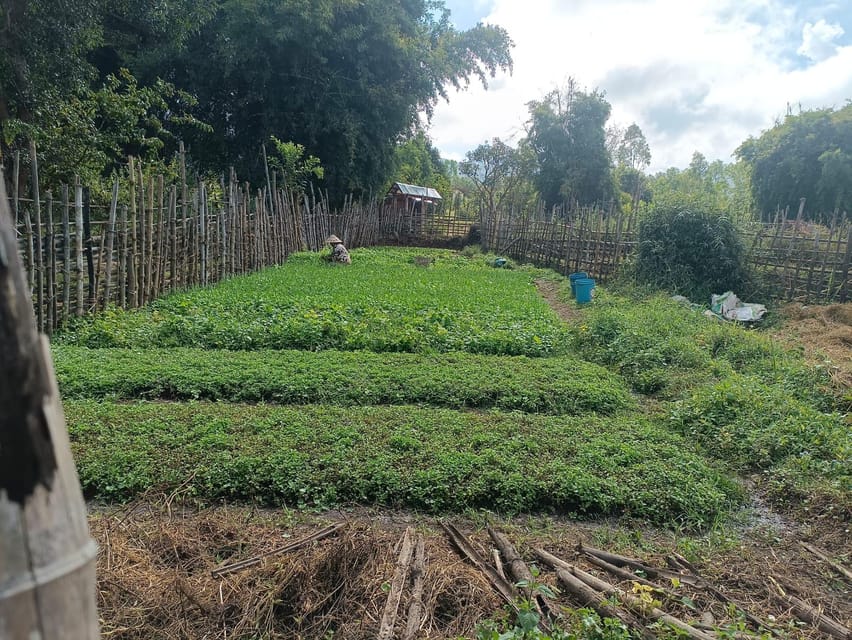
At $99 per person, this is not the cheapest way to see one jar site. It is a reasonable package for a full day because the price covers the air-conditioned vehicle, driver, English or Thai-speaking guide, entrance fees at all three sites, noodle-soup lunch, and drinking water.
The value is strongest if you are staying in Phonsavan without a private vehicle. You are paying for the links between the scattered sites as much as for admission. The route covers the village and three archaeological sites, then returns you to town, all within about eight hours.
A private trip could offer more control over stops and timing, but the shared format lowers the cost. It is particularly useful when you want a full day out but do not want to arrange a driver yourself.
The price does not cover soft drinks, beer, souvenirs, or a tip. Those costs are easy to manage, but they should be part of your day budget.
Rain, clothing, and practical preparation
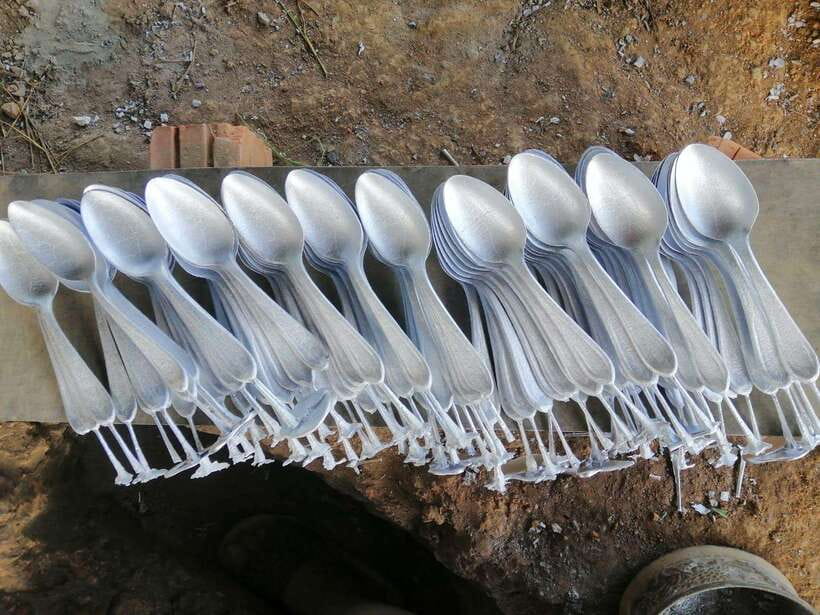
The most important preparation is footwear. Site 3 involves a walk through rice-field surroundings, and rain can flood the path. Choose shoes with a firm sole that you can clean, and consider carrying spare socks.
You should also bring drinking water beyond the included supply if you prefer to drink often, along with sun protection and a light layer. The tour runs from morning into late afternoon, and conditions can change between the open jar sites and the minivan.
Do not plan an important evening connection too tightly. The stated duration is eight hours, but shared pickups, road conditions, traffic, and wet paths can affect the return time. The tour is designed as a full-day outing, not a quick morning excursion.
The cancellation policy allows a full refund when you cancel at least 24 hours in advance. You can also reserve and pay later, which is useful when your Phonsavan plans depend on transport or weather.
Who should book this tour?
I would choose this tour if you want the broadest Plain of Jars introduction in one day. It suits people who value context, do not have their own vehicle, and are happy to share transport to keep the cost at $99.
It is also a good fit if you want more than archaeological sites. Ban Napia adds a local craft stop, Site 3 provides a rural walk, Site 2 offers the best view, and Site 1 supplies the largest group of jars.
I would hesitate if you need a highly controlled schedule, dislike muddy paths, or want a long time at each site. The day covers a lot of ground, and the shared format means you follow the group’s rhythm.
Should you book it?
Book this tour if you want an efficient, well-rounded day from Phonsavan and accept a little weather-related uncertainty. The combination of three jar sites, a spoon-making village, lunch, entrance fees, and guided transport gives the price solid value.
Before booking, check the forecast, prepare for a wet walk at Site 3, and arrive at your hotel lobby early. If the tour is led by Teh, you can expect a guide who combines clear English with a friendly approach. For most people with one free day in Xiangkhouang Province, this is a practical way to see the Plain of Jars without making the day feel like a string of disconnected stops.
FAQ
How long does the Plain of Jars shared tour last?
The tour lasts eight hours, including pickup in Phonsavan, visits to Ban Napia and all three jar sites, lunch, and return to the city.
Where does the tour begin?
Pickup is provided from your hotel in Phonsavan. You should be in the hotel lobby 15 minutes before departure.
Which Plain of Jars sites are included?
The tour visits Site 3 at Ban Xieng Di, Site 2 at Ban Nakho, and Site 1, the largest site with 334 jars.
Is Ban Napia included?
Yes. The tour includes about one hour at Ban Napia, where you can visit the spoon-making workshop, take photos, join a guided visit, and shop.
Is lunch included?
Yes. Lunch is included and is specified as noodle soup at a local restaurant in Lak Khai. Drinking water is also included.
Are entrance fees included?
Yes. Entrance fees for all three Plain of Jars sites are included in the tour price.
What languages does the guide speak?
The live guide is available in English or Thai.
Can I cancel the booking?
You can cancel up to 24 hours in advance for a full refund. The tour also offers a reserve-now-and-pay-later option.
Fresh in Laos
- Vientiane IG tour & Patuxay monument★ 5.0 · 5 reviews
- Vientiane Private Lao Cooking Class with Market Tour★ 4.0 · 3 reviews
- Vientiane: Lao Cultural Attire Rental Experience★ 5.0 · 3 reviews
- Vientiane : Private Custom Tour with a Local Guide★ 5.0 · 6 reviews
- Vientiane: Half-Day City Tour – Morning or Afternoon★ 4.0 · 3 reviews
- Vang Vieng: Zipline&Water Cave&Tham Chang&Blue Lagoon 1★ 5.0 · 3 reviews
- Vientiane classic Food tour ( Included Food )★ 4.2 · 6 reviews
- Vangvieng a beauty and incredible things to do.★ 5.0 · 2 reviews
Plain of Jars Tours, compared.
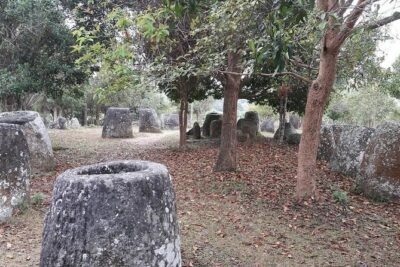
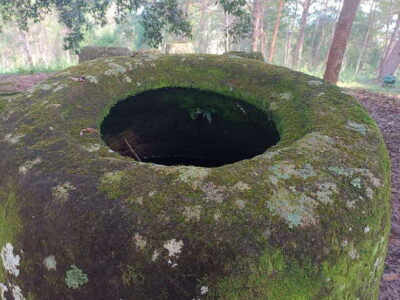
3 Days The Plain of Jars and Xieng Khouan (Depart from Luang Prabang)
Read our review →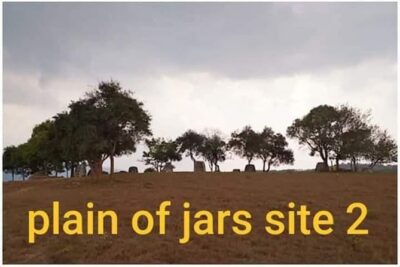
The Old capital tour combined with Plain off jars
Read our review →Browse the lists this tour appears in