
Reviewed · FOOD & DRINK
Luang Prabang Local Market and Morning Food Tour with Drinks
Wake up hungry in Luang Prabang. This two-hour food tour swaps a hotel buffet for steaming rice dishes, fresh herbs, sweets, and a guided walk through Phosi Market, the town’s largest market. The experience gives you more than a list of things to eat: your guide explains how the dishes connect to Lao culture and Southeast Asian cooking. I especially like the small group limit of 10 people and the chance to meet market traders with a local guide. I also like that a tuk tuk pickup makes the early start easier.
The main consideration is timing. The tour begins at 7:00 am, and the food is local breakfast food, not a Western-style morning spread. Some dishes may be spicy, and anyone with a narrow diet should ask questions before tasting. At $39 per person, the price is not simply for the meal. You are paying for transport, several food stops, market access, and interpretation that would be difficult to arrange on your own.
In This Review
- Five things to know before booking
- Why a Lao breakfast is worth leaving the hotel for
- The 7:00 am tuk tuk pickup
- Luang Prabang gives the food a proper setting
- Phosi Market: the real heart of the morning
- Four dishes that explain Lao morning cooking
- What the guide adds beyond the plate
- Is $39 a fair price?
- Who will enjoy this morning most?
- Should you book this Luang Prabang food tour?
- FAQ
- What time does the tour start?
- How long does the experience last?
- Where does the tour take place?
- Is transportation provided?
- What food is included?
- What is the cancellation policy?
Five things to know before booking
- The morning begins at 7:00 am: You visit breakfast spots when local food stalls are active, not after the market has quieted down.
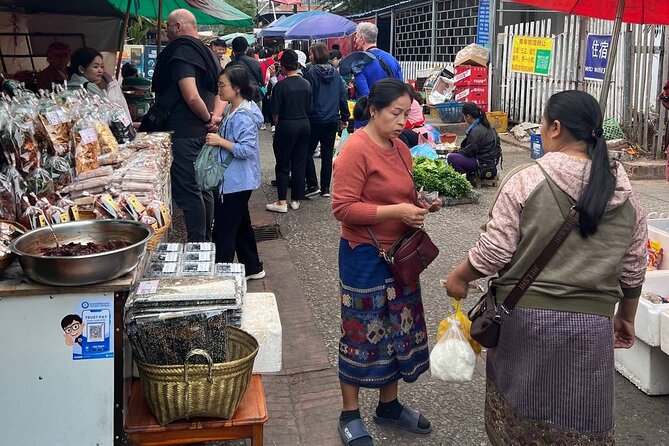
- Phosi Market is the main setting: This large indoor and outdoor market sells food, clothing, household goods, furniture, live animals, and vegetables.
- Four Lao foods are highlighted: Expect Naem Khao, Khao Poun, Pun Mang, and Kao Sung Ka Ya.
- A tuk tuk handles pickup: The ride adds a distinctly local touch and saves you from sorting out early morning transport.
- The group can include up to 10 people: That is small enough for questions, photos, and a more personal guide experience.
- You get food and context together: Guides such as Anou and Khamla are praised for explaining both Lao cuisine and the country’s history.
Why a Lao breakfast is worth leaving the hotel for
Many visitors first meet Lao food at lunch or dinner. This tour makes breakfast the entry point, which is useful because morning dishes show a more everyday side of local cooking. You are not just sampling restaurant specialties. You are seeing what people in Luang Prabang eat at the start of the day.
The food list also gives you a good range of textures and flavors. There is rice, noodles, pork, egg, fresh herbs, peanuts, eggplant, lettuce, coconut, sweet sauces, and sour sauces. That mix helps you understand why Lao cooking does not fit neatly into one flavor category. A dish can be savory, sharp, sweet, fresh, and spicy in the same meal.
I like that the guide explains the background of each dish. Without that help, you might see a rice cake or noodle bowl and simply decide if you like it. With the explanation, you get a better sense of where the food sits in Lao daily life and how local ingredients are combined.
The early hour matters, too. A 7:00 am start is not designed for a slow hotel morning. It is designed to catch breakfast activity while the market is supplying the town. If you are an early riser, this is a strong use of your first morning in Luang Prabang. If you need a late start on holiday, you may find the schedule demanding.
A few more Luang Prabang trips worth reading about
- Luang Prabang Evening Food Tour by Tuk-Tuk
★ 4.5 · 68 reviews - Luang Prabang: Mekong Meals Food Tour with 15+ Tastings
★ 4.9 · 58 reviews - Mekong Meals Food Tour with 15+ Tastings
★ 5.0 · 37 reviews
The 7:00 am tuk tuk pickup
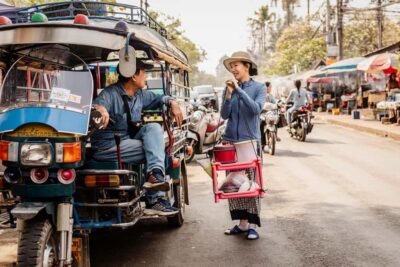
The tour begins with pickup by local tuk tuk. The information provided does not specify a single pickup point, so you should check the exact arrangements when booking. The transport is useful at this hour, especially if you are staying away from the immediate market area or are not yet comfortable finding your way around Luang Prabang.
A tuk tuk also sets the tone. You are not being sealed inside a tour bus and carried from one polished venue to another. The ride is part of the local experience, although it may feel basic compared with private car transport. That tradeoff makes sense for a short food outing focused on ordinary town life.
The maximum group size is 10 people. That is worth noting because food tours work best when you can hear the guide and see what is being discussed. A larger group could make a market visit awkward. Here, the group is still large enough to share the cost but small enough for questions and conversation.
Your guide is central to the experience. Anou is praised for explaining Lao culture as well as food, while Khamla receives particular credit for making the market walk friendly and engaging. The names are useful to know if you are hoping for a guide who does more than point at dishes and move on.
Luang Prabang gives the food a proper setting
The first part of the experience is tied to Luang Prabang itself. The town sits where the Nam Khan and Mekong rivers meet and served as Laos’s royal capital until 1975. It has been inhabited for thousands of years, and its Buddhist temples include Wat Xieng Thong and Wat Mai.
You do not receive an admission-heavy sightseeing program here. The Luang Prabang stop is listed as free admission and lasts about an hour within the overall schedule. Its value is the setting and the historical explanation, not a long visit inside a single monument.
That context helps explain why food and culture are linked so closely in this town. Luang Prabang is known for temples, royal history, and traditional daily life. A morning market tour lets you see a less formal side of the same place. Instead of viewing the town only through grand buildings, you watch people buy ingredients, prepare food, and sell goods for ordinary use.
You should keep your expectations clear. This is not a full temple tour, and the experience does not promise entry to Wat Xieng Thong or Wat Mai. The historic town is part of the backdrop and discussion. If you want detailed architectural sightseeing, book a separate walking tour.
Phosi Market: the real heart of the morning
Phosi Market is Luang Prabang’s biggest market and supplies the town with daily necessities. It includes indoor and outdoor areas, so the visit is not limited to one neat hall of food stalls.
You can expect to see cooked meals, fresh vegetables, clothing, cookware, furniture, bedding, and other household goods. Live animals are also part of the market’s range. That variety is important. You are not entering a market designed only for visitors and souvenirs. You are seeing a place that serves local needs.
The guide introduces you to market traders and helps you understand the food displays. Bring a camera if you like photographing ingredients and colorful arrangements, but ask before photographing people closely. The market is a place of work, not just a backdrop for holiday pictures.
The market can also feel more intense than a quiet cafe. There are many kinds of goods in one place, and the atmosphere may be unfamiliar if you are used to clean, organized supermarket aisles. I see that as part of the value, but you should be ready for a direct look at local commerce.
The walking portion ends with a chance to select sweets and desserts. This is a good finish because it slows the pace after the savory food stops and gives you a final look at the market through its small treats. The description does not state that every item is included in the tour price, so ask your guide before buying extra food.
Somewhere quieter, at a slower pace:
- Luang Prabang: Cruise to Pak Ou Caves & Kuang Si Waterfalls
★ 5.0 · 1,769 reviews - Luang Prabang: Cruise to Pak Ou Caves & Kuang Si Waterfalls
★ 4.8 · 1,360 reviews - Half Day Mekong Cruise to Pak Ou Caves (Morning / Afternoon)
★ 4.6 · 290 reviews - Luang Prabang: UNESCO World Heritage City Highlights Tour
★ 4.6 · 201 reviews
Four dishes that explain Lao morning cooking
The food is the reason to book, but the explanations are what make the tasting useful. Here is what each named dish brings to the table.
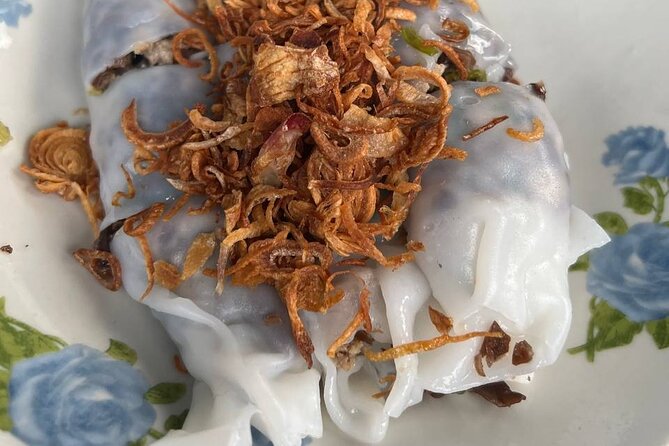
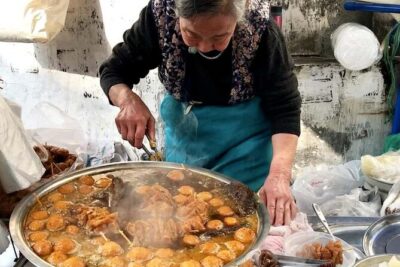
Naem Khao is described as a special steamed rice cake with egg, served with sour sauce and something sweet. That combination gives you a clear example of contrast in Lao food. The rice cake and egg provide a soft, filling base, while the sauces add sharper and sweeter notes.
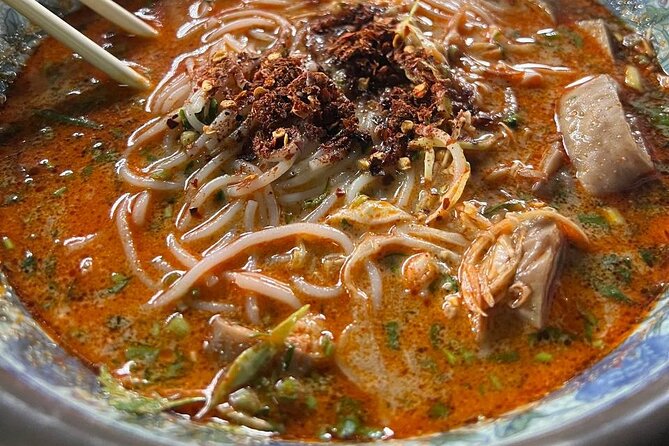
Khao Poun is an authentic rice noodle dish with pork and fresh herbs. The herbs matter here. They bring a fresh element to a dish that could otherwise be heavy, and they show how Lao meals often balance meat and starch with raw or lightly handled greens.
Pun Mang combines pork, lemongrass, peanuts, and eggplant, rolled in fresh lettuce. This is the most obviously hands-on item of the group. You get meat, aromatic lemongrass, nutty peanuts, soft eggplant, and crisp lettuce in one bite. If you enjoy trying several textures at once, this should be one of the more memorable samples.
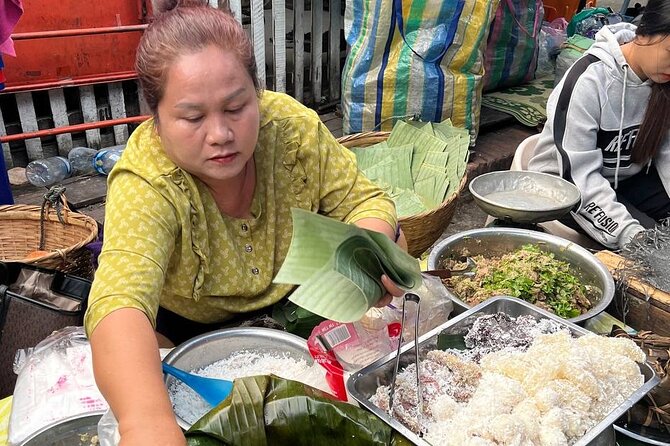
Kao Sung Ka Ya is a steamed sticky rice dessert with shaved coconut. It gives the tour a gentle ending and brings coconut into the meal. Sticky rice appears in both savory and sweet food traditions across the region, so this dessert helps connect the morning dishes rather than treating dessert as an unrelated extra.
The exact serving sizes are not stated, so do not assume you are receiving a large restaurant breakfast at every stop. Think of the tour as a guided tasting with enough food to replace or supplement your morning meal, depending on your appetite.
What the guide adds beyond the plate
The strongest reason to choose this outing is the food history. You can visit a market alone, point at unfamiliar dishes, and buy something at random. You cannot easily recreate the explanations about ingredients, preparation, and cultural meaning without help.
That difference came through especially clearly in the feedback about Anou and Khamla. Anou is praised for connecting cuisine with Lao culture and national history. Khamla is praised for combining a delicious breakfast with an informative market walk and a warm manner with local sellers.
I would ask questions as you go. Ask which dishes are spicy, what the sour sauce contains, and how the rice cakes are prepared. Since the experience is capped at 10 people, you should have a reasonable chance to speak with the guide rather than simply follow along.
Spice deserves a practical warning. One person specifically enjoyed the food while noting that Lao cuisine can be spicy. That does not mean every dish is hot, but it does mean you should tell the guide about your comfort level. The listed foods include sauces, herbs, lemongrass, and other strong flavors, so this is not an ideal choice if you want bland food.
Is $39 a fair price?
At $39 per person, this is not the cheapest way to eat breakfast in Luang Prabang. Local dishes can cost far less when purchased on your own. One piece of feedback refers to an Asian dish costing less than 50,000 kip, about €2.48 at the exchange rate cited there. That comparison shows the gap between buying one inexpensive dish and booking a guided experience.
The tour’s value comes from the bundle. You receive local tuk tuk pickup, a two-hour itinerary, several food tastings, a guided walk through Phosi Market, introductions to traders, and explanations of Lao history and cuisine. If you would otherwise spend the morning wandering without knowing what to order, the fee can be reasonable.
You are paying for access to understanding, not luxury. The transport is a tuk tuk, the setting is a working market, and the food is everyday local fare. That is good news if authenticity matters more to you than polished service.
I would book it if you want a structured first taste of Luang Prabang and are willing to eat what local people eat. I would skip it if your main goal is a long, sit-down breakfast or if you already have strong knowledge of Lao food and plan to explore markets independently.
Who will enjoy this morning most?
This tour suits you if you like food with a story. It is also a good choice for a first visit, since the guide can help you understand the town while introducing basic Lao dishes.
It should appeal to photographers, too. Phosi Market has food displays, fresh goods, household objects, and traders at work. The guide can help you approach the scene respectfully and explain what you are seeing.
Couples, families, and small groups should find the maximum of 10 manageable. Most people can participate, according to the tour information, but the food itself is the main thing to consider. If you have dietary restrictions, ask before booking because the named dishes include pork, egg, peanuts, herbs, and sauces.
The tour is less suitable for anyone who dislikes early starts, market settings, or unfamiliar food. It also may not satisfy you if you want an extensive history lecture or a full-day food crawl. Two hours gives you a focused introduction, not an exhaustive survey of Luang Prabang cuisine.
Free cancellation is available if you cancel at least 24 hours before the 7:00 am start. Within 24 hours, the amount paid is not refunded, and late changes are not accepted.
Should you book this Luang Prabang food tour?
Book this experience if you want to replace a standard hotel breakfast with local dishes, a working market, and useful cultural background. The best parts are the food variety, the Phosi Market setting, and guides such as Anou and Khamla who explain what you are eating instead of treating each dish as a quick sample.
I would make it one of your first activities in Luang Prabang, provided you can manage the early start. It gives you a practical introduction to Lao flavors and leaves you better prepared to order food on your own for the rest of your stay.
Skip it if you prefer to sleep late, avoid pork or spicy food, or want a formal restaurant meal. For curious eaters who value context, the $39 fee is fair because the guide and market access are the real product, with breakfast as the delicious bonus.
FAQ
What time does the tour start?
The tour starts at 7:00 am.
How long does the experience last?
The tour lasts approximately two hours.
Where does the tour take place?
The experience takes place in Luang Prabang, including Phosi Market, the town’s largest market.
Is transportation provided?
Yes. Local tuk tuk pickup is offered.
What food is included?
The named foods are Naem Khao, Khao Poun, Pun Mang, and Kao Sung Ka Ya. The tour also includes a walk through the market to select sweets and desserts.
What is the cancellation policy?
You can receive a full refund if you cancel at least 24 hours before the experience start time. Cancellations or changes made within 24 hours are not accepted and are not refunded.
More Markets in Luang Prabang
- Private Tour Full-day Morning Market, Villages and Scenic Kuang Si Waterfall
★ 4.5 · 22 reviews - Traditional Market Tour and Private Laotian Cooking Class with a Local
★ 5.0 · 13 reviews - Luang Prabang Early Morning Alms Giving and Wet Market
★ 4.5 · 5 reviews - Vientiane Private Lao Cooking Class with Market Tour
★ 4.0 · 3 reviews
Fresh in Luang Prabang
- 6-Day Private Laos Tour to Vientiane, Pak Ou Cave, Luang Prabang★ 5.0 · 5 reviews
- The Namkhan – Traditional Lao Bamboo Weaving★ 5.0 · 4 reviews
- The Namkhan – Yoga Class (8 am or 4 pm)★ 4.0 · 5 reviews
- Unwind with a Sunset Cruise on the Mekong River★ 5.0 · 4 reviews
- Night Bus to Huay Xai, Chiang Rai, Thailand – Hotel pickup★ 3.0 · 2 reviews
- Sunset Cruise in Luang Prabang with Live Performance★ 4.5 · 3 reviews
- Private Tour: Half-Day City Tour of Luang Prabang★ 4.5 · 4 reviews
- Private Luang Prabang City Tour★ 5.0 · 3 reviews
Food & Drink, compared.

Luang Prabang Plates Food Tour with 15+ Tastings
Read our review →
Luang Prabang Street Food Culture, Paper Handicraft Village Tour
Read our review →Browse the lists this tour appears in