
Reviewed · FOOD & DRINK
Luang Prabang Street Food Culture, Paper Handicraft Village Tour
Taste Luang Prabang slowly. This half-day food and craft tour pairs the morning market with local dishes, coffee by the Mekong, and a paper handicraft stop. I like the small-group limit of 15 and the choice between easy cycling and walking. The price is $46.90 per person, which is fair if you value food samples, a guide, bike equipment, and cultural visits in one outing.
I also like the relaxed pace and the chance to try dishes you might not order alone, including Neam Khao and Khao Piak Khao. The main consideration is that some food and drinks are not covered at the final petanque stop, and the non-refundable booking policy gives you little flexibility if plans change.
In This Review
- Key things to know before you book
- Why this four-hour outing works in Luang Prabang
- The morning market: start with ingredients, not explanations
- Lao coffee and Khanom beside the Mekong
- Neam Khao and Khao Piak Khao at a local restaurant
- Paper making and the hands-on craft stop
- Bike or walking tour: choosing the better option
- What the $46.90 price really covers
- Who will enjoy this food and craft morning
- Practical details that affect your decision
- Should you book the Luang Prabang food and paper tour?
- FAQ
- How long does the Luang Prabang food and craft tour last?
- Where does the tour start and finish?
- Can I take the tour on foot instead of by bicycle?
- Are bicycles and safety equipment included?
- What food is included?
- Are drinks included?
- What is the maximum group size?
- Can children join the tour?
Key things to know before you book
- The morning market sets the tone: You will see meats, herbs, spices, fruits, and vegetables brought in from the countryside around Luang Prabang.
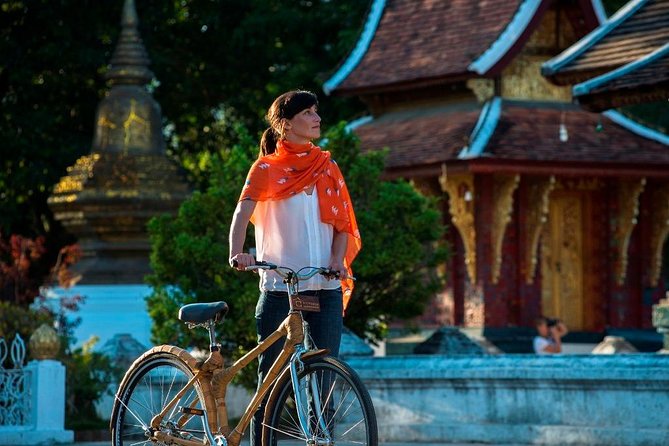
- You can choose your pace: The experience is offered as a walking tour or with quality bikes and safety equipment.
- The food is more than a tasting plate: You sample local delicacies, Lao coffee, a pastry, Neam Khao, and Khao Piak Khao.
- Crafts are part of the cultural picture: A paper workshop is included, and the experience may also include a visit to a silk weaving workshop.
- Guide Ken has earned warm praise: His relaxed, friendly manner helped make the food and craft visits feel easy and personal.
- The group stays fairly small: A maximum of 15 people keeps the outing more manageable than a large bus tour.
Why this four-hour outing works in Luang Prabang
Luang Prabang is easy to explore on foot, but food can be harder to understand without help. A market stall may display an unfamiliar herb, a sticky rice preparation, or a dish whose name tells you very little about what is inside. This tour gives you a local guide who can explain how ingredients fit into Lao cooking before you taste them.
That combination matters. You are not simply moving from one attraction to another. You are learning why the food looks the way it does, then trying it in a more comfortable setting. The route also adds coffee, crafts, and a little exercise, so the four-hour format feels varied rather than built around one long meal.
The experience begins at the meeting point and bike shop on the main street, opposite the fountain. From there, your guide takes you to the nearby morning market. The meeting point is also the ending point, which makes the arrangement simple if you are staying in central Luang Prabang.
The biking option is described as easy, and the walking version covers a short route. Most people should be able to participate, though you should still consider your comfort with a bicycle, warm weather, and several food stops in one morning.
A few more Luang Prabang trips worth reading about
- Luang Prabang Evening Food Tour by Tuk-Tuk
★ 4.5 · 68 reviews - Luang Prabang: Mekong Meals Food Tour with 15+ Tastings
★ 4.9 · 58 reviews - Mekong Meals Food Tour with 15+ Tastings
★ 5.0 · 37 reviews
The morning market: start with ingredients, not explanations
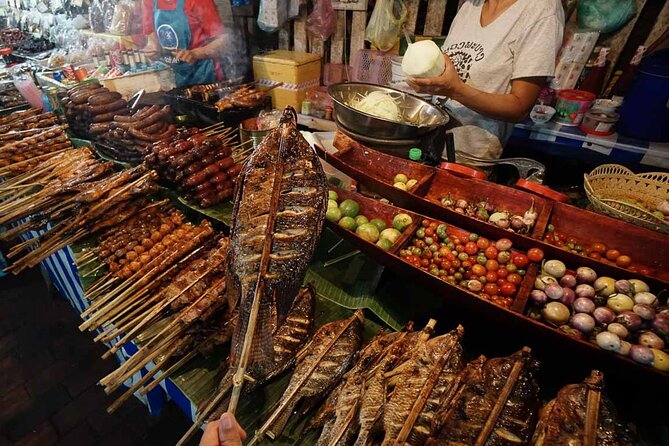
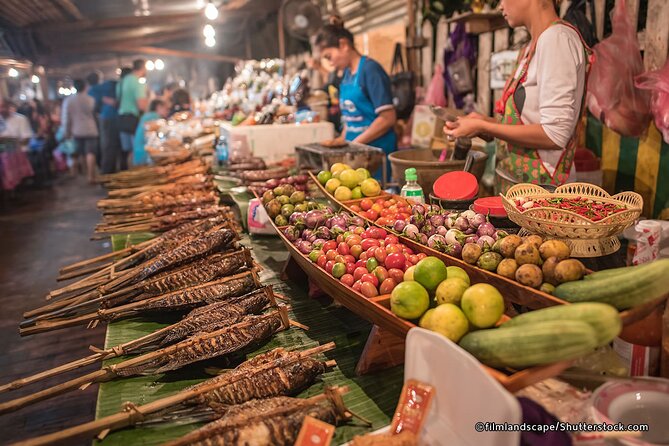
The market is the strongest opening because it gives you a practical look at everyday food in Luang Prabang. People from the countryside bring in meats, fruit, vegetables, herbs, and spices. You get to see the ingredients before they reach a restaurant table.
I like this kind of introduction because it makes the later meal easier to understand. Your guide can point out items that may be unfamiliar and explain how they are used in Lao kitchens. That turns a quick market walk into a short lesson in local cooking, without making it feel like a formal class.
You will also sample a few local delicacies here. The exact selection can vary, so you should not book expecting a fixed menu. That is part of the appeal, but it also means cautious eaters may want to ask the guide what each item contains before tasting.
The market stop lasts about an hour. That is enough time to look closely without using up the whole outing. I would come with an open mind and a light breakfast, since the food begins early and continues throughout the tour.
The market may be the best part for you if you enjoy seeing how a place eats at home rather than only visiting polished restaurants. It also gives you useful context for the dishes served later.
Lao coffee and Khanom beside the Mekong
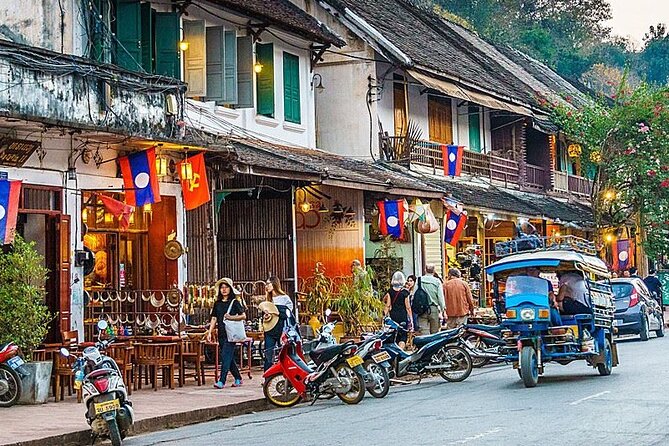
After the market, the group walks to a well-known Lao coffee shop near the Mekong River. You sit down with coffee and a local pastry called Khanom.
This is a welcome pause. Food tours can become tiring when every stop requires standing, walking, or tasting something new. Sitting with a drink gives you time to talk with your guide, look toward the river, and let the market experience settle in.
The coffee shop also adds a different side of local food culture. The morning market shows ingredients and household cooking. The café stop shows the social side of a simple drink and pastry. It is a small detail, but it helps the tour feel like a morning in Luang Prabang rather than a checklist of samples.
Coffee and Khanom are included, while additional drinks elsewhere are not. If you want something beyond the planned coffee and water, bring extra money. Bottled water and drinking water are provided, which is useful during a warm cycling or walking outing.
Neam Khao and Khao Piak Khao at a local restaurant
The main meal takes place at a local restaurant during the walking option, with about two hours devoted to food and nearby stops. You try several dishes, including Neam Khao and Khao Piak Khao.
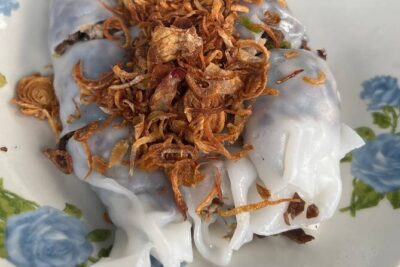
Neam Khao is described as a rice noodle crepe filled with minced meat, mushrooms, and assorted herbs. It is cut into small pieces and served with a dipping sauce made with minced nuts, lemon, chili, coriander, and sweet fish sauce. That combination gives you several flavors and textures in one bite.
Khao Piak Khao is a rice soup commonly eaten in the morning. It is slowly cooked with pork and meat broth, then finished with crushed black pepper and chopped coriander. Depending on your taste, you can add an egg and fresh chili.
I appreciate that these dishes represent different kinds of Lao comfort food. Neam Khao gives you a more layered, snack-like tasting experience. Khao Piak Khao is simpler and softer, the sort of dish that explains why soup can be part of a morning meal.
Your guide can also discuss recipes and food customs as you eat. That is where the tour becomes more useful than simply ordering a dish from a menu. You learn what you are eating and how it fits into local habits.
The amount of food should be enough to make this a substantial morning meal, but the tour description does not promise a set number of dishes or a fixed menu. If you have allergies or strong food restrictions, ask before booking or tell the provider in advance. The supplied information does not confirm how dietary requests are handled.
Somewhere quieter, at a slower pace:
- Luang Prabang: Cruise to Pak Ou Caves & Kuang Si Waterfalls
★ 5.0 · 1,769 reviews - Luang Prabang: Cruise to Pak Ou Caves & Kuang Si Waterfalls
★ 4.8 · 1,360 reviews - Half Day Mekong Cruise to Pak Ou Caves (Morning / Afternoon)
★ 4.6 · 290 reviews - Luang Prabang: UNESCO World Heritage City Highlights Tour
★ 4.6 · 201 reviews
Paper making and the hands-on craft stop
The paper handicraft visit gives the tour a needed change of rhythm. After the market and restaurant, you get to see a local craft workshop and, according to the experience details, make your own paper creation.
That hands-on element is more useful than simply browsing finished goods. You get a better sense of the work involved and leave with a personal connection to the craft. One guest specifically praised the chance to make a masterpiece, which suggests this is not just a quick photo stop.
The paper workshop also fits Luang Prabang well because handmade paper is part of the town’s craft identity. The visit gives you something different from food, and it may appeal to families as much as to adults who enjoy traditional handiwork.
A separate silk weaving workshop may also be included. The available details do not state exactly how long that stop lasts or guarantee it on every departure, so treat it as a possible addition rather than the central promise of the tour.
If you want a long, technical craft demonstration, this may feel brief. If you want a friendly introduction with a chance to make something, it should fit the half-day format nicely.
Bike or walking tour: choosing the better option
The tour can be done by bicycle or on foot. Bikes, safety equipment, and drinking water are included with the cycling option. The route is described as easy, and the outing is designed to take only half a day.
Cycling lets you cover more ground with less effort between stops. It also suits you if you enjoy seeing a town at street level and want a little movement between tastings. The bike shop meeting point makes collection of the equipment straightforward.
Walking is likely the simpler choice if you prefer not to cycle around town or want to focus fully on food and conversation. It may also work better if your group includes people with different cycling abilities.
One useful tip comes from a group that requested a tuk-tuk because it made getting around easier. That option is not listed as a standard inclusion, so you should not assume it is automatically available or covered in the price. Still, it is worth asking the provider if cycling is not right for your group.
The maximum group size is 15. That is not a private tour, but it is small enough for the guide to answer questions and keep the group together. The experience is also mobile-ticket friendly, which reduces the need for printed paperwork.
What the $46.90 price really covers
At $46.90 per person, this is not the cheapest way to eat in Luang Prabang. You could spend much less by choosing market snacks and a local restaurant on your own. The value comes from combining food, interpretation, transportation by bike, water, and craft visits in one organized morning.
Your fee includes an English-speaking guide, quality bikes and safety equipment, drinking water, bottled water, snacks, and the planned food stops. The experience also brings you to places you might not choose without local direction.
The cost makes more sense if you want a gentle introduction to Lao food and do not want to research dishes, locate workshops, or work out a route yourself. It is less compelling if you are already comfortable navigating Luang Prabang’s markets and prefer to choose every dish independently.
The last petanque stop is the important exception. Meals and drinks there are not included, and any additional drinks during the experience are also your responsibility. Budget a little extra so the final stop does not come as a surprise.
Group discounts may be available, which could improve the price for families or larger parties. A child rate applies only when the child shares with two paying adults, and children must be accompanied by an adult.
Who will enjoy this food and craft morning
I would recommend this experience to first-time visitors who want a friendly introduction to Luang Prabang’s food culture. It gives you a market, a restaurant meal, coffee, a river setting, and crafts without taking a full day away from the rest of your plans.
It also suits people who like to try unfamiliar food but want a guide nearby. Neam Khao and Khao Piak Khao are more rewarding when someone can explain the ingredients and usual way of eating them.
Families may appreciate the short duration and the chance to make paper at the workshop. The cycling choice is useful for active families, while the walking option keeps the outing less demanding. Children still need adult supervision, and the child price has specific conditions.
This is not the best match for someone seeking a private, highly customized food tour. The group can reach 15 people, and the menu is not presented as a fixed tasting list. It may also disappoint you if your main goal is an extended craft class or a full day of cycling.
The experience is rated five out of five, with a 100 percent recommendation rate from the available feedback. That is a very small sample, so I would treat it as encouraging rather than absolute proof. The praise focuses on the friendly guide, tasty Lao food, market visit, and craft experience, which are also the tour’s clearest strengths.
Practical details that affect your decision
Confirmation is normally sent at booking. If you book within five days of the travel date, confirmation can take up to 48 hours and depends on availability. Plan ahead if your schedule is tight.
The activity begins and ends at the meeting point in Luang Prabang. The exact starting address is given as Luang Prabang in the tour details, with the bike shop located on the main street opposite the fountain. Confirm the precise meeting instructions before setting out.
The tour is non-refundable and cannot be changed for any reason. That is the biggest booking risk. Only reserve once you are confident about your date, since cancellation or amendment does not result in a refund.
The outing lasts about four hours. I would schedule it early in your stay, especially if you want guidance on Lao food for later meals. You can use what you learn at the market and restaurant to make better choices during the rest of your time in town.
Should you book the Luang Prabang food and paper tour?
Book it if you want a relaxed half-day that combines eating, local explanation, easy movement, and hands-on crafts. The strongest reasons are the morning market, the chance to try Neam Khao and Khao Piak Khao, and the friendly style associated with guide Ken.
Ask about the walking, biking, and possible tuk-tuk arrangements before you pay. Also remember that the final petanque food and drinks cost extra, and the booking cannot be refunded or changed.
For a first visit to Luang Prabang, I think the mix offers good value. It will not replace a full food-focused day or a serious craft workshop, but it gives you a useful, pleasant introduction without demanding too much time.
FAQ
How long does the Luang Prabang food and craft tour last?
The experience lasts approximately four hours.
Where does the tour start and finish?
It starts at the meeting point in Luang Prabang, at the bike shop on the main street opposite the fountain. It ends back at the meeting point.
Can I take the tour on foot instead of by bicycle?
Yes. A walking tour option is available, and the route is described as short and easy.
Are bicycles and safety equipment included?
Yes. The cycling option includes quality bikes and safety equipment.
What food is included?
Included food and snacks feature local delicacies, Lao coffee with Khanom pastry, Neam Khao, and Khao Piak Khao. The exact selection may vary.
Are drinks included?
Drinking water and bottled water are included. Additional drinks are not included, and food and drinks at the final petanque stop are also excluded.
What is the maximum group size?
The tour has a maximum of 15 participants.
Can children join the tour?
Yes. Children must be accompanied by an adult, and the child rate applies only when sharing with two paying adults.
Fresh in Luang Prabang
- 6-Day Private Laos Tour to Vientiane, Pak Ou Cave, Luang Prabang★ 5.0 · 5 reviews
- The Namkhan – Traditional Lao Bamboo Weaving★ 5.0 · 4 reviews
- The Namkhan – Yoga Class (8 am or 4 pm)★ 4.0 · 5 reviews
- Unwind with a Sunset Cruise on the Mekong River★ 5.0 · 4 reviews
- Night Bus to Huay Xai, Chiang Rai, Thailand – Hotel pickup★ 3.0 · 2 reviews
- Sunset Cruise in Luang Prabang with Live Performance★ 4.5 · 3 reviews
- Private Tour: Half-Day City Tour of Luang Prabang★ 4.5 · 4 reviews
- Private Luang Prabang City Tour★ 5.0 · 3 reviews
Food & Drink, compared.

Luang Prabang Plates Food Tour with 15+ Tastings
Read our review →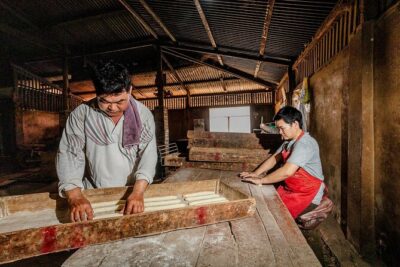
Luang Prabang Local Market and Morning Food Tour with Drinks
Read our review →Browse the lists this tour appears in