
Reviewed · COOKING CLASSES
Evening Bamboo weaving & Cooking classes join-in
Bamboo tells Laos’s story. This four-hour evening outing combines hands-on weaving with a Lao cooking class at The Bamboo Experience, a rustic pavilion beside rice fields. I like that you make something small to take home, then sit down to eat food you helped prepare. I also like the cultural touches, including a blessing, traditional singing, and local music.
The main consideration is timing. You start at 4:00 pm and spend much of the evening outside or in a simple open pavilion, so rain can affect the program. Alcohol is not included, and the cooking session is a group activity rather than a private lesson.
In This Review
- Key things to know before you go
- Why bamboo matters in Lao daily life
- The 4:00 pm pickup and drive outside town
- Weaving bamboo into a small souvenir
- Preparing sticky rice and bamboo shoot dishes
- Eating the meal you helped prepare
- Cultural moments after the cooking
- The rice-field setting at dusk
- Who will enjoy this $25 evening?
- Practical details that affect your decision
- Should you book The Bamboo Experience?
- FAQ
- What time does the experience start?
- How long does the experience last?
- Where does the experience take place?
- Is hotel pickup included?
- Is dinner included?
- Are alcoholic drinks included?
- What will I make during the weaving activity?
- Is bamboo used in the cooking class?
- How many people can join the activity?
- Can I cancel for a full refund?
Key things to know before you go
- You weave a bamboo souvenir: Learn a centuries-old technique and make a small mat or coaster from bamboo strips.
- The cooking class uses bamboo: Bamboo shoots are a key ingredient, alongside a sticky-rice preparation.
- The setting is rural and relaxed: The pavilion sits beside rice fields outside the center of Luang Prabang.
- The evening includes more than cooking: A blessing, singing, and a traditional pipe performance may form part of the program.
- Hotel pickup and drop-off are included: Transport is by private vehicle arranged through the provider, with a tuk-tuk used for some pickups.
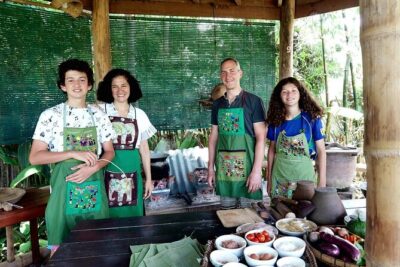
- The group is limited to 12 people: That keeps the activity social without making it feel like a large class.
Why bamboo matters in Lao daily life
Bamboo is not a decorative extra here. It is a practical plant used in rural Lao homes for household goods, tools, food preparation, and woven objects. The opening talk gives you a useful way to see the countryside around Luang Prabang, where bamboo is part of ordinary life rather than a museum display.
I appreciate this context because the weaving would otherwise feel like a simple craft project. Instead, you learn why the plant matters before handling it yourself. The lesson connects the material to rural homes and explains how bamboo can be shaped into many useful items.
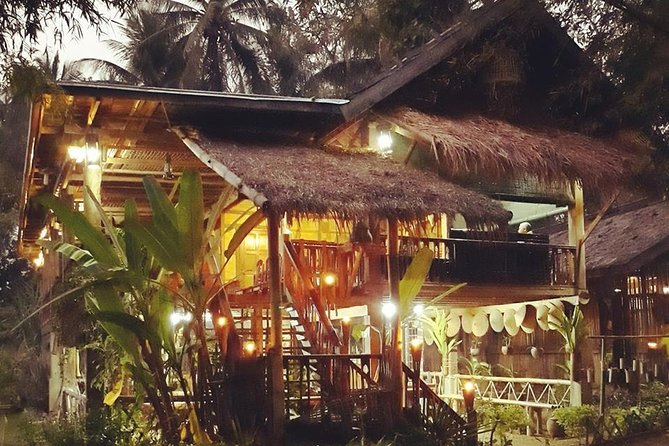
The setting helps. The Bamboo Experience is a rustic pavilion modeled on a traditional Lao house, placed near rice fields. You are not sitting in a polished hotel kitchen. The simple surroundings make the activity feel tied to the local setting, even though the program is designed for visitors.
That simplicity also comes with a small tradeoff. This is not a luxury dining venue or a formal culinary school. You should expect a relaxed, practical session where the focus is on participation, culture, and shared food.
Other Lao kitchens taking bookings:
- Luang Prabang: Evening Cooking Class & Local Baci Ceremony
★ 4.9 · 151 reviews - Luang Prabang: Bamboo Weaving Workshop & Cooking Class
★ 5.0 · 96 reviews - Luang Prabang: Cooking Class at the Former Royal Palace
★ 4.9 · 51 reviews
The 4:00 pm pickup and drive outside town
The experience begins with pickup at your hotel lobby at about 4:00 pm. Private transportation is included, and the ride takes you to the venue outside the central streets of Luang Prabang. One pickup described in the experience took about 10 minutes by tuk-tuk, though the exact journey depends on your hotel.
This arrangement is useful if you are unfamiliar with the area or would rather not arrange a ride yourself. You are also returned to your hotel after the evening, which removes the need to find transport in the dark.
The pickup is one reason the $25 price feels fair. You are paying for transport, instruction, materials, cooking, and dinner, not just a short demonstration. Group discounts may also be available, which could make this a sensible choice for families or friends traveling together.
You should be ready in the hotel lobby before the stated start time. Since this is a shared activity with a maximum of 12 people, a late arrival could affect the group. The program lasts approximately four hours, so plan for an evening commitment rather than a quick stop between other plans.
Weaving bamboo into a small souvenir
The weaving session is calm and tactile. You work with narrow strips of bamboo and follow a pattern used for generations. The stated project is a small souvenir mat, while the craft may also take the form of a coaster depending on the session.
You do not need to arrive with craft experience. The activity is designed to be guided and hands-on, and the small size of the project keeps it manageable. The point is not to produce a perfect artisan piece. The value comes from learning how simple strips are joined and how much patience goes into everyday woven goods.
I like this part because it slows the evening down. Cooking classes can become a rush from chopping to eating. Weaving gives you time to watch the material, ask questions, and notice how a useful object begins with a plant that grows widely in Laos.
There is also a practical limit. If you have poor hand strength or find detailed manual work frustrating, the weaving may test your patience. The activity is accessible to most participants, but it is still a hands-on craft, not a performance where you simply watch.
Keep your small woven item as a reminder of the evening. It will likely be more meaningful than a standard shop purchase because you made it yourself, even if the edges are not perfectly straight.
Preparing sticky rice and bamboo shoot dishes
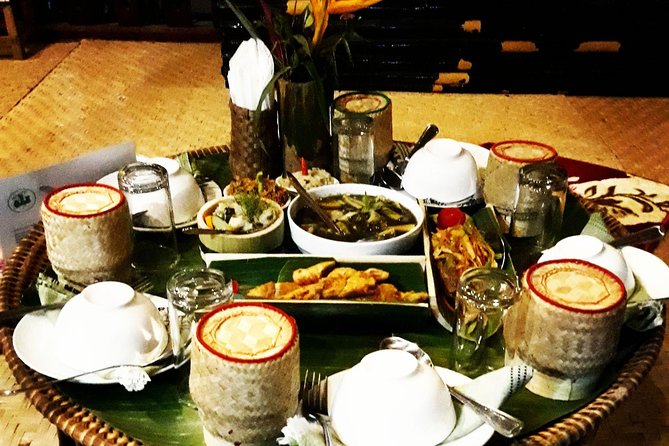
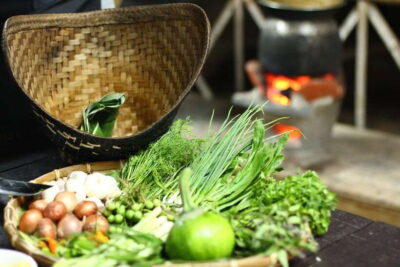
After the craft session, the focus shifts to food. The cooking class uses bamboo as a key ingredient, with bamboo shoots forming an important part of the meal. You also help prepare sticky rice, including a step involving the separation of the rice from its husks.
That detail gives the class a welcome connection to Lao food traditions. Sticky rice is not treated as a side dish that simply appears on the table. You take part in preparing it, which helps explain the work behind a familiar staple.
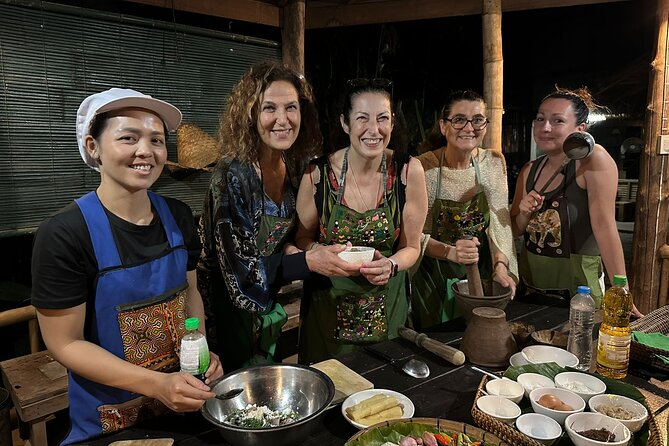
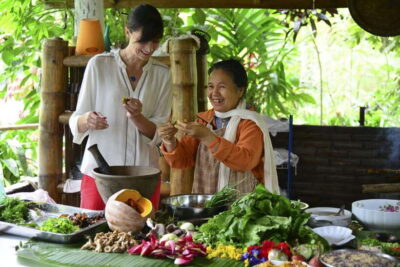
The class is described as interactive and well explained. You should expect to handle ingredients and help with the preparation rather than sit through a cooking demonstration. This is a good fit if you enjoy learning by doing and do not mind sharing tasks with other people.
The bamboo focus gives the meal a clear purpose. Instead of trying to cover every Lao dish in one evening, the class builds around one important ingredient and shows how it moves from plant to plate. That makes the program easier to follow and more memorable.
I would not book this expecting a detailed chef-training course. The information provided does not promise a full recipe book, advanced knife instruction, or a choice of menus. The strength is the cultural setting and the chance to help prepare a traditional-style meal.
Other weaving and craft sessions:
- Day-time Bamboo weaving & Cooking Classes join-in
★ 5.0 · 38 reviews - Luang Prabang: Hmong Batik Art Workshop
★ 5.0 · 27 reviews - Tribal Cooking Class in Luang Prabang Forest and visit
★ 5.0 · 15 reviews - Traditional Market Tour and Private Laotian Cooking Class with a Local
★ 5.0 · 13 reviews
Eating the meal you helped prepare
Dinner is included, and you eat the food made during the class. That shared meal is the natural payoff after weaving, preparing sticky rice, and cooking with bamboo shoots.
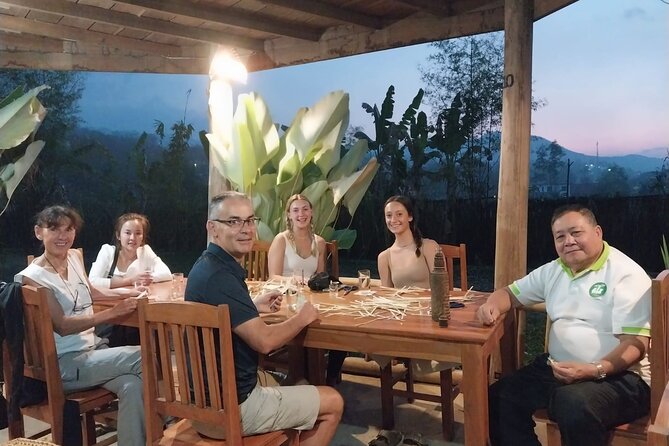
Food tends to taste better when you have done some of the work yourself, but the real benefit is social. With a group of up to 12, the meal gives you time to talk with the people in the class and with the local hosts. The atmosphere is likely to be more communal than restaurant formal.
The meal is also a practical value point. At $25, the package includes a full evening activity and dinner, rather than charging separately for a lesson and a meal. Alcohol is not included, so budget separately if you want drinks. No alcoholic beverage is promised as part of the program.
Food allergies and dietary needs are not explained in the available details. If you have restrictions, ask before booking or contact the provider in advance. Do not assume that a bamboo-based menu can automatically accommodate every diet.
Cultural moments after the cooking
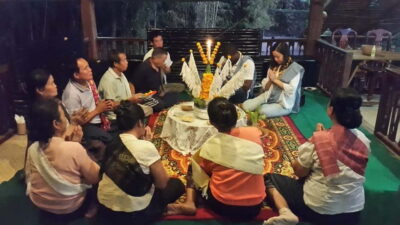
The evening can include more than weaving and food. A shaman blessing and singing have been part of the program, adding a ceremonial element before or around the meal. These moments give the event a stronger connection to Lao customs than a standard cooking class.
The word shaman can mean different things in different contexts, so you should treat the blessing as a cultural presentation and personal experience, not as a tourist photo prop. Watch respectfully and follow the lead of the local hosts.
Music may continue after dinner. A local pipe player has performed for the group, with an opportunity to listen and, in some cases, try playing the instrument. This is a charming ending because it adds sound and human exchange to an evening already built around making things by hand.
The exact order and presence of every element may vary. The core program is bamboo weaving, cooking, and dinner, while the blessing, singing, and pipe music appear as additional cultural parts of the evening. If a particular performance is important to you, confirm what is scheduled when you book.
The rice-field setting at dusk
The pavilion’s position beside rice fields gives the evening a pleasant change of pace from Luang Prabang’s central streets. You can use the terrace for photographs and take in a semi-rural view while the light fades.
This is not a grand sightseeing viewpoint. The appeal is quieter: a simple pavilion, open air, fields, and the feeling of being just outside town. You may find the setting especially welcome after a day spent visiting temples or walking through the old quarter.
Weather matters. The activity requires good weather, and poor conditions can lead to a different date or a full refund. Bring light protection from the sun and be prepared for an outdoor setting, although the available information does not specify exactly which portions take place under cover.
The evening schedule works well in Luang Prabang. Starting at 4:00 pm leaves the hottest part of the day behind and gives you a gradual shift from craft work to dinner and music. The four-hour length also means you are likely to return to your hotel around the later evening, though the exact end time can vary.
Who will enjoy this $25 evening?
I would choose this for anyone who wants more than a cooking demonstration. You get a craft, a meal, cultural explanation, and local entertainment in one outing. It suits couples, families, solo visitors who like meeting people, and small groups looking for a shared evening.
It is particularly good for visitors interested in daily life and traditional materials. If you want to understand why bamboo appears so often in Lao homes, the program gives you a direct answer through touch, food, and conversation.
Families may appreciate the variety. Children can switch between weaving, preparing food, eating, and watching music rather than sitting through a long lecture. However, the detailed craft work and cooking require attention, so very young children may need help.
This is less suitable if you want a private, polished culinary lesson or a fast itinerary. The group format means you share the instructor’s attention and kitchen tasks. The program also has a cultural and social focus, so you should come ready to participate rather than simply take photographs.
Practical details that affect your decision
The maximum group size is 12 people. That is small enough for a more personal feel, while still large enough to create a sociable dinner table. The experience is listed near public transportation, but with pickup and return included, you may not need to arrange public transport yourself.
Mobile tickets are accepted, and confirmation is provided when you book. Tipping and alcoholic drinks are not included. The price is $25, which is strong value if you take part in most of the evening and eat the included dinner.
Free cancellation is available up to 24 hours before the 4:00 pm start time. Canceling within 24 hours or making changes during that period does not qualify for a refund. Since weather can affect the program, a cancellation caused by poor conditions should result in another date or a full refund.
Most people can participate, but anyone who needs special assistance should check before booking. The available details do not provide a full accessibility description. The hands-on weaving and cooking also mean you should be comfortable taking part in simple manual activities.
Should you book The Bamboo Experience?
Book it if you want a warm, practical introduction to Lao culture that fits into one evening. The best parts are the bamboo lesson, the small woven souvenir, the sticky-rice preparation, and the meal you help make. The blessing, singing, and pipe music add character without requiring a full day away from Luang Prabang.
At $25, the combination of hotel transport, instruction, materials, dinner, and cultural activities makes good sense. Just keep your expectations realistic: this is a shared, rustic experience, not a private gourmet class. If you like making things, eating local food, and spending time in a semi-rural setting, I would put it near the top of your Luang Prabang evening plans.
FAQ
What time does the experience start?
The stated start time is 4:00 pm.
How long does the experience last?
It lasts approximately four hours.
Where does the experience take place?
It takes place at The Bamboo Experience, a rustic pavilion modeled on a traditional Lao house beside rice fields near Luang Prabang.
Is hotel pickup included?
Yes. A representative meets you in your hotel lobby, and transportation to and from the venue is included.
Is dinner included?
Yes. Dinner made during the cooking class is included in the price.
Are alcoholic drinks included?
No. Alcoholic beverages are not included.
What will I make during the weaving activity?
You will weave a small souvenir mat from strips of bamboo. The item may also be described as a small coaster.
Is bamboo used in the cooking class?
Yes. Bamboo is used as a key ingredient, with bamboo shoots forming part of the cooking program.
How many people can join the activity?
The maximum group size is 12 people.
Can I cancel for a full refund?
Yes, if you cancel at least 24 hours before the experience start time. Cancellations made less than 24 hours in advance are not refunded. If poor weather causes the provider to cancel, you will be offered another date or a full refund.
More Evening Experiences in Luang Prabang
- Luang Prabang: Afternoon Kuang Si Waterfalls & Sunset Cruise
★ 4.6 · 158 reviews - Luang Prabang Evening Food Tour by Tuk-Tuk
★ 4.5 · 68 reviews - Luang Prabang: Mekong Sunset Cruise & Lao Tasting Dinner
★ 4.3 · 27 reviews - From Chiang Rai : 2 Day 1 Night Slow Boat to Luang Prabang
★ 4.0 · 26 reviews
Fresh in Luang Prabang
- 6-Day Private Laos Tour to Vientiane, Pak Ou Cave, Luang Prabang★ 5.0 · 5 reviews
- The Namkhan – Traditional Lao Bamboo Weaving★ 5.0 · 4 reviews
- The Namkhan – Yoga Class (8 am or 4 pm)★ 4.0 · 5 reviews
- Unwind with a Sunset Cruise on the Mekong River★ 5.0 · 4 reviews
- Night Bus to Huay Xai, Chiang Rai, Thailand – Hotel pickup★ 3.0 · 2 reviews
- Sunset Cruise in Luang Prabang with Live Performance★ 4.5 · 3 reviews
- Private Luang Prabang City Tour★ 5.0 · 3 reviews
- Private Tour: Half-Day City Tour of Luang Prabang★ 4.5 · 4 reviews
Cooking Classes, compared.
Day-time Bamboo weaving & Cooking Classes join-in
Read our review →
Tribal Cooking Class in Luang Prabang Forest and visit
Read our review →
Traditional Market Tour and Private Laotian Cooking Class with a Local
Read our review →
Browse the lists this tour appears in