
Reviewed · COOKING CLASSES
Tribal Cooking Class in Luang Prabang Forest and visit
The best meals often begin with a machete.
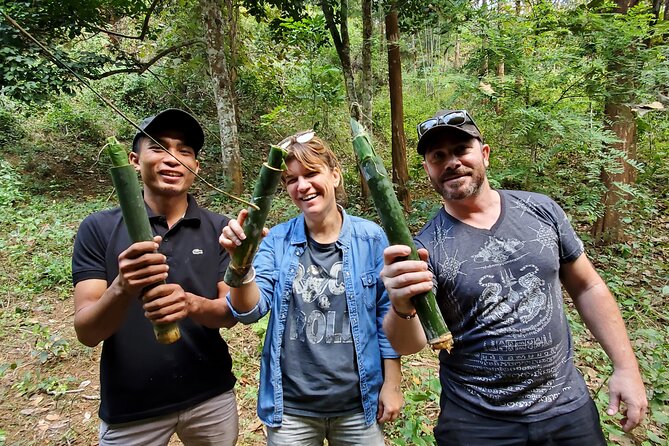
This five-hour private outing takes you beyond a standard cooking class and into the countryside around Luang Prabang. With a local Khmu guide, you collect ingredients, work with bamboo, build a cooking fire, and prepare traditional Lao food in a simple forest or farm setting. I like the practical nature of the experience, especially making your own chopsticks and drinking cup. I also like that lunch is part of the activity, so you eat what you have helped prepare.
There is one important point to clarify. The experience may not always take place in untouched primary forest as the description suggests. One account found it was based on a farm, with ingredients gathered from cultivated land rather than entirely from the jungle. If you want polished instruction in a restaurant kitchen, this is not the right class. If you want mud, smoke, bamboo, plants, and a hands-on day outside town, it is a strong choice.
In This Review
- Key Points at a Glance
- Why This Class Feels Different From a Standard Cooking Lesson
- The Drive From Naga Lodge Into the Countryside
- Walking Ten Minutes to the Cooking Shelter
- Finding Ingredients With a Local Guide
- Bamboo, Machetes, Stone, and Fire
- Cooking a Lao Lunch From Simple Materials
- Making Souvenirs You Can Actually Use
- What the Five-Hour Format Really Gives You
- Is $78.08 a Fair Price?
- The Main Strength: The Guide Makes the Day
- Practical Tips Before You Go
- Who Should Book This Luang Prabang Experience?
- Should You Book It?
- FAQ
- Where does the experience start?
- Where does the experience end?
- How long does the activity last?
- Is transportation included?
- Is this a private activity?
- What is included in the price?
- Can I cancel for a full refund?
- What happens if the activity does not meet its minimum number of participants?
Key Points at a Glance
- A short forest walk leads to the cooking area: Expect about 10 minutes on foot before reaching a simple bamboo platform or shelter.
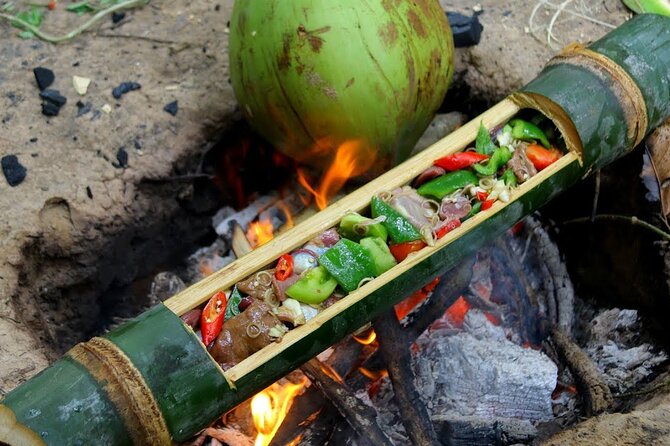
- Bamboo is both tool and material: You make cooking, eating, and drinking utensils, then take them home.
- Khmu cultural knowledge shapes the class: Guides such as Peng and Pheng explain local food sources, village life, and traditional methods.
- The meal begins with gathering: You help collect plants, herbs, banana leaves, and other ingredients used in the cooking.
- It is a private five-hour activity: Only your own group takes part, with transportation, lunch, snacks, water, and cooking equipment included.
- The strongest praise centers on the guide: Friendly, patient instruction is a major reason this outing earns a 4.9 rating from 15 published assessments.
Why This Class Feels Different From a Standard Cooking Lesson
Many cooking classes in Luang Prabang begin at a market or a purpose-built outdoor kitchen. This one begins with the raw materials. You learn where some ingredients come from, how bamboo is handled, and how food can be prepared with simple objects rather than a full set of modern tools.
That difference matters. You are not only following a recipe. You are learning how food, forest materials, farming, and daily life connect in rural Laos. The class gives you a better sense of the work behind a meal.
The cultural element comes from the Khmu guide who leads the day. The Khmu are one of Laos’s long-established ethnic groups, and the activity presents cooking methods associated with village life and forest use. I would not treat a half-day class as a complete lesson in Khmu culture, but it can offer a respectful introduction through food and practical skills.
The experience is private, which is a real advantage. You can ask questions, work at your own pace, and let the guide adjust the lesson to your group. A private booking also makes this more suitable for families or friends who want a shared project rather than a large class where everyone watches from the back.
Other Lao kitchens taking bookings:
- Luang Prabang: Evening Cooking Class & Local Baci Ceremony
★ 4.9 · 151 reviews - Luang Prabang: Bamboo Weaving Workshop & Cooking Class
★ 5.0 · 96 reviews - Luang Prabang: Cooking Class at the Former Royal Palace
★ 4.9 · 51 reviews
The Drive From Naga Lodge Into the Countryside
The meeting point is Naga Lodge Eco Resort in Ban Xieng Mouark, Luang Prabang. Pickup is offered, and private transportation is included. The exact road and drive time are not provided, so confirm the pickup details when you book.
The journey is part of the change in mood. You leave the town setting and head toward rural areas, with possible stops along the way to collect ingredients. One account describes the ride in a zebra-striped Jeep, which gives you a good idea of the informal, adventurous tone of the outing.
Do not expect luxury transport or a smooth sightseeing transfer. The appeal is getting out of town and reaching a working rural setting. If you are sensitive to rough roads or want a tightly timed schedule, ask about the vehicle and route before departure.
Walking Ten Minutes to the Cooking Shelter
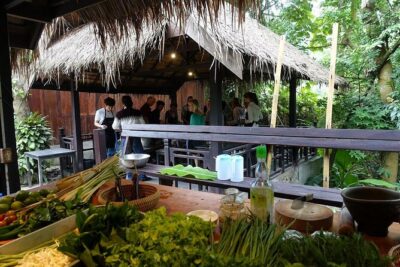
From the vehicle, the route continues on foot for about 10 minutes. The walk leads to a simple shelter or bamboo platform where the cooking takes place. Some groups have used machetes to cut bamboo and make cover from rain before beginning the meal.
This short walk is not a serious trek, but you should wear shoes suited to uneven ground and outdoor work. The class is active. You may be walking, gathering, cutting, preparing, and tending a fire rather than sitting at a workbench for most of the morning.
The setting can change. The advertised plan refers to primary forest, while one account describes a farm-based activity in the countryside. That variation is worth keeping in mind. You should book this for the outdoor setting and the traditional methods, not for a guarantee of a remote jungle camp.
Finding Ingredients With a Local Guide
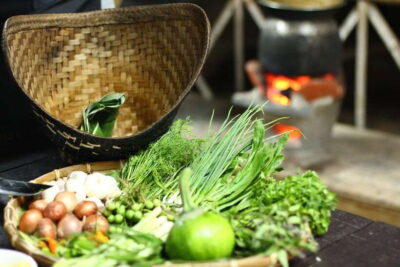
The ingredient-gathering part gives the day its sense of purpose. Along the route, you learn to identify edible plants and collect items that will later become part of lunch. The supplied information refers to exotic edible plants, forest products, banana leaves, and fresh ingredients from local farms and villages.
Your guide is the key to this part. Do not pick anything on your own. Plants can look similar, and the value of the activity comes from learning which ones are safe and useful from someone who knows the area.
Peng is praised for his farming background and his understanding of local farms and villages. Pheng is also named as a guide who explains where food comes from and helps turn the gathering into a practical lesson. Guides may vary by date, so you can ask who will lead your group.
This is not a botanical course. You will not leave with a full field guide to Lao plants. You will, however, get a direct lesson in how ingredients are selected and used, which is far more memorable than seeing prepared herbs laid out on a table.
Other weaving and craft sessions:
- Day-time Bamboo weaving & Cooking Classes join-in
★ 5.0 · 38 reviews - Luang Prabang: Hmong Batik Art Workshop
★ 5.0 · 27 reviews - Evening Bamboo weaving & Cooking classes join-in
★ 5.0 · 17 reviews - Traditional Market Tour and Private Laotian Cooking Class with a Local
★ 5.0 · 13 reviews
Bamboo, Machetes, Stone, and Fire
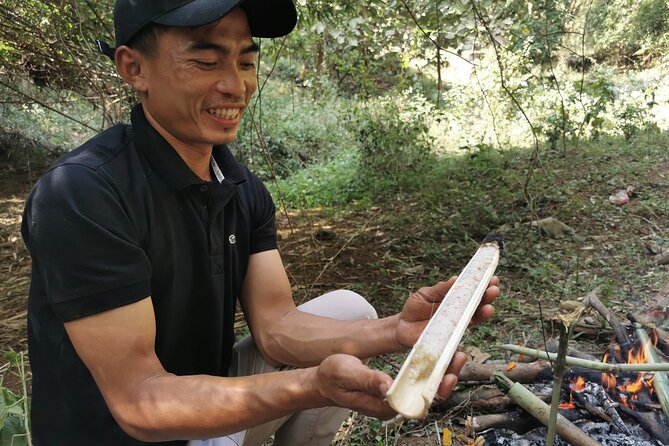
Bamboo is the central material of the class. You use it to make chopsticks and a drinking cup, and you learn how it can be used in cooking. The tools are not decorative props. They show how a widely available plant can serve as fuel, cookware, tableware, and building material.
You may also make other cooking utensils and, depending on the activity that day, learn simple survival skills such as making a trap from available materials. The exact sequence can vary, but the hands-on work is a major part of the appeal.
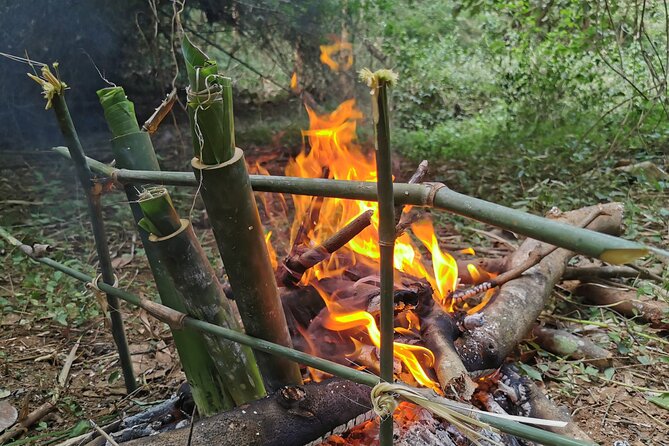
The equipment includes the cooking tools and utensils needed for the class. Even so, this is not a polished demonstration kitchen. You might work with a machete, bamboo, stones, banana leaves, and an open fire. That is precisely why the experience is memorable, but it also means you should pay attention to every safety instruction.
Families with older children may enjoy the making and building. Very young children may find the tools and fire difficult to manage. The class suits people who like practical work and do not mind getting close to smoke, dirt, and rough materials.
Cooking a Lao Lunch From Simple Materials
After gathering and preparing, you cook typical Lao dishes using the ingredients collected during the outing. The description does not provide a fixed menu, so do not book expecting named dishes or the same meal on every departure.
That uncertainty is normal for an experience tied to seasonal ingredients and local availability. The point is to learn the method and the connection to the food, not to reproduce a restaurant menu exactly.
The meal is included, along with snacks and bottled water. This makes the price easier to assess, since you are paying for transport, instruction, ingredients, lunch, and equipment rather than only a recipe lesson.
The cooking process may take longer than you expect because you are helping prepare the materials. Starting a fire, shaping bamboo, cleaning ingredients, and arranging food in leaves all take time. I consider that a benefit, but anyone looking for a quick, air-conditioned class should choose a different format.
The strongest accounts describe the meal as delicious and the day as one of the best parts of a longer Southeast Asian trip. That praise appears tied to the whole process, not just the taste. Food feels different when you have gathered it, made the utensils, and cooked it outdoors.
Making Souvenirs You Can Actually Use
The bamboo chopsticks and drinking cup are among the best details of this experience. You make them yourself and take them home, giving you a small reminder of the day that is more useful than a shop-bought trinket.
The work also helps you understand bamboo as a basic household material in Laos. A plant that might seem ordinary becomes a cup, a utensil, a cooking aid, or part of a shelter.
Do not expect a perfect souvenir. Handmade bamboo items can be uneven, and that is part of their charm. The value is in learning the process and carrying home something connected to your own effort.
What the Five-Hour Format Really Gives You
Five hours is enough time to cover the walk, ingredient gathering, tool making, cooking, and lunch without turning the day into a rushed demonstration. It also leaves room for conversation with the guide and time in the village or rural setting.
The experience ends back at the meeting point. Since pickup is offered and private transportation is included, you do not need to arrange a separate taxi for the return. Confirm the exact pickup point and timing, especially if you are staying somewhere other than Naga Lodge.
The private format is especially useful if your group has different interests. One person can ask about plants, another can focus on cooking, and another can spend more time making bamboo items. You are not working around a large class schedule.
One booking issue deserves attention. A solo participant may need to pay for two people because the booking system does not always offer a single-person option. If you are alone, check the final price carefully before confirming.
Is $78.08 a Fair Price?
At $78.08 per person, this is not the cheapest cooking lesson in Luang Prabang. The price makes more sense when you count what is included: private transportation, bottled water, snacks, lunch, tools, utensils, a private guide, and roughly five hours of instruction and outdoor activity.
You are also paying for access to a setting and style of teaching that would be difficult to arrange independently. Finding a local guide, identifying safe plants, getting to a rural area, preparing bamboo tools, and organizing a meal would take time and local contacts.
I would call it good value for a couple, family, or small private group that wants an active cultural outing. It is less compelling if your main goal is to learn several precise restaurant recipes or compare many finished dishes.
The booking pattern suggests planning ahead is sensible. This experience is booked around 23 days before the date on average, so last-minute availability may be limited. Confirmation is normally provided when you book, though bookings made within one day of departure are confirmed as soon as possible and depend on availability.
The Main Strength: The Guide Makes the Day
The guides receive the clearest praise. Peng is described as an excellent farmer and teacher, while Pheng is praised for explaining local farms, villages, and food sources. The best version of this experience depends less on a formal lesson plan than on the guide’s patience and willingness to explain.
That is useful to know before booking. You are not buying a scripted show. You are paying for a person to connect you with local food practices, help you use unfamiliar tools, and keep the day moving.
The guide also affects how much culture you take away. Ask questions about the plants, the village, the Khmu community, and the reasons behind each cooking method. A curious group will get more from the experience than one that simply waits for lunch.
The overall score is 4.9 from 15 ratings, with 100 percent recommending it. That is a small sample, but the consistency is notable: praise focuses on the guide, the authenticity of the activity, the bamboo work, and the feeling of adventure.
Practical Tips Before You Go
Wear clothes and shoes that can handle dirt, smoke, uneven ground, and outdoor work. The walk is short, but the class itself is active.
Bring patience. The meal may take time because you are helping gather ingredients and prepare the tools. This is not a quick cooking lesson followed by a long free afternoon.
Ask who your guide will be. Peng and Pheng are both associated with especially strong instruction, though the assigned guide can depend on the date.
If food allergies or dietary restrictions matter to you, raise the issue before booking. The menu is not specified, and the ingredients depend on what is available locally.
The activity includes bottled water, but carrying a small personal bag may still be useful. Keep valuables to a minimum, since the setting is rural and the class involves active work.
Cancellation is free up to 24 hours before the start time. Inside that window, the payment is not refunded, and changes are not accepted. The activity also requires a minimum number of participants. If the operator cancels because that minimum is not reached, you can choose another date or experience, or receive a full refund.
Who Should Book This Luang Prabang Experience?
I recommend it most strongly for people who want a cultural activity with real participation. Couples can share the work, families with older children can learn useful skills, and small groups can enjoy the private format without strangers slowing the pace.
It is also a good match for anyone who has already seen Luang Prabang’s temples and markets and wants a day outside the town center. The village and farm setting adds a different side of the region.
I would think twice if you want a clean, comfortable kitchen, a fixed menu, exact recipe cards, or a reliable primary-forest setting. The farm-based account shows that the location can differ from the most dramatic version of the description.
Should You Book It?
Book this class if you want to make your own utensils, work with bamboo, gather ingredients, cook outdoors, and learn from a Khmu guide in a private setting. The guide quality, included lunch, transport, and unusual hands-on format give the $78.08 price a fair case.
Skip it if your idea of a cooking class means a modern kitchen and a carefully standardized menu. For everyone else, this is one of Luang Prabang’s more personal food experiences, with enough smoke, splinters, and improvisation to make lunch memorable.
FAQ
Where does the experience start?
The activity starts at Naga Lodge Eco Resort in Ban Xieng Mouark, Luang Prabang 06000, Laos.
Where does the experience end?
The activity ends back at the meeting point.
How long does the activity last?
The experience lasts approximately five hours.
Is transportation included?
Yes. Private transportation is included, and pickup is offered.
Is this a private activity?
Yes. Only your own group participates.
What is included in the price?
The price includes private transportation, bottled water, lunch, snacks, and the tools and utensils needed for the cooking class.
Can I cancel for a full refund?
Yes. You can receive a full refund if you cancel at least 24 hours before the experience start time. Cancellations within 24 hours are not refunded.
What happens if the activity does not meet its minimum number of participants?
If the activity is canceled because the minimum number is not met, you will be offered a different date or experience, or a full refund.
Fresh in Luang Prabang
- 6-Day Private Laos Tour to Vientiane, Pak Ou Cave, Luang Prabang★ 5.0 · 5 reviews
- The Namkhan – Traditional Lao Bamboo Weaving★ 5.0 · 4 reviews
- The Namkhan – Yoga Class (8 am or 4 pm)★ 4.0 · 5 reviews
- Unwind with a Sunset Cruise on the Mekong River★ 5.0 · 4 reviews
- Night Bus to Huay Xai, Chiang Rai, Thailand – Hotel pickup★ 3.0 · 2 reviews
- Sunset Cruise in Luang Prabang with Live Performance★ 4.5 · 3 reviews
- Private Tour: Half-Day City Tour of Luang Prabang★ 4.5 · 4 reviews
- Private Luang Prabang City Tour★ 5.0 · 3 reviews
Cooking Classes, compared.
Day-time Bamboo weaving & Cooking Classes join-in
Read our review →
Evening Bamboo weaving & Cooking classes join-in
Read our review →
Traditional Market Tour and Private Laotian Cooking Class with a Local
Read our review →
Browse the lists this tour appears in