
Reviewed · COOKING CLASSES
Luang Prabang: Cooking Class at the Former Royal Palace
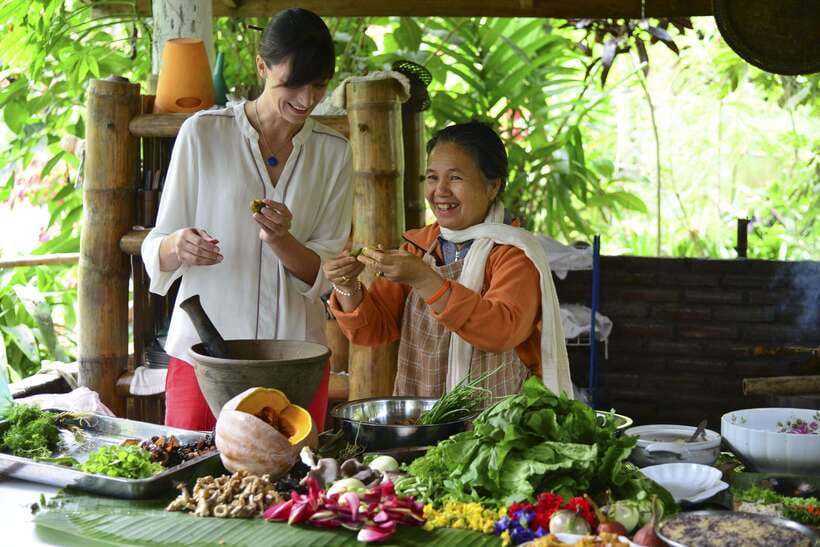
Start with a market, finish with lunch. This four-hour Luang Prabang experience pairs a guided morning market visit with hands-on Lao cooking at Victoria Xiengthong Palace and Alame Restaurant. I especially like the chance to taste unfamiliar ingredients with chef Nov or chef Noi before cooking, and the peaceful Mekong-side setting for lunch. The main thing to know is that the class may include a fairly long break while the kitchen prepares ingredients, so it is not four straight hours of cooking.
You meet near Wat Xiengthong Temple, then travel to the local morning market by bicycle or tuk tuk. The group is limited to 10, which helps keep the class friendly and manageable. I also like that vegetarian food can be arranged in advance, though standing for long periods means this is not a good fit for wheelchair users or anyone who needs frequent sitting breaks.
In This Review
- Key details at a glance
- Meeting the chef near Wat Xiengthong Temple
- The Luang Prabang morning market with a local chef
- The two-hour gap before cooking
- Cooking four Lao dishes at Alame Restaurant
- Eating your own lunch beside the Mekong
- What $45 buys you
- Who should book this Lao cooking class
- Useful tips before you go
- The strongest parts of the experience
- Should you book it?
- FAQ
- Where does the cooking class meet?
- How long does the activity last?
- Is transport to the market included?
- What food will I cook?
- Is lunch included?
- Are vegetarian options available?
- Is the class taught in English?
- How large is the group?
Key details at a glance
- Market before the kitchen: A local chef explains Lao herbs, vegetables, spices, fruit, and other ingredients as you shop.
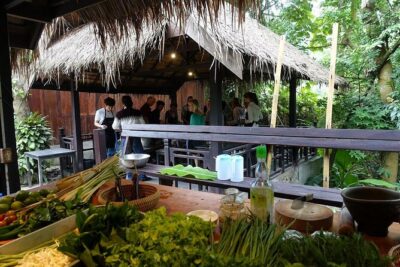
- Cooking beside the Mekong: The class takes place at Alame Restaurant, with cooking and lunch on a peaceful riverside terrace.
- Several dishes, one shared meal: You may help prepare soup, laab, sticky rice, salads, appetizers, and a coconut dessert, depending on the day.
- Small English-speaking group: Up to 10 people join, with instruction in English.
- A useful souvenir: Recipes are provided so you can try the dishes again at home.
- Good value for food lovers: At $45 per person, the price covers transport to the market, the class, and lunch, but not drinks or a tip.
Meeting the chef near Wat Xiengthong Temple
The experience begins at Victoria Xiengthong Palace on Kounxoau Road in Ban Phonehueng, close to Wat Xiengthong Temple. The meeting point puts you in one of Luang Prabang’s most atmospheric areas, but the activity itself is not simply a palace tour. The cooking takes place at Alame Restaurant, connected with the Victoria Xiengthong Palace setting, where you cook and eat beside the Mekong.
The chef is an important part of the day. Chef Noi receives repeated praise for being kind, funny, patient, and clear when explaining each step. Chef Nov is also singled out for making the market visit engaging and for buying small items for the group to taste. Other sessions have been led by Vannasone, so the exact instructor may vary.
That matters because this is not a class built around a printed demonstration alone. You can ask about ingredients, watch how dishes come together, and get help from the chef as you work. The small group limit of 10 gives the instructor room to guide beginners without turning the kitchen into a crowded production line.
Other Lao kitchens taking bookings:
- Luang Prabang: Evening Cooking Class & Local Baci Ceremony
★ 4.9 · 151 reviews - Luang Prabang: Bamboo Weaving Workshop & Cooking Class
★ 5.0 · 96 reviews - Day-time Bamboo weaving & Cooking Classes join-in
★ 5.0 · 38 reviews
The Luang Prabang morning market with a local chef
The market is the first real highlight. You reach it by bicycle or tuk tuk, then walk through the stalls with the chef. Instead of seeing unfamiliar leaves, roots, fruit, and spices as a blur of local color, you get an explanation of what they are and how they fit into Lao cooking.
This is where the class earns much of its cultural value. Lao food depends on fresh herbs, sharp flavors, vegetables, sticky rice, and ingredients that may not have obvious names or uses to a first-time visitor. The chef can point out what belongs in a soup, what works in a salad, and which items are worth tasting on their own.
On some outings, the chef buys small market foods for you to try. One group also picked up fruit and juice. Those little tastes are useful because they turn the market from a sightseeing stop into a food lesson. You begin to understand the connection between what is sold in the morning and what later appears on your plate.
The market visit lasts about an hour. I would wear a hat and comfortable shoes, since the activity includes walking and standing. The market can feel exciting and slightly hair-raising, especially if you are not used to the pace and close quarters, but that is part of its value. You are seeing everyday food shopping rather than a display arranged for tourists.
The two-hour gap before cooking
Here is the part to plan for carefully. After the market, there can be about two hours before the cooking session begins. The chef uses this time to prepare ingredients, while you may visit nearby temples, cafés, and shops or stop for coffee by the Mekong.
This break is not necessarily a flaw. If you have arrived early in Luang Prabang, it gives you a useful pause. The meeting point is near Wat Xiengthong, and the area offers places to wander before lunch. A coffee break beside the river can be a pleasant part of the morning.
Still, you should not book this activity expecting a nonstop kitchen session. One participant felt that more hands-on preparation during this interval would have improved the experience. That is a fair point. If your main goal is to chop and cook every ingredient from start to finish, the gap may feel long.
The best way to view it is as a split morning: first, a market lesson; then, free time; finally, a structured cooking class. Ask about the timing when you book, and avoid scheduling an important activity immediately afterward. The listed duration is about four hours, though the detailed program divides it into roughly one hour at the market, two hours of cooking, and one hour for lunch.
Cooking four Lao dishes at Alame Restaurant
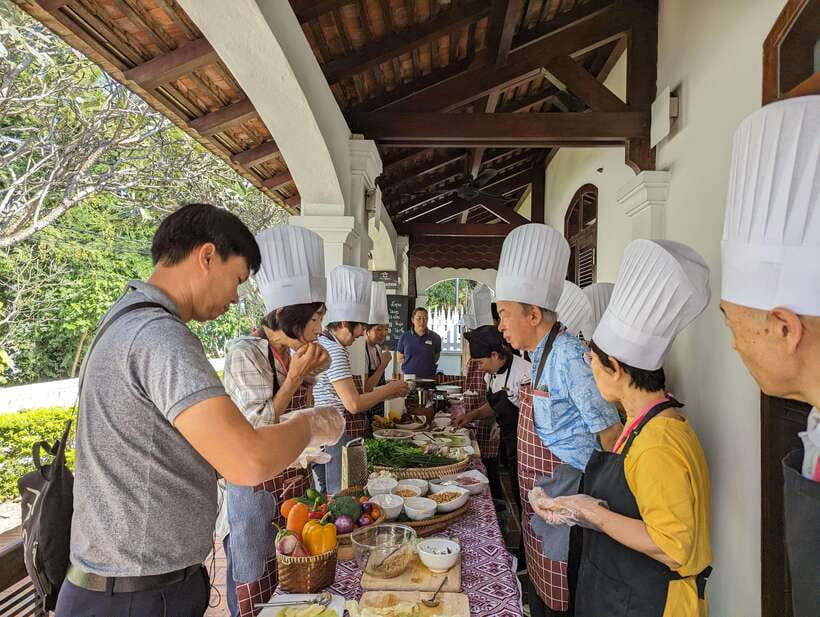
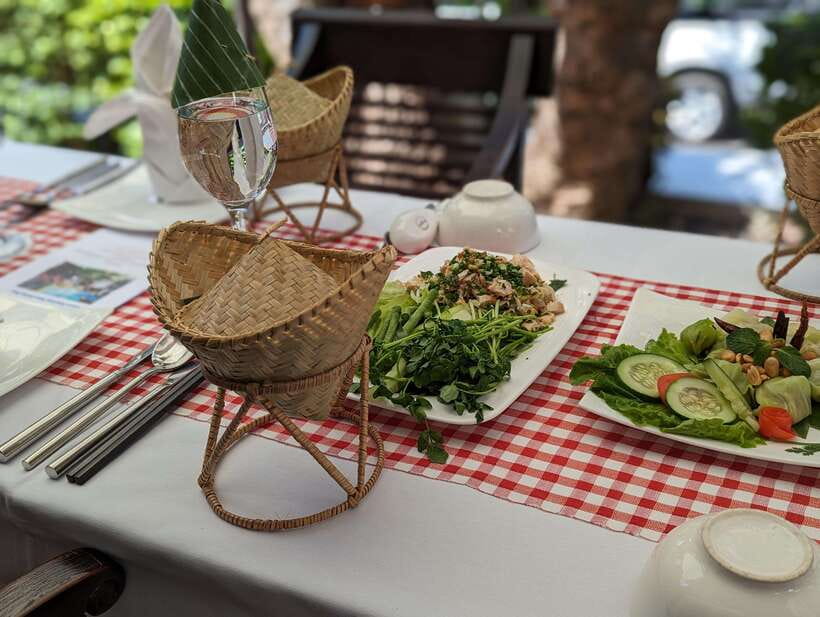
When you return to the restaurant, the kitchen is set up and the chef guides you through the dishes. The exact menu can vary, but sessions have included sticky rice, a fresh appetizer, sour soup with pork and mushrooms, chicken laab, salads, fragrant curry-style dishes, and rice balls in coconut milk.
This is practical cooking rather than a lecture. You may cut ingredients, mix sauces, shape rice balls, cook components, and combine prepared items under supervision. The group works together, so you should know that you may not prepare every dish from beginning to end by yourself.
That shared approach works well for couples, families with older children, and small groups of friends. It also keeps the class moving. One person may handle a step in the soup while another works on the laab, then everyone helps assemble the meal. If you want a full start-to-finish lesson for each recipe, this format may feel less thorough.
The recipes are the real payoff. Lao food is easy to enjoy at a restaurant, but harder to recreate without knowing the balance of herbs, sourness, heat, salt, and texture. Taking home the recipes gives you a way to continue the experience after Laos. Several participants found the instructions clear and precise, which is especially helpful if you are not an experienced cook.
Other weaving and craft sessions:
- Luang Prabang: Hmong Batik Art Workshop
★ 5.0 · 27 reviews - Evening Bamboo weaving & Cooking classes join-in
★ 5.0 · 17 reviews - Tribal Cooking Class in Luang Prabang Forest and visit
★ 5.0 · 15 reviews - Traditional Market Tour and Private Laotian Cooking Class with a Local
★ 5.0 · 13 reviews
Eating your own lunch beside the Mekong
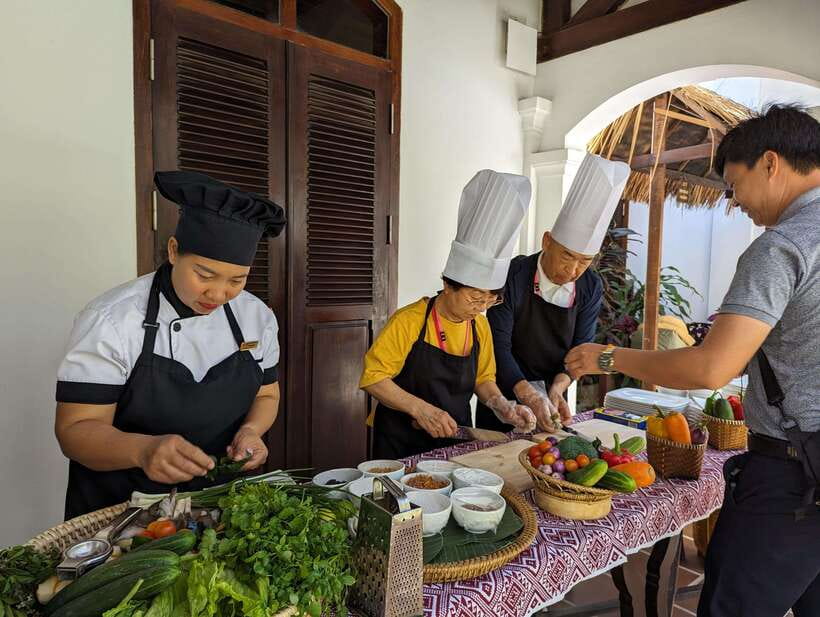
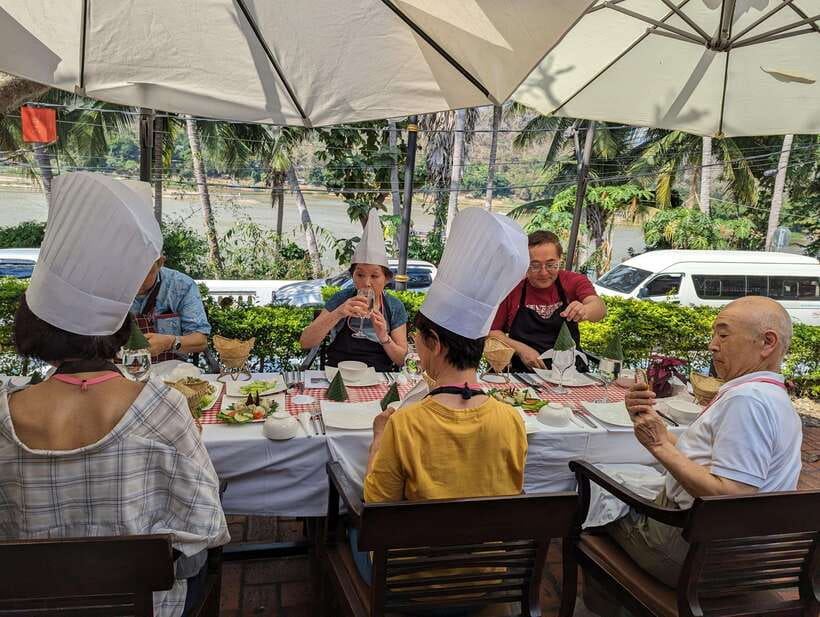
After the cooking, you sit down to eat what the group has prepared. Lunch is served on a terrace or outdoor riverside setting, with views toward the Mekong. The setting adds a calm finish after the market and the work of the kitchen.
I like this part because the meal has a clear connection to the morning. You have seen the ingredients at the market, learned how they are used, and then helped turn them into lunch. The food is not just a meal included in the price. It is the result of the activity.
Past menus have included several courses, with soup, laab, vegetables or salad, sticky rice, and dessert. One especially memorable menu included sour pork and mushroom soup, chicken laab, fresh herbs, and rice balls in coconut milk. The meal can be generous, so arrive hungry.
Drinks are not included. You should budget separately for them, and tips are also extra. That is a small but useful detail when comparing the $45 price with other activities in Luang Prabang.
What $45 buys you
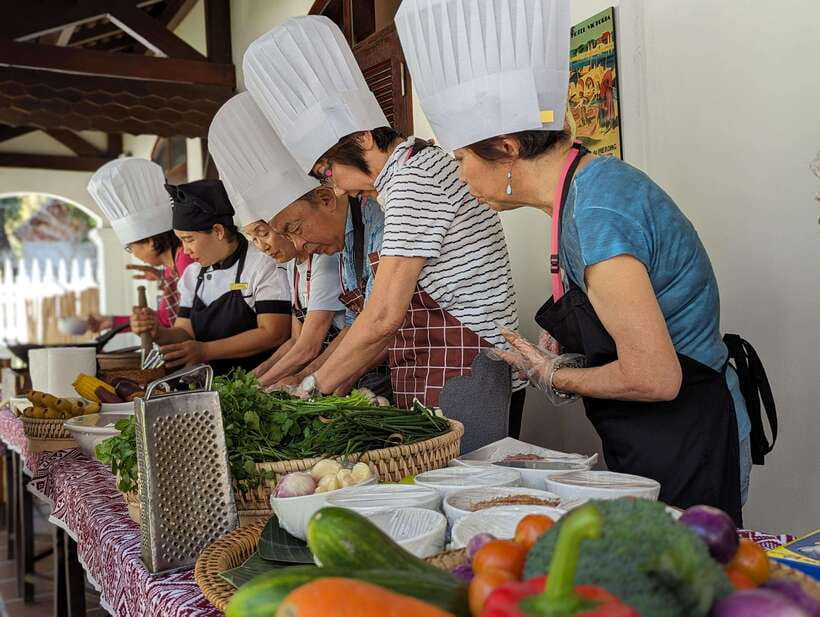
At $45 per person, this is not the cheapest way to eat lunch in Luang Prabang. You can find inexpensive Lao meals around town. The value here comes from combining several services in one morning: transport to the market by bicycle or tuk tuk, a guided ingredient tour, cooking instruction, a multi-dish lunch, and recipes to take home.
The class also offers a setting that is more polished than a basic market lesson. You cook at a heritage hotel and riverside restaurant rather than in a plain classroom. If you care about atmosphere, the terrace overlooking the Mekong helps justify the price.
The value is strongest for people who want cultural context and food skills together. It is weaker if you only want a quick lunch or if you dislike group cooking. The two-hour preparation break also means you are paying for a broader half-day experience, not four hours of constant instruction.
A group of seven found the pace relaxed and comfortable. Solo participants may get lucky with a very small group, and one person had a private class when no one else booked. You cannot count on that, but the maximum of 10 keeps the usual format from feeling oversized.
Who should book this Lao cooking class
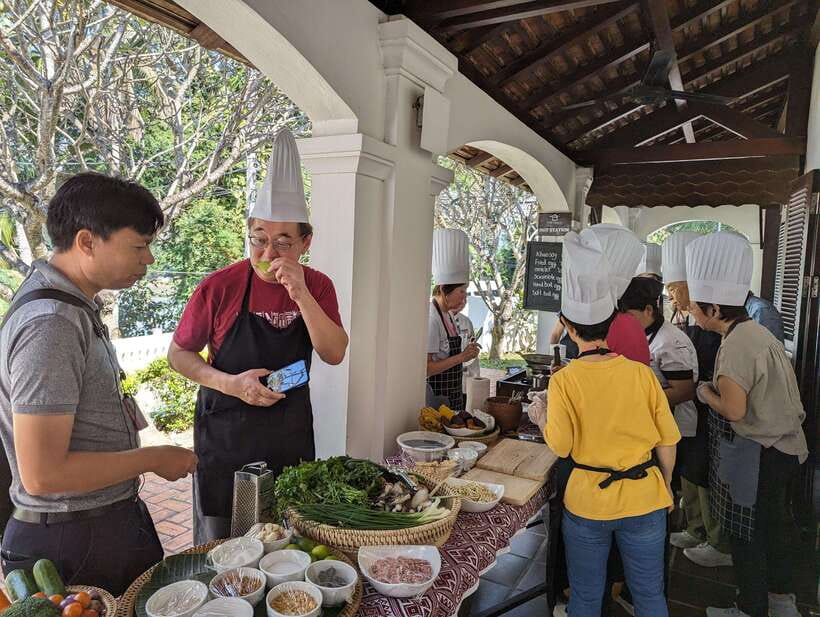
I would recommend this experience to food-focused visitors, first-time cooks, and anyone who wants a gentle introduction to Lao culture. You do not need advanced kitchen skills. The chef guides the process, and the class is designed so beginners can take part.
It is also a strong choice for people who enjoy markets but want more explanation than a self-guided walk provides. The chef helps you understand what you are seeing and how it becomes part of a meal.
Couples and small friend groups should find the format easy to enjoy. Families can consider it too, but babies are not suitable for the activity, and baby carriages are not allowed. Participants need to be comfortable standing for extended periods, and the experience is not suitable for wheelchair users.
Vegetarians should notify the provider ahead of time. Vegetarian options are available, but they should not be left until the morning of the class.
Useful tips before you go
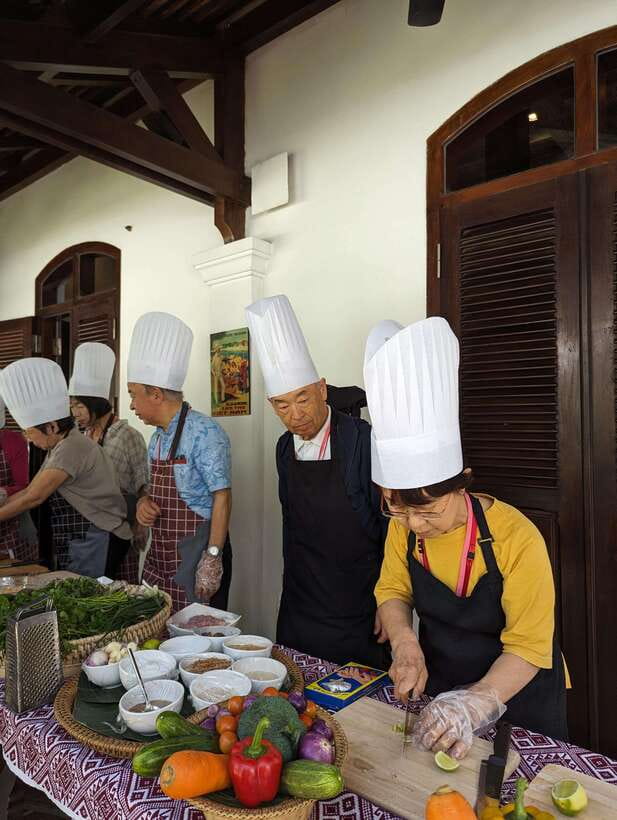
Wear light, comfortable clothing and bring a hat for the market. You will be on your feet for much of the morning, and the market portion is easier when you can walk freely.
Keep your schedule open around the activity. The market, break, class, and lunch are intended to make up one four-hour experience, but the middle pause means you should not treat it like a tightly packed sightseeing transfer.
Do not expect alcohol or drinks to be included. Alcohol and drugs are not allowed, and drinks are not permitted in the vehicle. Sharp objects and weapons are also prohibited, though the cooking equipment needed for the class is provided as part of the activity.
The class is taught in English. If English instruction works for you, the small group and direct guidance should make the recipes easy to follow. You can also ask the chef about vegetarian substitutions before the cooking starts.
The cancellation policy is friendly: you can cancel up to 24 hours ahead for a full refund. You can also reserve now and pay later, which is useful when your Luang Prabang schedule is still changing.
The strongest parts of the experience
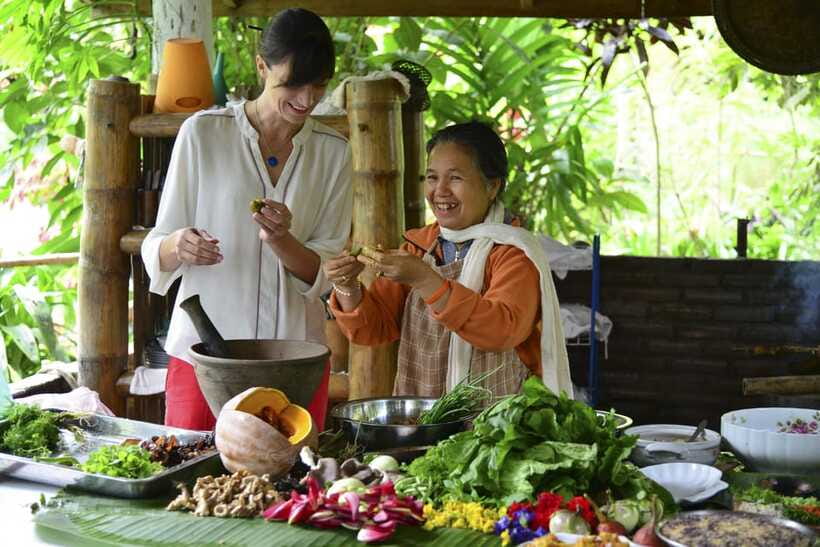
The market visit is the most useful introduction. It gives you a clear sense of how Lao cooking begins, and the chef’s tastings make the stop more than a walk past food stalls.
The cooking itself receives the most consistent praise. Guests have found the chefs warm, humorous, organized, and patient. That combination matters. Clear instruction is more valuable than flashy presentation when you are trying to reproduce a recipe later.
The riverside lunch is the other major strength. Eating outdoors with the Mekong in view gives the day a relaxed finish, and the location feels special without requiring a separate sightseeing stop.
The main weakness is the split schedule. You may spend two hours waiting while ingredients are prepared. Some people will enjoy using that time for coffee and nearby temples. Others will wish they had more knife work and cooking to do.
Should you book it?
Book this class if you want to understand Lao food, meet a local chef, visit the morning market, and eat a multi-course lunch in a beautiful riverside setting. At $45, it is a fair package for a small group, transport, instruction, lunch, and recipes.
Skip it if you want nonstop cooking, a private lesson guaranteed in advance, or a short activity with no open time. For everyone else, this is a relaxed and useful way to connect Luang Prabang’s market life with its cooking traditions. Chef Noi, chef Nov, or another local instructor may be the person who makes the day especially memorable, but the format itself offers a strong mix of food, place, and practical skill.
FAQ
Where does the cooking class meet?
The meeting point is Victoria Xiengthong Palace on Kounxoau Road in Ban Phonehueng, near Wat Xiengthong Temple in Luang Prabang.
How long does the activity last?
The full experience lasts about four hours. The schedule includes roughly one hour at the market, two hours for the cooking class, and one hour for lunch.
Is transport to the market included?
Yes. The morning market visit includes transport by bicycle or tuk tuk.
What food will I cook?
Menus can vary, but dishes prepared during sessions have included sticky rice, appetizers, salads, sour soup, chicken laab, and rice balls in coconut milk. Fragrant curry-style dishes may also be included.
Is lunch included?
Yes. You eat the dishes prepared during the class. Drinks are not included.
Are vegetarian options available?
Yes. Vegetarian options are available, but you need to notify the provider in advance.
Is the class taught in English?
Yes. The listed instruction language is English.
How large is the group?
The class is a small-group experience limited to 10 participants.
Fresh in Luang Prabang
- 6-Day Private Laos Tour to Vientiane, Pak Ou Cave, Luang Prabang★ 5.0 · 5 reviews
- The Namkhan – Traditional Lao Bamboo Weaving★ 5.0 · 4 reviews
- The Namkhan – Yoga Class (8 am or 4 pm)★ 4.0 · 5 reviews
- Unwind with a Sunset Cruise on the Mekong River★ 5.0 · 4 reviews
- Night Bus to Huay Xai, Chiang Rai, Thailand – Hotel pickup★ 3.0 · 2 reviews
- Sunset Cruise in Luang Prabang with Live Performance★ 4.5 · 3 reviews
- Private Tour: Half-Day City Tour of Luang Prabang★ 4.5 · 4 reviews
- Private Luang Prabang City Tour★ 5.0 · 3 reviews
Cooking Classes, compared.
Day-time Bamboo weaving & Cooking Classes join-in
Read our review →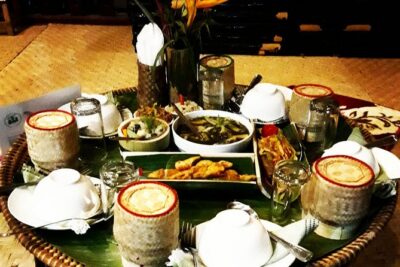
Evening Bamboo weaving & Cooking classes join-in
Read our review →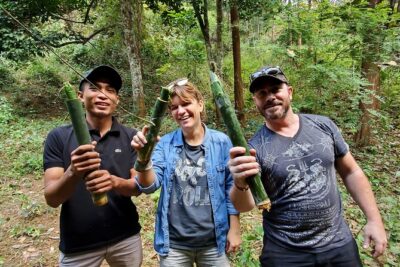
Tribal Cooking Class in Luang Prabang Forest and visit
Read our review →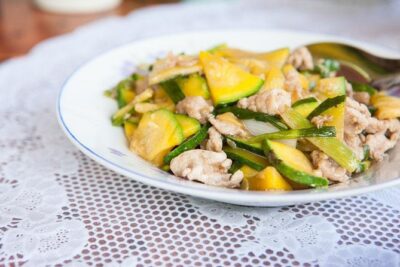
Traditional Market Tour and Private Laotian Cooking Class with a Local
Read our review →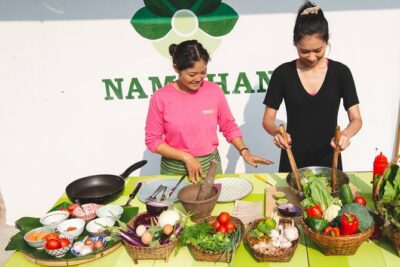
Browse the lists this tour appears in