
Reviewed · COOKING CLASSES
Laos Cooking Class in Luang Prabang
Your lunch starts in a market. This four-hour Luang Prabang cooking class combines a local food visit with hands-on instruction, and I especially like the market ingredient tour and the chance to eat a full meal you helped prepare. The class also includes a recipe book, so the experience can continue after you leave Laos.
I also like the small maximum of 12 people and the open-air kitchen setting described by past participants. The main consideration is that the class may be less satisfying if you already cook confidently and prefer to work alone, since the chef demonstrates each dish and guides the group step by step.
In This Review
- Four things to know before booking
- Starting at Tamarind on Kingkitsarath Road
- Phosy Market and the ingredients behind Lao food
- An open kitchen outside the town center
- What you actually cook during the four hours
- Eating what you prepared
- The recipe book makes the class last longer
- Who will get the most from this class
- How the $58 price measures up
- A few practical cautions before you reserve
- Should you book the Luang Prabang Lao cooking class?
- FAQ
- How much does the Laos cooking class cost?
- How long does the cooking class last?
- Where does the class begin and end?
- What is included in the price?
- Is the local market visit included?
- Can I cancel for a full refund?
- How many people can join the class?
Four things to know before booking
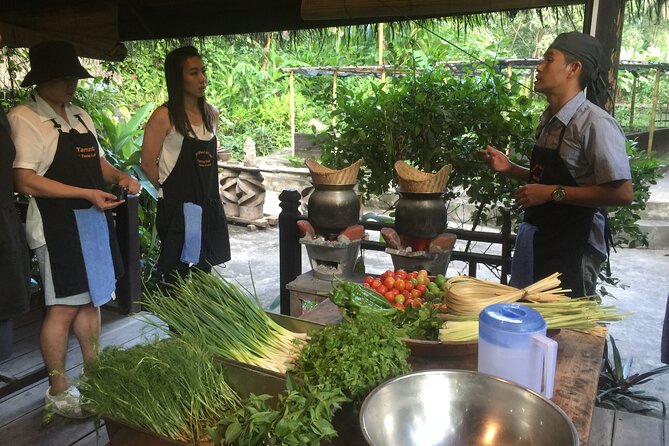
- The 8:30 am start can include a market visit: You may visit Phosy Market, learn about Lao ingredients, and help select food for the class.
- Chef Sit leads the cooking: His demonstrations make unfamiliar dishes easier to follow, even if you have little kitchen experience.
- You prepare a full Lao meal: Expect spicy dipping sauces, Mok Pa, Laap, lemongrass stuffed with chicken and herbs, dessert, and more.
- The meal is part of the class: You eat the food you make, rather than watching a demonstration and leaving hungry.
- You receive recipes to take home: The recipe book helps you recreate the dishes after returning home.
- The group is capped at 12 people: That keeps the class more personal, though the pace still depends on the group’s cooking ability.
Starting at Tamarind on Kingkitsarath Road
The class begins at 8:30 am at Tamarind, located at V4VR+VMF on Kingkitsarath Road in Luang Prabang. Plan to arrive with enough time to find the meeting point without rushing. Your confirmation is provided at booking, and the activity ends back at the same meeting point.
The four-hour length is useful here. You get more than a quick lesson, but you are not giving up an entire day of sightseeing. Luang Prabang is easiest to enjoy at a slower pace, and a morning class leaves part of the afternoon free for temples, the riverfront, or a quiet lunch elsewhere.
The class is described as suitable for all ages and skill levels. I would take that seriously. The format is built around demonstration and guidance, not culinary training, so you do not need to know Lao cooking before arriving.
The group size can reach 12 people. That is small enough for a shared class rather than a large cooking show, but it is still worth remembering that you may not have your own private chef. If several people need extra help, the pace may slow down.
Other Lao kitchens taking bookings:
- Luang Prabang: Evening Cooking Class & Local Baci Ceremony
★ 4.9 · 151 reviews - Luang Prabang: Bamboo Weaving Workshop & Cooking Class
★ 5.0 · 96 reviews - Luang Prabang: Cooking Class at the Former Royal Palace
★ 4.9 · 51 reviews
Phosy Market and the ingredients behind Lao food
For the morning option, the first stop is the local market. This is not just a shopping errand. The market helps explain the ingredients that give Lao dishes their character, including herbs and produce that may be unfamiliar if you normally shop in Western supermarkets.
You can select ingredients for the dishes you will prepare. That simple choice makes the cooking feel connected to Luang Prabang rather than being a lesson built from food already portioned and hidden in a kitchen.
The market can feel chaotic to Western eyes. That is part of its value, but it may also be the least comfortable section for people who prefer polished, orderly food halls. Your chef helps explain what you are seeing, which matters when you are facing unfamiliar ingredients or local food products.
One practical point: the supplied details specifically connect the market visit with the morning tour. The listed start time is 8:30 am, so this appears to be the relevant option, but check your booking details if more than one departure is offered.
I like this beginning because it gives the meal some context. You are not simply told that Lao cooking uses herbs, chilies, and fresh produce. You see the raw materials first, then use them later.
An open kitchen outside the town center
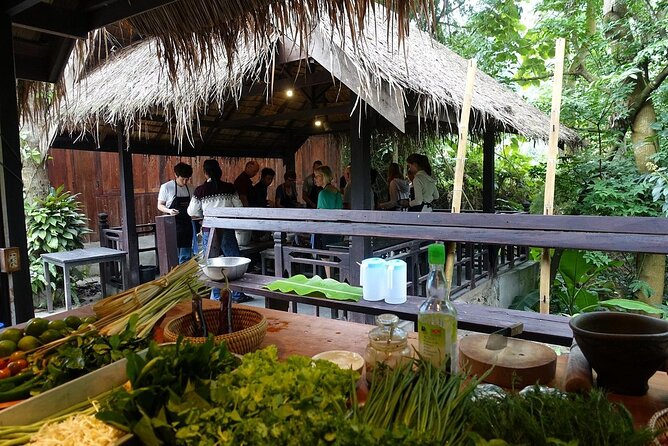
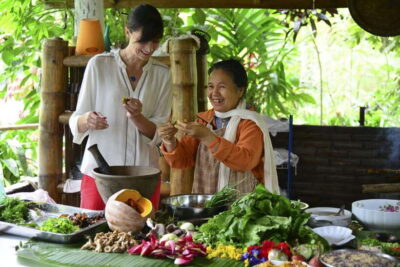
After the market, the group returns to the restaurant, with past participants describing a short drive to a rural setting and an open kitchen. The surroundings are one of the most praised parts of the experience. You are not cooking in a plain classroom with stainless-steel counters and little atmosphere.
The setting may be especially appealing if you want a break from Luang Prabang’s compact center. An open kitchen makes the class feel more connected to everyday cooking, though it also means you should expect a practical environment rather than a polished cooking studio.
The information does not specify the transport arrangement in detail, so do not assume a private vehicle or hotel pickup. The confirmed meeting point is Tamarind, and the activity returns there at the end. If you have mobility or transport concerns, ask the provider before booking.
The kitchen setup is designed for participation. Chef Sit first demonstrates the dishes, then guides the group as you prepare them. That structure is friendly to beginners, but an experienced cook may find parts of it slower than expected.
What you actually cook during the four hours
The menu is broad enough to make the class feel like a proper meal. You are not preparing one attractive dish and calling it lunch. The cooking includes spicy dipping sauces, Mok Pa, lemongrass stuffed with chicken and herbs, Laap, dessert, and additional dishes.
Mok Pa is a useful introduction to Lao cooking because it shows how herbs, seasoning, and fish can be combined in a traditional preparation. Laap gives you a different taste and texture, while the stuffed lemongrass dish brings a more hands-on task to the table. The exact menu may vary, but these are the named dishes associated with the class.
The sauce work is important too. Lao meals often depend on strong accompaniments, and making a spicy dip helps you understand how a small bowl of seasoning can shape an entire meal. You can adjust your expectations here: the focus is on learning the method and tasting the result, not on producing restaurant-perfect food.
Past participants described making one dip, one dessert, and three other dishes. That is a generous amount for a four-hour class. It also explains why the chef’s demonstrations matter. Without an organized sequence, several dishes would become a muddle of chopping, mixing, and waiting.
Chef Sit is specifically praised for making the process simple. That is good news if your cooking skills begin and end with boiling noodles. You can watch the method first, then repeat it with help instead of trying to decode a recipe on your own.
Other weaving and craft sessions:
- Day-time Bamboo weaving & Cooking Classes join-in
★ 5.0 · 38 reviews - Luang Prabang: Hmong Batik Art Workshop
★ 5.0 · 27 reviews - Evening Bamboo weaving & Cooking classes join-in
★ 5.0 · 17 reviews - Tribal Cooking Class in Luang Prabang Forest and visit
★ 5.0 · 15 reviews
Eating what you prepared
The class includes a meal, and that is more important than it may sound. You get to taste the balance of the dishes together, rather than judging each item separately while it is still being prepared.
Some people first come to a cooking class for the recipes and end up remembering the meal most clearly. I like this format because it rewards the work immediately. After cutting, stuffing, seasoning, and cooking, you sit down to eat the results.
The class is not aimed only at expert cooks. One participant described being a capable cook while others in the group had little kitchen experience, yet still found the session worthwhile. That suggests the chef can accommodate mixed ability levels, though an advanced cook may want to take a more observant role during basic demonstrations.
The included meal also strengthens the value of the $58 price. You are paying for instruction, ingredients, a market component, the cooking venue, and lunch, not just a short recipe demonstration. In Luang Prabang, where you can find inexpensive meals, the class is not the cheapest way to eat, but it gives you skills and context that a restaurant meal cannot.
The recipe book makes the class last longer
You receive a recipe book with the dishes prepared during the class. This is one of the most practical inclusions, since memories of a meal fade quickly and Lao ingredients can be hard to identify once you are back home.
The book gives you a chance to try the recipes again, though you may need to adapt them based on what you can find locally. The class itself introduces you to the ingredients, and the written recipes help bridge the gap between seeing them in a Luang Prabang market and shopping for substitutes at home.
I would keep the book with your travel papers rather than packing it in checked luggage if you plan to cook soon after the trip. That is simple advice, but a recipe book is useful only if you can find it when you want to use it.
The book also makes this a good activity for couples, families, or friends with different levels of interest. One person can focus on technique while another pays more attention to the ingredients. Everyone still shares the final meal.
Who will get the most from this class
I would recommend the class most strongly if you want an activity that connects food with daily life in Laos. The market visit, ingredient selection, open kitchen, and meal create a fuller picture than a lesson held entirely indoors.
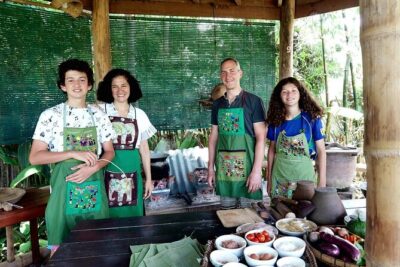
It is also a good pick for first-time cooks. The chef demonstrates the dishes, guides your work, and supplies recipes. You do not need to arrive with knife skills or a list of Lao ingredients memorized.
Families may appreciate the broad age range, provided each child can take part safely and follow the instructor’s directions. The details describe the activity as suitable for all ages, but they do not provide specific child pricing or age rules, so confirm those points if they matter to your booking.
I would be more cautious if you want a private class, a highly advanced lesson, or a fixed menu designed around dietary needs. The group can include up to 12 people, and the available information does not specify vegetarian, vegan, allergy, or other dietary arrangements.
The class also suits people who want a morning activity with a clear ending. At roughly four hours, it has enough substance to feel worthwhile without taking over your full day. Since it finishes at the meeting point, you can plan your next Luang Prabang activity from there.
How the $58 price measures up
At $58 per person, this is a mid-range food experience rather than a budget lunch. I think the value is sound if you care about learning how the dishes are made and want a meal included.
You are getting the class, ingredients, food market component for the morning option, the cooking venue, the finished meal, and a recipe book. The group size is limited to 12, which helps justify the cost compared with a large demonstration.
The value is weaker if you mainly want to eat Lao food. Local restaurants will likely offer meals for less, but they will not let you choose ingredients, cook several dishes, or take recipes home. The right comparison is not with lunch alone. Compare it with a half-day cultural activity that happens to end at the table.
The class has a 4.3 rating from seven published ratings, so the overall picture is positive but not based on a large sample. One booking was cancelled because there were not enough participants, and a refund was later processed. That suggests you should keep a little flexibility in your schedule, especially if this class is one of the main anchors of your Luang Prabang plans.
Free cancellation is available up to 24 hours before the local start time. Cancellations made inside that window are not refunded, and changes are not accepted within 24 hours. The class is not available from April 13 through April 16 during Lao New Year.
A few practical cautions before you reserve
Confirm whether your booking includes the morning market visit. The description ties that visit to the morning option, while the listed start time is 8:30 am. It is a worthwhile part of the experience, so I would not treat it as a minor detail.
Ask about dietary restrictions before paying if you need adjustments. The available details list the ingredients and meal but do not promise substitutions or special menus.
Do not expect a private lesson. The maximum is 12 people, and the class is designed for shared instruction. That is part of its social appeal, but it means you may need to wait briefly while the chef helps another participant.
Bring an appetite and a willingness to taste unfamiliar food. The point is not only to reproduce a familiar Western dish with Lao labels. The market and menu are intended to show you how local herbs, produce, sauces, and proteins work together.
Should you book the Luang Prabang Lao cooking class?
I would book it if you want an active morning with food, local ingredients, and a meal you make yourself. The strongest reasons are the Phosy Market visit, Chef Sit’s clear instruction, the appealing open kitchen setting, and the recipe book you take home.
I would skip it if you want a private, advanced culinary course or if your diet requires guaranteed changes that have not been confirmed. Also keep a little room in your itinerary in case the class does not reach its minimum group size.
For most visitors who enjoy cooking or eating, $58 is fair value for four hours of instruction, ingredients, lunch, and a useful souvenir. It gives you something better than a photograph of Lao food: a method for making it again.
FAQ
How much does the Laos cooking class cost?
The price is $58 per person.
How long does the cooking class last?
The activity lasts approximately four hours.
Where does the class begin and end?
It begins at Tamarind, V4VR+VMF, Kingkitsarath Road, Luang Prabang, Laos. The activity ends back at the meeting point.
What is included in the price?
The price includes the cooking class, ingredients, and a meal.
Is the local market visit included?
For the morning tour, you meet the instructor at 8:30 am and have the chance to visit the local market, learn about Lao ingredients, and select ingredients for the dishes.
Can I cancel for a full refund?
Yes. You can cancel at least 24 hours before the local start time for a full refund. Cancellations or changes made less than 24 hours before the start time are not accepted for a refund.
How many people can join the class?
The activity has a maximum of 12 travelers.
Fresh in Luang Prabang
- 6-Day Private Laos Tour to Vientiane, Pak Ou Cave, Luang Prabang★ 5.0 · 5 reviews
- The Namkhan – Traditional Lao Bamboo Weaving★ 5.0 · 4 reviews
- The Namkhan – Yoga Class (8 am or 4 pm)★ 4.0 · 5 reviews
- Unwind with a Sunset Cruise on the Mekong River★ 5.0 · 4 reviews
- Night Bus to Huay Xai, Chiang Rai, Thailand – Hotel pickup★ 3.0 · 2 reviews
- Sunset Cruise in Luang Prabang with Live Performance★ 4.5 · 3 reviews
- Private Luang Prabang City Tour★ 5.0 · 3 reviews
- Private Tour: Half-Day City Tour of Luang Prabang★ 4.5 · 4 reviews
Cooking Classes, compared.
Day-time Bamboo weaving & Cooking Classes join-in
Read our review →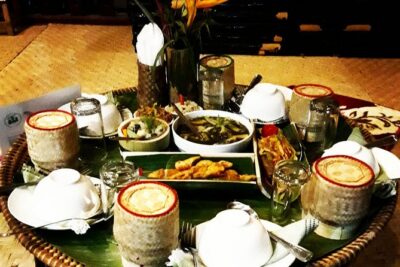
Evening Bamboo weaving & Cooking classes join-in
Read our review →
Tribal Cooking Class in Luang Prabang Forest and visit
Read our review →
Traditional Market Tour and Private Laotian Cooking Class with a Local
Read our review →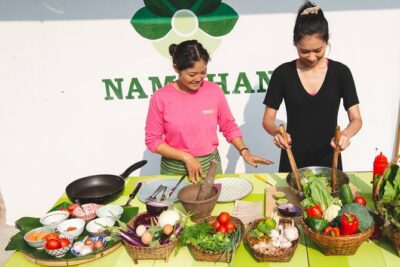
Browse the lists this tour appears in