
Reviewed · COOKING CLASSES
Luang Prabang: Evening Cooking Class & Local Baci Ceremony
An evening here brings much more than dinner. This four-hour experience combines a local market visit, hands-on Lao cooking, a family welcome, a traditional Baci ceremony, and music beside rice fields. I like the small group of six or fewer, which gives the evening a personal feel, and I like that the setting is a real family-run place rather than a polished city restaurant.
The main consideration is that this is a cultural evening first and a cooking lesson second. You may have less freedom to choose every dish than in a formal cooking school, and the ceremony requires respectful dress and participation. Still, at $51 per person, the combination of transport, dinner, instruction, music, and a personal blessing gives you a lot for your money.
In This Review
- Key points before you book
- A 4 p.m. start from Luang Prabang
- The local market is your first lesson
- Cooking five Lao dishes over charcoal
- Eating together in the Lao style
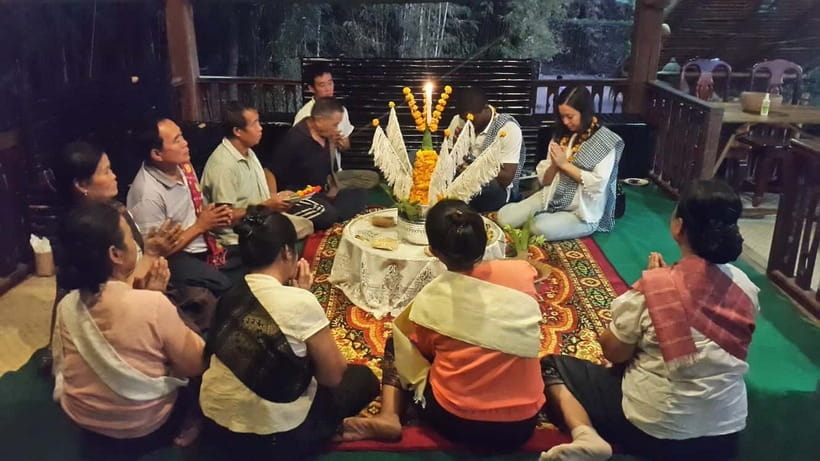
- Why the Baci ceremony matters
- Music after dinner, with rice fields beyond
- What the $51 price really covers
- Who will enjoy this most
- A few sensible tips for the evening
- Should you book the Baci and cooking evening?
- FAQ
- How long does the Luang Prabang cooking and Baci experience last?
- Is hotel pickup included?
- How many people can join the activity?
- Is the cooking class taught in English?
- How many dishes will I cook?
- Is the experience suitable for vegetarians?
- What should I wear to the Baci ceremony?
- Are drinks included?
- Who should not book this activity?
Key points before you book
- Five Lao dishes in a home-style kitchen: You help prepare a full meal using local ingredients, with dishes that may include soup, meat, fish, sticky rice, and dips.
- A real local market stop: Your guide explains herbs, produce, and ordinary food habits before you cook.
- A personal Baci ceremony: Local elders tie ceremonial strings around your wrists and offer blessings for good fortune.
- Rice-field views at sunset: The open pavilion gives the cooking and ceremony a peaceful rural setting.
- Traditional Hmong music: A local musician performs on a traditional instrument, and you may get a chance to try it.
- Small, family-friendly format: Hotel pickup, an English-speaking host, and a maximum of six participants keep the evening easy to follow.
A 4 p.m. start from Luang Prabang
The evening begins with hotel pickup at about 4 p.m. in Luang Prabang city. You should wait in the lobby five minutes before pickup, and comfortable clothes and shoes are the sensible choice.
The drive takes you away from the central streets toward a village setting. The transport matters here. Without it, reaching the family home and returning after sunset would be less convenient, especially if you are staying in the historic center.
The activity lasts around four hours. That sounds long on paper, but the schedule has several distinct parts, so the time is likely to pass quickly. You are not simply sitting through a demonstration. You move from market shopping to cooking, ceremony, dinner, and music.
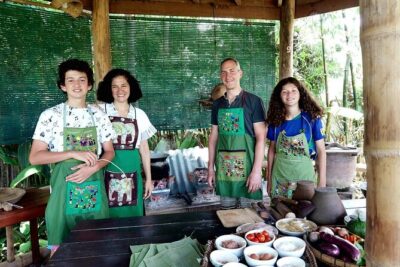
The group limit is six people. That is a useful number for a practical cooking session because you can ask questions and take part without competing with a large crowd. If you prefer a quiet, private experience, remember that the group is small, but not necessarily private unless your booking happens to be the only one.
Other temple visits and alms giving:
- Luang Prabang: Almsgiving Ceremony Offering
★ 4.1 · 13 reviews - Home-cooked dinner & Baci ceremony with Villagers in Ban Nasang
★ 5.0 · 12 reviews - Luang Prabang Early Morning Alms Giving and Wet Market
★ 4.5 · 5 reviews
The local market is your first lesson
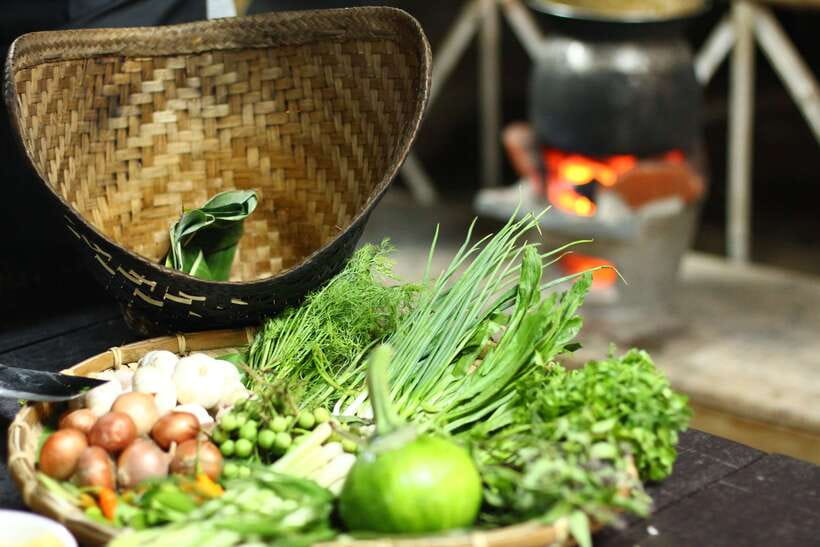
The market visit is one of the strongest parts of the evening. Rather than beginning with premeasured ingredients, you see the food that local families buy for everyday cooking.
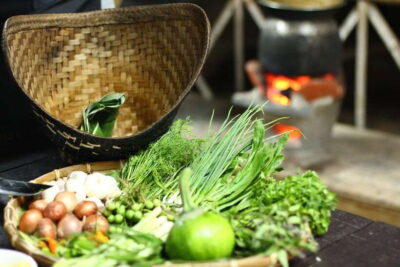
Your English-speaking guide explains the fresh produce, herbs, and other ingredients used in Lao kitchens. This gives you useful context before you pick up a knife or sit near the cooking fire. Food makes more sense when you have first seen it in its ordinary setting.
The market is also a window into daily life. You can ask about unfamiliar produce and learn which ingredients are common in local meals. One practical limitation is that the market visit is focused on ingredients for dinner, so it may not cover every item sold there. If you are curious about something unrelated to the meal, ask your guide directly.
Several people have found the market more eye-opening than expected because it shows the food system behind the meal. I would pay attention to the herbs and vegetables, not just the items you recognize. Lao cooking often depends on fresh flavor and texture, and this stop helps explain why.
Cooking five Lao dishes over charcoal

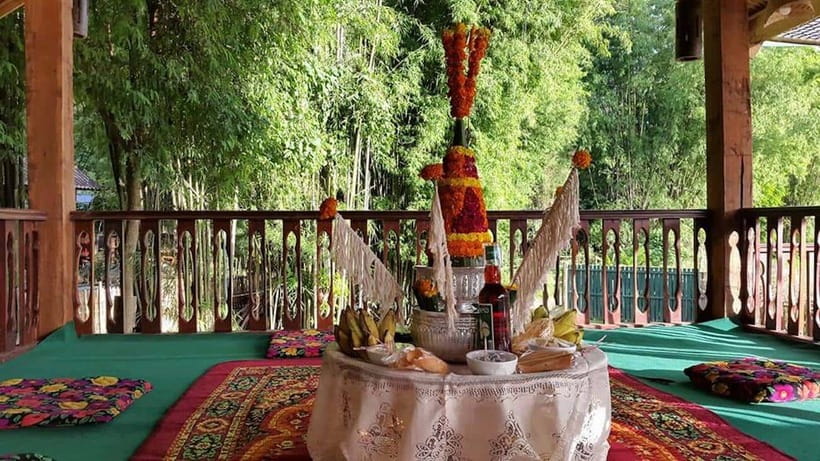
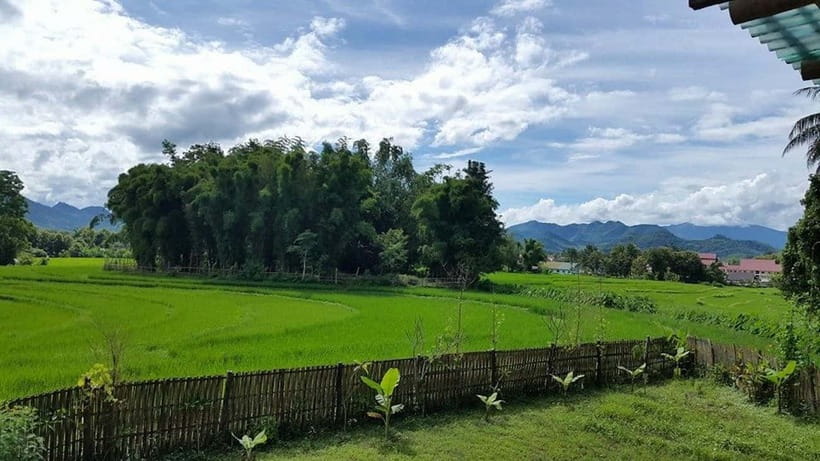
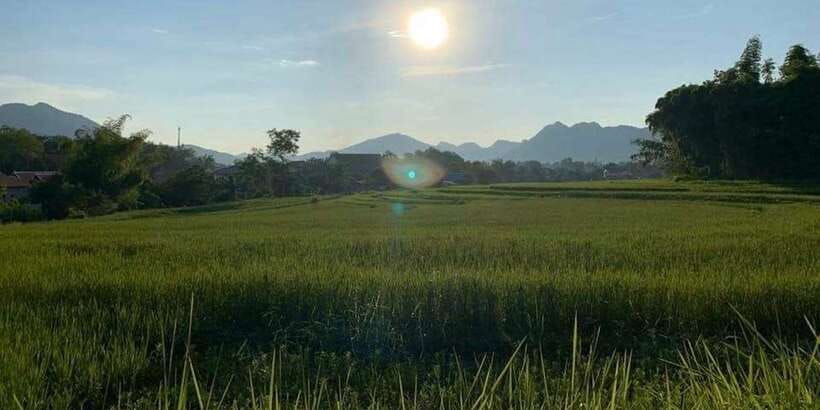
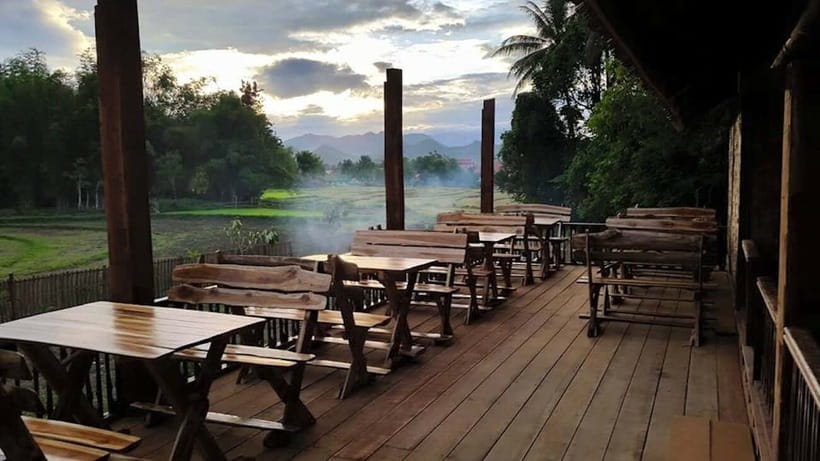
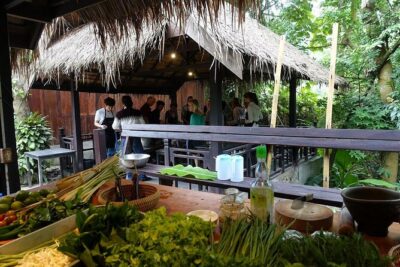
After the market, you continue to the family cooking site. The setting is a rustic pavilion modeled on a traditional Lao house, with an open cooking area and views across rice fields and toward the surrounding hills.
This is not a glossy demonstration kitchen. One detailed account describes cooking over charcoal in clay burners, which is exactly the kind of simple setup that makes the meal feel connected to ordinary home cooking. You may need to be comfortable with heat, smoke, bending, and a less formal kitchen arrangement.
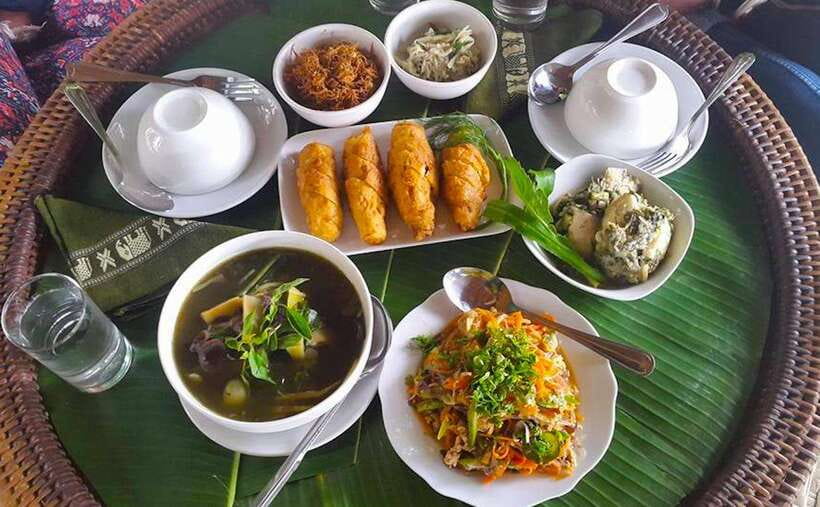
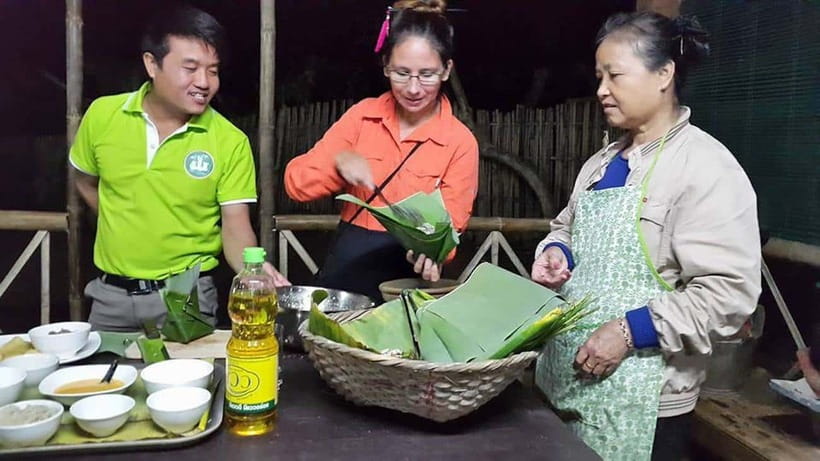
You help make five typical Lao dishes. The precise menu can vary, but the meal has included combinations such as pumpkin soup, pork, fish, sticky rice, tomato dip, eggplant dip, salad, and food cooked in banana leaves. The available details suggest a proper spread rather than one token dish.
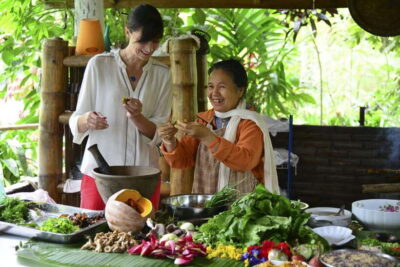
The cooking is hands-on, though the level of participation can depend on group size. In a very small group, you may handle most of the steps yourself. With a full group, you will still help, but some preparation may be shared among participants.
This is a good choice if you want to learn techniques and ingredients rather than collect a formal certificate. The focus is relaxed and practical. You cook, eat, and talk with the hosts. One small improvement would be a printed or digital recipe sheet, so bring a phone or notebook if you want to record ingredients and methods.
Vegetarians can take part. You should state your dietary needs when booking or at the start of the activity, since the menu includes meat and possibly fish. The information confirms vegetarian suitability, but it does not promise a fully vegan menu or list every substitution.
Eating together in the Lao style
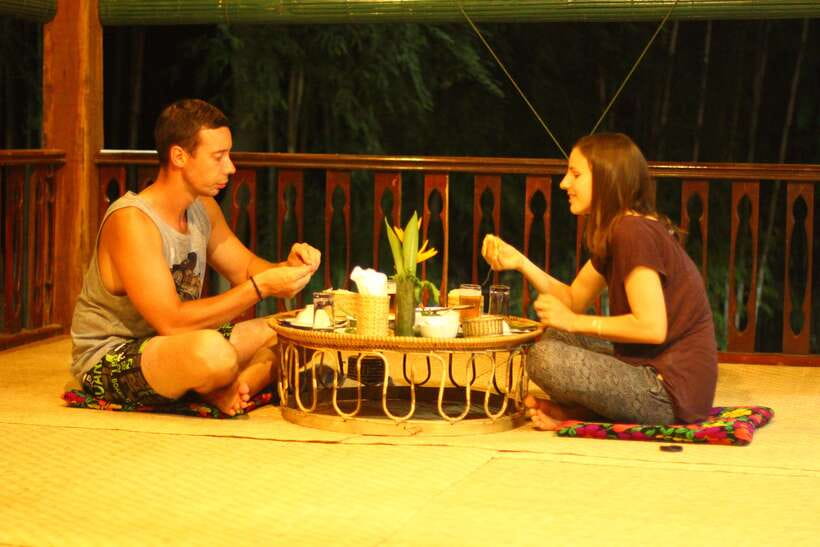
Once the dishes are ready, you sit down for a home-cooked dinner with the local family. This shared meal is where the separate parts of the evening come together.
Sticky rice is central to Lao food, and the meal may include several dishes placed for sharing. You are not just served a plate prepared by someone else. You eat food you helped make, in the same family setting where you cooked it.
The meals described from this experience have been generous, with soup, salads, stir-fried dishes, fish or pork, dips, and sweet sticky rice with coconut milk and mango appearing in different accounts. The exact menu is not guaranteed, so think of these as examples rather than promises.
Alcoholic drinks are not included. Some accounts mention ceremonial rice whiskey or small drinks during the Baci ritual, but you should not treat that as part of the paid beverage service. Food and outside drinks are not allowed, so arrive ready to eat what is provided.
Other Lao kitchens taking bookings:
- Luang Prabang: Bamboo Weaving Workshop & Cooking Class
★ 5.0 · 96 reviews - Luang Prabang: Cooking Class at the Former Royal Palace
★ 4.9 · 51 reviews - Day-time Bamboo weaving & Cooking Classes join-in
★ 5.0 · 38 reviews - Evening Bamboo weaving & Cooking classes join-in
★ 5.0 · 17 reviews
Why the Baci ceremony matters
The Baci ceremony is the cultural heart of this experience. In Lao tradition, it can mark a homecoming, marriage, birth, recovery from illness, a mother’s recovery after childbirth, a festival, or the arrival of monks at a temple.
The ceremony may take place throughout the year, often before noon or before sunset. Here it fits the evening schedule, with local elders and family members welcoming you in the pavilion.
Your host explains the meaning before the ceremony begins. This explanation is important because Baci is not a staged dance or a quick photo stop. It is a blessing ceremony connected with well-being, good fortune, and the many personal spirits traditionally associated with a person.
You may sit during chanting, receive blessings, and have white ceremonial strings tied around your wrists. Small treats and a ceremonial drink may also be offered. If sitting with folded legs is uncomfortable, you should not panic. The ceremony is intended to welcome you, and one account specifically notes that physical flexibility was not treated as a problem.
Dress needs a little care. Cover your shoulders and knees. This is a respectful requirement, not merely a suggestion for temple sightseeing.
The ceremony can feel intimate because it takes place with a family and local elders rather than on a large stage. You may also be invited to sing a song for the family. That is part of the friendly exchange, but it could feel awkward if you prefer to stay completely in the background.
Music after dinner, with rice fields beyond
The evening closes with traditional music performed by a local musician, sometimes in Hmong traditional clothing. The performance may include a Khene, a Lao mouth organ associated with local musical traditions.
The music is more than background entertainment. You get to see and hear an instrument that you would not normally encounter during a standard restaurant meal. In some sessions, you can try playing it yourself, which turns the final part into a light, memorable lesson.
The open pavilion and rice-field views add to the mood, particularly around sunset. This is not a grand stage production, and that is part of its appeal. The performance feels like a family welcome shared with a small group.
The timing also gives you a nice change of pace. After handling ingredients and eating dinner, you can sit back, listen, and look out over the fields. If you are hoping for a long professional concert, this is not that. It is a short local performance included as part of a wider cultural evening.
What the $51 price really covers
At $51 per person, the experience is not the cheapest way to eat in Luang Prabang. You can have a good Lao dinner for much less. The value comes from the collection of services and the access to a family setting.
Your price includes hotel pickup and drop-off in Luang Prabang, an English-speaking host, the market visit, the cooking class, ingredients, home-cooked dinner, the Baci ceremony, and musical performance. You are paying for four hours of guided contact and participation, not just a meal.
The small group helps justify the cost. A large cooking school can offer lower prices, but it usually cannot provide the same personal ceremony with local elders or the same family atmosphere. The rice-field setting and transport add practical value too.
I would consider it good value if you want food and culture in one evening. It is less suitable if your only goal is to master Lao recipes or choose from a long menu. For a couple or small group, the price can feel especially reasonable because the evening offers several experiences without requiring separate bookings.
Free cancellation up to 24 hours before the start and the option to reserve now and pay later make it easier to fit into a changing Laos itinerary. You still need to check the available start time because schedules can vary.
Who will enjoy this most
I would recommend this to food lovers who want to understand Lao cooking in context. You will see the ingredients, help prepare them, eat the meal, and learn how food fits into family life.
It also suits anyone interested in spiritual customs and personal cultural exchange. The Baci ceremony is not something you can reduce to a checklist attraction. You should arrive with patience and respect, and be willing to take part rather than simply watch.
Families can consider it because the activity is described as family-friendly. Children should be comfortable with an evening that includes market food, cooking, sitting for a ceremony, and listening to music. The experience is not suitable for pregnant women, people with mobility impairments, or wheelchair users.
The format works for solo participants as well. A very small group can make it easier to speak with the hosts and ask questions. Couples may appreciate the warm setting, while curious home cooks will get the most from the practical preparation.
A few sensible tips for the evening
Wear clothes that cover your shoulders and knees from the start. That saves you from trying to adjust your outfit after arrival.
Choose shoes and clothing that are comfortable for standing, sitting, and cooking. The setting is rustic, and you should not expect a restaurant kitchen designed around Western comfort.
Bring a phone or small notebook for recipes. A recipe handout is not listed, and one useful suggestion from the experience is that written instructions would help you recreate the dishes at home.
Do not bring outside food or drinks. Alcoholic beverages are not included, and the meal and refreshments are handled as part of the evening.
Ask questions at the market. If you want to know about produce that is not used for dinner, speak up. The market is a good place to learn how Lao households shop, not just where the cooking ingredients come from.
The experience has a 4.9 rating from 151 reviews, and 96 percent of ratings for transport gave a perfect score. The strongest pattern is clear: the family welcome, the Baci ceremony, the food, and the guide’s explanations are the reasons to book. The only recurring reservation in the supplied feedback is a desire for more cooking choices or more instruction.
Should you book the Baci and cooking evening?
Yes, if you want one well-filled evening that connects Luang Prabang food with Lao family culture. The best parts are the small group, the rural pavilion, the warm family setting, and the chance to receive a real Baci blessing instead of simply hearing about the custom in a museum or lecture.
I would skip it if you want a formal cooking school with a fixed menu, detailed recipe booklet, or extensive control over every dish. I would also skip it if you are uncomfortable with ceremonial participation or cannot cover your shoulders and knees.
For most people who have four free hours in Luang Prabang, this is a thoughtful use of an evening. You leave with a full stomach, a better sense of Lao food, and a cultural memory that is more personal than another restaurant meal.
FAQ
How long does the Luang Prabang cooking and Baci experience last?
The activity lasts four hours, beginning with hotel pickup at about 4 p.m. and ending with return transport to your hotel.
Is hotel pickup included?
Yes. Pickup and drop-off are included for hotels in Luang Prabang city. You should wait in your hotel lobby five minutes before the scheduled pickup.
How many people can join the activity?
It is a small-group experience limited to six participants.
Is the cooking class taught in English?
Yes. An English-speaking host and live English-speaking guide are included.
How many dishes will I cook?
You will learn to cook five typical Lao dishes using local ingredients. The exact dishes can vary.
Is the experience suitable for vegetarians?
Yes. The cooking class can accommodate vegetarians. You should communicate your dietary needs before cooking begins.
What should I wear to the Baci ceremony?
Wear clothing that covers your shoulders and knees. Comfortable clothes and shoes are also recommended for the market and cooking activities.
Are drinks included?
Alcoholic drinks are not included. You should also avoid bringing outside food or drinks, as these are not allowed.
Who should not book this activity?
It is not suitable for pregnant women, people with mobility impairments, or wheelchair users.
More Evening Experiences in Luang Prabang
- Luang Prabang: Afternoon Kuang Si Waterfalls & Sunset Cruise
★ 4.6 · 158 reviews - Luang Prabang Evening Food Tour by Tuk-Tuk
★ 4.5 · 68 reviews - Luang Prabang: Mekong Sunset Cruise & Lao Tasting Dinner
★ 4.3 · 27 reviews - From Chiang Rai : 2 Day 1 Night Slow Boat to Luang Prabang
★ 4.0 · 26 reviews
More Workshops in Luang Prabang
- Luang Prabang: Hmong Batik Art Workshop
★ 5.0 · 27 reviews - Tribal Cooking Class in Luang Prabang Forest and visit
★ 5.0 · 15 reviews - Traditional Market Tour and Private Laotian Cooking Class with a Local
★ 5.0 · 13 reviews - Luang Prabang: Weaving Workshop Half-Day Experience
★ 5.0 · 9 reviews
Fresh in Luang Prabang
- 6-Day Private Laos Tour to Vientiane, Pak Ou Cave, Luang Prabang★ 5.0 · 5 reviews
- The Namkhan – Traditional Lao Bamboo Weaving★ 5.0 · 4 reviews
- The Namkhan – Yoga Class (8 am or 4 pm)★ 4.0 · 5 reviews
- Unwind with a Sunset Cruise on the Mekong River★ 5.0 · 4 reviews
- Night Bus to Huay Xai, Chiang Rai, Thailand – Hotel pickup★ 3.0 · 2 reviews
- Sunset Cruise in Luang Prabang with Live Performance★ 4.5 · 3 reviews
- Private Tour: Half-Day City Tour of Luang Prabang★ 4.5 · 4 reviews
- Private Luang Prabang City Tour★ 5.0 · 3 reviews
Cooking Classes, compared.
Day-time Bamboo weaving & Cooking Classes join-in
Read our review →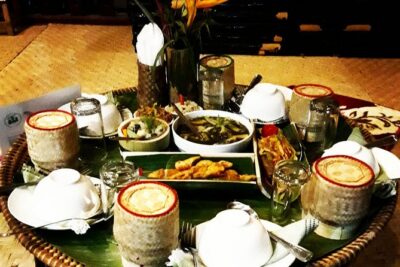
Evening Bamboo weaving & Cooking classes join-in
Read our review →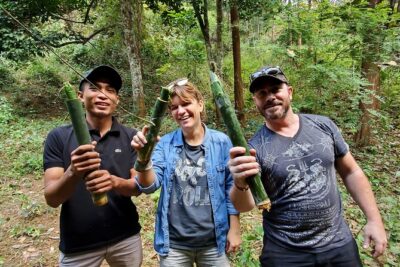
Tribal Cooking Class in Luang Prabang Forest and visit
Read our review →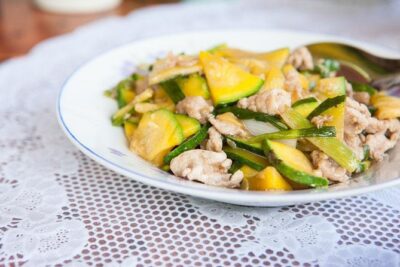
Traditional Market Tour and Private Laotian Cooking Class with a Local
Read our review →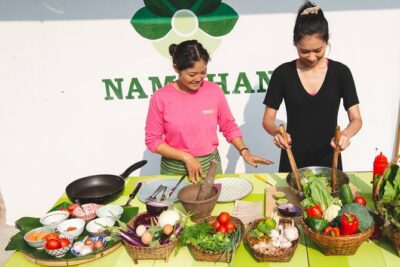
Browse the lists this tour appears in