
Reviewed · WORKSHOPS
Luang Prabang: Weaving Workshop Half-Day Experience
Slow travel starts with making something.
This small-group weaving workshop gives you a calm, hands-on way to connect with Lao craft in Luang Prabang. I like that you work directly with local artisans, and I like that you leave with a useful piece you helped create, not just a souvenir bought from a shelf.
The main consideration is time and patience. Weaving is harder than it looks, and a half-day session may feel short if you want to master the loom rather than simply learn its basic rhythm. The workshop is also not suitable for wheelchair users or people over 75.
In This Review
- Quick Points Before You Book
- Meeting the Weaving Sisters on Khounkhampheng Road
- Getting Used to the Katu Backstrap Loom
- Choosing a Piece You Will Actually Use
- Learning the Meaning Behind the Patterns
- A Half-Day That Requires Real Attention
- What the $70 Price Really Buys
- Who Will Enjoy This Most
- Practical Booking Advice for Luang Prabang
- The Final Verdict: Book It for the Process
- FAQ
- How long does the weaving workshop last?
- Where does the workshop take place?
- How much does the workshop cost?
- Do I need previous weaving experience?
- What can I make during the class?
- What does the price include?
- How many people can join the workshop?
- Is the workshop available in English?
- Can I cancel the booking?
- Is the workshop suitable for wheelchair users?
- Is the workshop suitable for people over 75?
Quick Points Before You Book
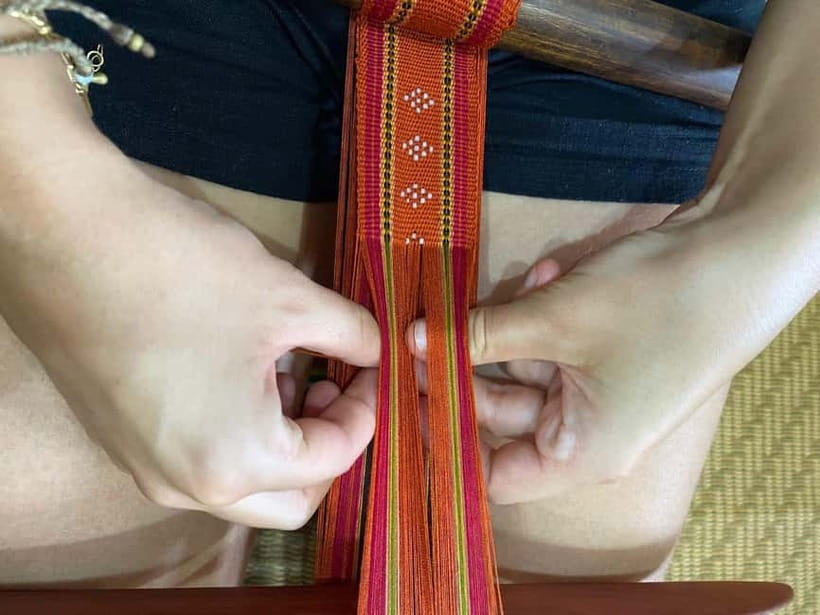
- You use a Katu backstrap loom: This traditional loom makes the session physical as well as creative, with work done by hand and foot.
- You choose your own project: Options include bracelets, a bookmark, mini-wall hanging, headband, camera strap, guitar strap, belt strap, or bag strap.
- The group is limited to four people: That gives you close help when the pattern or loom starts to confuse you.
- Doi and Dom lead the workshop: They are patient, friendly artisans who speak good English, according to the experience details and direct feedback.
- You receive materials, a snack, and one handmade piece: One participant specifically left with two pieces per person, so ask what project allowance applies on your date.
- The workshop costs $70 per person: That is a fair price if you value instruction, cultural context, and making something yourself, but it is not the cheapest souvenir option.
Meeting the Weaving Sisters on Khounkhampheng Road
Your workshop takes place at The Weaving Sisters on Khounkhampheng Road, written locally as ຄູນຄຳແພງ, in Luang Prabang.
The meeting point matters because this is not a large craft factory or a staged performance. You meet the people who teach the process and guide your hands through it. The small setting keeps the activity personal, with space for questions and individual help.
The group limit of four is one of the strongest parts of the experience. A backstrap loom has several moving parts, and beginners can quickly lose track of the pattern or tension. With only a few people in the room, you should have a better chance of getting help before a small mistake grows into a long row of wrong weaving.
The hosts are known as the Weaving Sisters, and Doi and Dom are named in the direct feedback from the activity. Their patient manner is important here. This is not a craft lesson where you are expected to watch once and then work alone. You can expect guidance when you need it, including help with the practical coordination of hand and foot movements.
The workshop is conducted in English. That makes it easier to ask about the meaning of patterns, the use of the loom, and the role of weaving in Katu culture.
Other weaving and craft sessions:
- Luang Prabang: Evening Cooking Class & Local Baci Ceremony
★ 4.9 · 151 reviews - Luang Prabang: Bamboo Weaving Workshop & Cooking Class
★ 5.0 · 96 reviews - Luang Prabang: Cooking Class at the Former Royal Palace
★ 4.9 · 51 reviews
Getting Used to the Katu Backstrap Loom
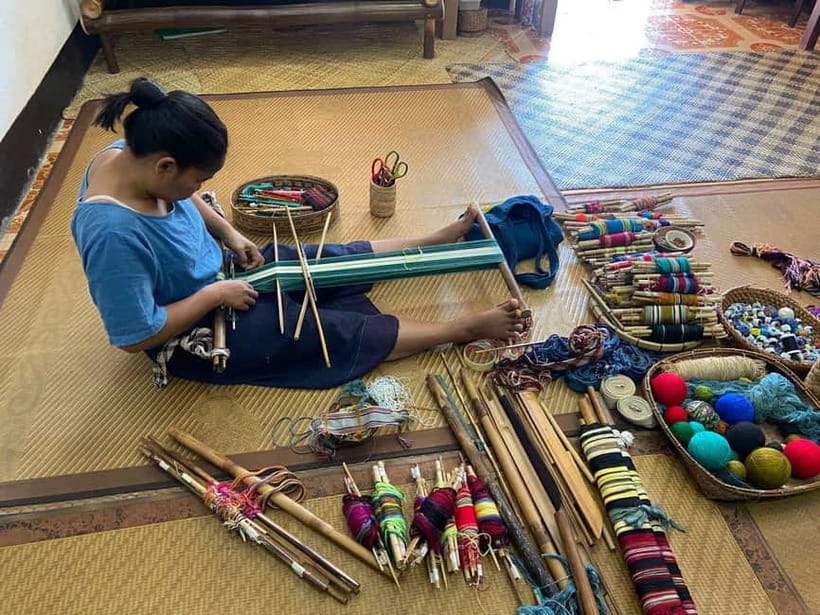
The first part of the activity introduces you to the Katu backstrap loom. Unlike a large floor loom, this setup connects to the weaver’s body. The arrangement requires you to sit and use your body position to help maintain tension while your hands control the threads.
That detail changes the lesson completely. You are not just passing thread through a fixed machine. Your posture, feet, hands, and attention all affect the result. One participant described the process as meditative, and I can understand why. Once the basic movements begin to make sense, the repeated pattern can draw your attention away from sightseeing schedules and phone notifications.
It can also be frustrating at first. Another participant noted that weaving is harder than it looks, which is useful advice to take seriously. Your first rows may be uneven. You may need several attempts to get the tension right. That is part of the value, but it means you should not book this expecting instant perfection.
The instructors help keep the mood light. Direct feedback describes Doi and Dom as patient and kind, with help available whenever it was needed. For a beginner, that support is more important than a long lecture about weaving theory.
Choosing a Piece You Will Actually Use
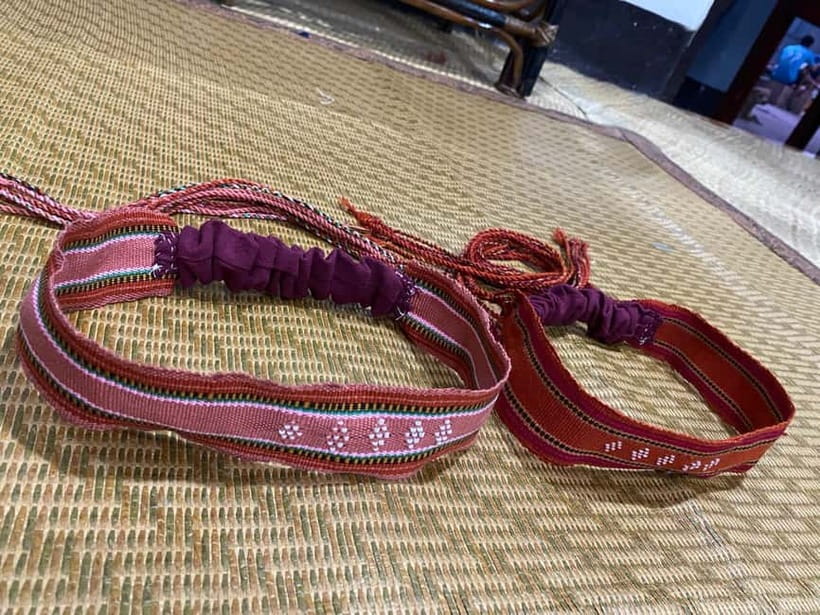
Once you understand the loom, you choose what to make. The available projects cover several levels of size and usefulness:
- Two bracelets
- Two bookmarks
- A mini-wall hanging
- A headband
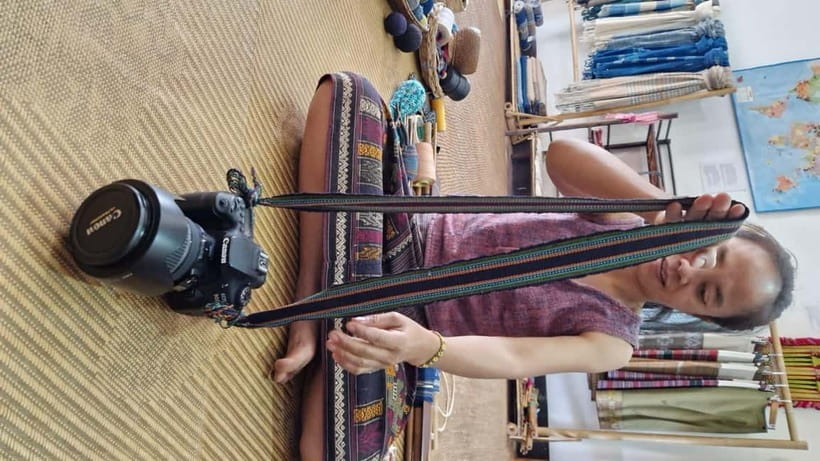
- A camera strap
- A guitar strap
- A belt strap
- A bag strap
The exact choice affects how ambitious the session feels. A bracelet or bookmark gives you a smaller project and may be easier to finish within the workshop period. A camera strap, guitar strap, belt strap, or bag strap gives you something more substantial, but it may demand more time and concentration.
I like the balance here. You can choose a small item if you want a manageable introduction, or select a strap if you care more about bringing home something practical. The choices also make the activity suitable for different kinds of craft enthusiasts. A person who collects handmade objects may prefer the mini-wall hanging, while someone who wants a useful travel memento may choose a camera strap or bag strap.
The information says you receive one handcrafted piece, though one direct account says two people each left with two pieces they had made by hand and foot. Since the project list includes paired items such as two bracelets or two bookmarks, ask the hosts at the start what your selected project includes. That small question can help you set realistic expectations.
Learning the Meaning Behind the Patterns
The activity is not only about producing a strip of cloth. You also learn about the heritage connected to the patterns and the Katu people.
The details provided do not assign a particular meaning to each pattern, so you should not expect a fixed explanation for every design unless the instructors provide one during your session. Still, having the artisan explain the work while you are doing it gives the object more value than a generic handicraft from a market stall.
The setting encourages questions. You can ask how the loom works, why certain colors or arrangements are used, and how traditional weaving is being preserved. The English-language instruction makes that exchange practical rather than awkward.
This is also where the activity earns its place in a Luang Prabang itinerary. Many cultural experiences involve looking, listening, and taking photographs. Here, you take part in a small piece of the process. You feel the tension in the threads and see how much care goes into a finished band or strap.
That does not make you a skilled weaver in half a day. It does give you a better eye for the work you see elsewhere in Laos.
A few more Luang Prabang trips worth reading about
- Luang Prabang: Cruise to Pak Ou Caves & Kuang Si Waterfalls
★ 5.0 · 1,769 reviews - Luang Prabang: Cruise to Pak Ou Caves & Kuang Si Waterfalls
★ 4.8 · 1,360 reviews - Half Day Mekong Cruise to Pak Ou Caves (Morning / Afternoon)
★ 4.6 · 290 reviews - Luang Prabang: UNESCO World Heritage City Highlights Tour
★ 4.6 · 201 reviews
A Half-Day That Requires Real Attention
The experience is described as a half-day workshop. One part of the booking information may show a one-day duration, so check the available start time and plan around the half-day description.
There is no detailed schedule showing exact minutes for introductions, instruction, weaving, and snack time. I would therefore leave some breathing room before your next fixed appointment. The lesson may run at a different pace depending on your chosen item and how quickly you learn the loom.
The workshop includes all materials. You do not need to bring weaving equipment or prepare in advance, and no prior experience is required. That makes this a good choice for first-time craft students, couples, and small groups of friends who want an activity with more substance than a quick demonstration.
A snack is included as well. One direct account specifically mentions yummy fruit provided during the session. The snack is a modest touch, but it suits the slow pace of the workshop and gives you a natural pause from the concentration required by the loom.
You should arrive ready to sit, focus, and repeat movements. This is not a fast, drop-in craft class where you finish something in twenty minutes. The work asks for attention, and your finished piece will show the marks of a beginner. That is not a flaw. It is evidence that you made it yourself.
What the $70 Price Really Buys
At $70 per person, this workshop costs more than purchasing a woven bracelet or strap from a market.
You are paying for more than the raw materials. The price covers a private-feeling lesson with a maximum of four participants, English instruction, guidance from local artisans, the weaving supplies, a snack, and one piece to take home. You are also paying for the chance to ask questions about Katu weaving while using the loom yourself.
For a short class, that is a reasonable value if you care about the process. The price is less compelling if your only goal is to obtain the cheapest handmade item. A market purchase takes minutes and costs less. This experience takes time, but it gives you an understanding of why the finished work commands attention.
The small group is key to the value. If eight or ten people shared the same lesson, the price would be harder to defend because beginners would have less access to the instructors. With four people, the personal guidance helps justify the cost.
You should also remember that the finished item may not look professionally made. The point is not to compete with an experienced artisan. The point is to understand the work and carry away something linked to your own effort.
Who Will Enjoy This Most
I would recommend the workshop to you if you enjoy quiet, practical cultural activities. It suits people who like making things, couples who want a shared project, and anyone who prefers meeting local artisans to moving from one sightseeing stop to another.
It is especially good for:
- First-time weavers who want close instruction
- Craft enthusiasts who enjoy learning traditional methods
- Couples or friends who want a joint activity
- Visitors looking for a useful handmade souvenir
- People who enjoy slow, focused experiences
- Anyone curious about Katu culture and weaving
The workshop may not suit you if you dislike repetitive work or become impatient when a skill takes time. It is also not a good fit if you want a polished product with no visible beginner marks.
The physical setup deserves attention. Because the Katu backstrap loom involves body position, hands, and feet, you should be comfortable with the demands of the activity. The experience is not suitable for wheelchair users or people over 75, according to the stated restrictions.
Practical Booking Advice for Luang Prabang
The experience offers free cancellation up to 24 hours before the start time, with a full refund. You can also reserve now and pay later, which helps if your Luang Prabang plans are still changing.
The meeting point is The Weaving Sisters on Khounkhampheng Road. Since no pickup service is included in the details provided, plan to reach the address yourself and confirm the start time when booking.
I would choose an earlier or later half-day activity around this workshop rather than scheduling a tight connection. The exact start times depend on availability, and your pace at the loom may vary from another participant’s pace.
Ask about the final project before the lesson begins. If you want a strap, confirm how much can be completed during the session. If you prefer a simpler result, choose a bracelet or bookmark. This one decision can make the workshop feel relaxed instead of rushed.
The Final Verdict: Book It for the Process
I would book the Weaving Sisters workshop if you want to understand Lao craft by doing it yourself.
The strongest reasons are the four-person limit, the patient help from Doi and Dom, the use of a Katu backstrap loom, and the choice of a finished item you can keep. The repeated praise for the friendly instruction and the calm, meditative nature of the work also fits the experience well.
I would skip it if you only want a quick souvenir, cannot comfortably manage the physical setup, or have no patience for a skill that takes practice. For everyone else, $70 buys a thoughtful half-day activity and a better appreciation of the work behind traditional woven goods.
You may leave with an uneven first attempt. You will also leave knowing exactly how much effort went into it.
FAQ
How long does the weaving workshop last?
The experience is described as a half-day workshop. Some booking information may display a one-day duration, so check the available starting times and plan for a half-day activity.
Where does the workshop take place?
It takes place at The Weaving Sisters on Khounkhampheng Road, Luang Prabang. The address is also written locally as ຄູນຄຳແພງ.
How much does the workshop cost?
The price is $70 per person.
Do I need previous weaving experience?
No. The workshop is suitable for beginners, and no prior weaving experience is required.
What can I make during the class?
You can choose from options including two bracelets, two bookmarks, a mini-wall hanging, headband, camera strap, guitar strap, belt strap, or bag strap.
What does the price include?
The price includes all weaving materials, a snack, and one handcrafted piece.
How many people can join the workshop?
The workshop is a small-group experience limited to four participants.
Is the workshop available in English?
Yes. The instructor language is English, and the hosts are described as speaking very good English.
Can I cancel the booking?
Yes. You can cancel up to 24 hours in advance for a full refund.
Is the workshop suitable for wheelchair users?
No. The experience is listed as not suitable for wheelchair users.
Is the workshop suitable for people over 75?
No. The experience is listed as not suitable for people over 75.
Fresh in Luang Prabang
- 6-Day Private Laos Tour to Vientiane, Pak Ou Cave, Luang Prabang★ 5.0 · 5 reviews
- The Namkhan – Traditional Lao Bamboo Weaving★ 5.0 · 4 reviews
- The Namkhan – Yoga Class (8 am or 4 pm)★ 4.0 · 5 reviews
- Unwind with a Sunset Cruise on the Mekong River★ 5.0 · 4 reviews
- Night Bus to Huay Xai, Chiang Rai, Thailand – Hotel pickup★ 3.0 · 2 reviews
- Sunset Cruise in Luang Prabang with Live Performance★ 4.5 · 3 reviews
- Private Tour: Half-Day City Tour of Luang Prabang★ 4.5 · 4 reviews
- Private Luang Prabang City Tour★ 5.0 · 3 reviews
Workshops, compared.



Day-time Bamboo weaving & Cooking Classes join-in
Read our review →

Evening Bamboo weaving & Cooking classes join-in
Read our review →
Tribal Cooking Class in Luang Prabang Forest and visit
Read our review →
Traditional Market Tour and Private Laotian Cooking Class with a Local
Read our review →Browse the lists this tour appears in